

Southwark Park sits just off the A200 in Bermondsey, and most drivers passing the gates on Lower Road probably have no idea how much is packed inside: a Victorian boating lake, a salvaged pair of stone caryatids, a fountain to a working-class temperance campaigner, and a road cutting straight through the middle of it all.
It is a Grade II‑listed park and garden, and it doesn’t particularly try to look grand about it, the character here comes from what has been added and rescued over 150 years rather than from a single sweeping design.

Built on Market Gardens
The land was market gardens before 1869, fruit, vegetables and flowers grown for the city rather than public parkland. Southwark Park opened that year as one of the first purpose-built public parks south of the river. Wide avenues of plane trees were laid out from the start, and they still give the place its structure today.

The trees are, in fact, the single easiest way to place yourself in the park, long straight rows of mature planes, underplanted with open grass either side, rather than the winding shrubbery paths found in some Victorian gardens.
The Lake
This stretch of water was not part of the original 1869 design. A board beside it tells the story in full: by 1883 the local Rotherhithe Vestry was pushing the Metropolitan Board of Works for an ornamental lake. The Board awarded a £2,490 contract to a Mr G. Bell that December. Workers held a “Lake Filling Ceremony” on 18 August 1885, and days later a pair of swans, a gift from Queen Victoria, known ever after as Joe and Jenny, took up residence.

By 1908 the lake was extended for boating. The Central (Unemployed) Body for London put 280 men to work on it, and nearly half of them came from Bermondsey. The enlarged boating lake opened that August. Workers added a children’s paddling pool in the 1930s. However, enemy action during the Second World War cracked the lake bed, and the lake was downsized again through the 1970s and 80s. A Heritage Lottery Fund restoration in 2001/2 finally returned it to its 1908 size. Today the water holds swans, tufted duck, mallard, moorhen and Canada geese, and pedal boats are available to hire in the summer season.

Ada Salter Garden
Tucked out of sight off the main path, meanwhile, is the Ada Salter Garden, easy to miss unless you go looking for the gate. Ada Salter was a social reformer and became the first female mayor in London; the garden named for her overlooks a quieter, secluded stretch of the lake and centres on a fountain sculpted with three dolphins.

A “No Dogs” sign hangs on the gate pillar, so this is one of the few genuinely dog-free corners of the park, worth knowing if the flower beds are the point of the detour.
The Caryatids
Two weathered stone figures standing among the trees are the only surviving feature of Rotherhithe Town Hall. Sculptor Henry Poole designed them in 1897. Caryatids, architectural supports carved as female figures, framed the Town Hall entrance; one wears oak, symbolising virtue and strength, while the other wears laurel, for peace and triumph, a nod to Rotherhithe’s maritime history.

Bombing severely damaged Rotherhithe Town Hall in 1944. The caryatids survived, and they moved to the Heygate Estate in 1974; when redevelopment began there in 2011, they found their current home in Southwark Park. The Heritage of London Trust restored them in 2025 with support from Knight Frank and Southwark Council, closer access can be arranged by emailing the council’s parks team.

The Jabez West Drinking Fountain
A granite obelisk fountain near the tennis courts commemorates a name most visitors won’t recognise: Jabez West. He was a blacksmith’s son from Princes Risborough who came to Bermondsey in the 1830s. He worked in the leather trade, but he became known locally for political reform and the temperance movement, and he personally campaigned for Southwark Park to be created in the first place.


After his death, the Metropolitan Board of Works took the unusual step of agreeing to a public memorial for a working-class man. The council unveiled it on 3 April 1885; the public paid for it entirely through subscription, at a cost of £120.
Sport, Bowls and the Bandstand
Southwark Park Bowls Club has played on the same green since 1908, and its current pavilion dates to 2019, the club gates display both years in their ironwork. Nearby are tennis courts and a set of outdoor table-tennis tables. The Southwark Park Sports and Athletics Centre, next to the Hawkstone Road car park, also has a gym and an Olympic-standard six-lane outdoor athletics track.


The bandstand itself sits on an open gravel plaza and hosts a programme of summer concerts and events; it is a natural stopping point on a lap of the park even outside event days.
Galleries and Gomm Road
Southwark Park Galleries occupies a converted mid-century building inside the park and exhibits contemporary art, with the smaller Dilston Gallery nearby used as a community learning and workshop space. The Gomm Road entrance takes its name from Sir William Maynard Gomm, a British Army officer during the Napoleonic Wars who rose to Commander-in-Chief, India. Part of the park stands on land his family once owned, and they also funded a local mission hall and an accident hospital.

For Families
There is, in addition, a large, well-equipped playground for children up to age 14, plus outdoor gym equipment and cricket practice nets set beneath the trees for older kids and adults. The Rotherhithe Children and Family Centre, offering support and advice for new parents, is also based inside the park near the Hawkstone Road gate.

Getting There and Getting In
There are, in total, four entrances: Jamaica Road, Lower Road, Southwark Park Road and Gomm Road. All are pedestrian-only except the Jamaica Road gate, which leads onto Southwark Park Road where limited-time street parking is available, and the Hawkstone Road car park.
Tube
Bermondsey, Canada Water, Surrey Quays or Rotherhithe
Bus
Routes 1, 47, 188, 199, 225, 381, 395, P13
Café and Gallery Hours
| Facility | Hours |
|---|---|
| Pavilion Café (summer) | 8:00am–7:30pm |
| Pavilion Café (winter) | 8:00am–4:00pm |
| Southwark Park Galleries | 11:00am–5:00pm, Wednesday–Sunday (closed Mon & Tue) |
Dogs and Accessibility
Southwark Council’s park byelaws ask owners to keep dogs under control at all times and to follow local signage. For example, the Ada Salter Garden is explicitly dog-free, and enclosed play areas are off-limits to dogs across all Southwark parks.
Wheelchair access is available throughout the park and at the café, and the main avenues are wide, flat tarmac rather than rough paths.
Frequently Asked Questions
Is Southwark Park free to enter?
Yes, the park is free. Southwark Park Galleries may charge for specific exhibitions or events.
What are the caryatids?
The only surviving feature of Rotherhithe Town Hall, built in 1897 and bomb-damaged in 1944. They were relocated to Southwark Park after the Heygate Estate redevelopment and restored in 2025.
Can I hire a pedal boat?
Yes, the boating lake operates seasonally in summer.
Is there a dog-free area?
The Ada Salter Garden is signed as no dogs. Enclosed playgrounds across Southwark parks are also off-limits to dogs.
Which entrance should I use?
Lower Road (A200) or Gomm Road are the most central for the lake, caryatids and gardens. Hawkstone Road is best if driving, for the athletics centre and car park.
Research Method
This guide is based on a visit to the park. Photographs on this page are original. The Lake, Caryatids and Jabez West Drinking Fountain boards were read and photographed on site. Opening hours, entrances, transport, café and gallery times, and dog rules were checked against Southwark Council. Prices and seasonal details such as boating and event dates should be confirmed with the council before travelling.
Official & Useful Sources
Southwark Council – Southwark Park
Confirms size, listed status, entrances, transport, car park, café and gallery hours, and facilities.
https://www.southwark.gov.uk/culture-and-sport/parks-and-open-spaces/find-park/southwark-park
Southwark Council – Park Opening Times
Source for the 7:30am daily gate-opening time and seasonal closing schedule.
https://services.southwark.gov.uk/parks-and-open-spaces/parks/opening-times
Southwark Council – Dogs in Parks
Sets out the dog byelaws and control rules that apply across Southwark’s parks.
https://services.southwark.gov.uk/parks-and-open-spaces/parks-information/dogs-in-parks
On-site interpretation read during the visit
The Lake history board, the Southwark Park Caryatids board, and the Jabez West Drinking Fountain board.
Last checked: 25 August 2026
Nearby guides: Mudchute Park & Farm, Greenwich Park and Peckham Rye Park
Author
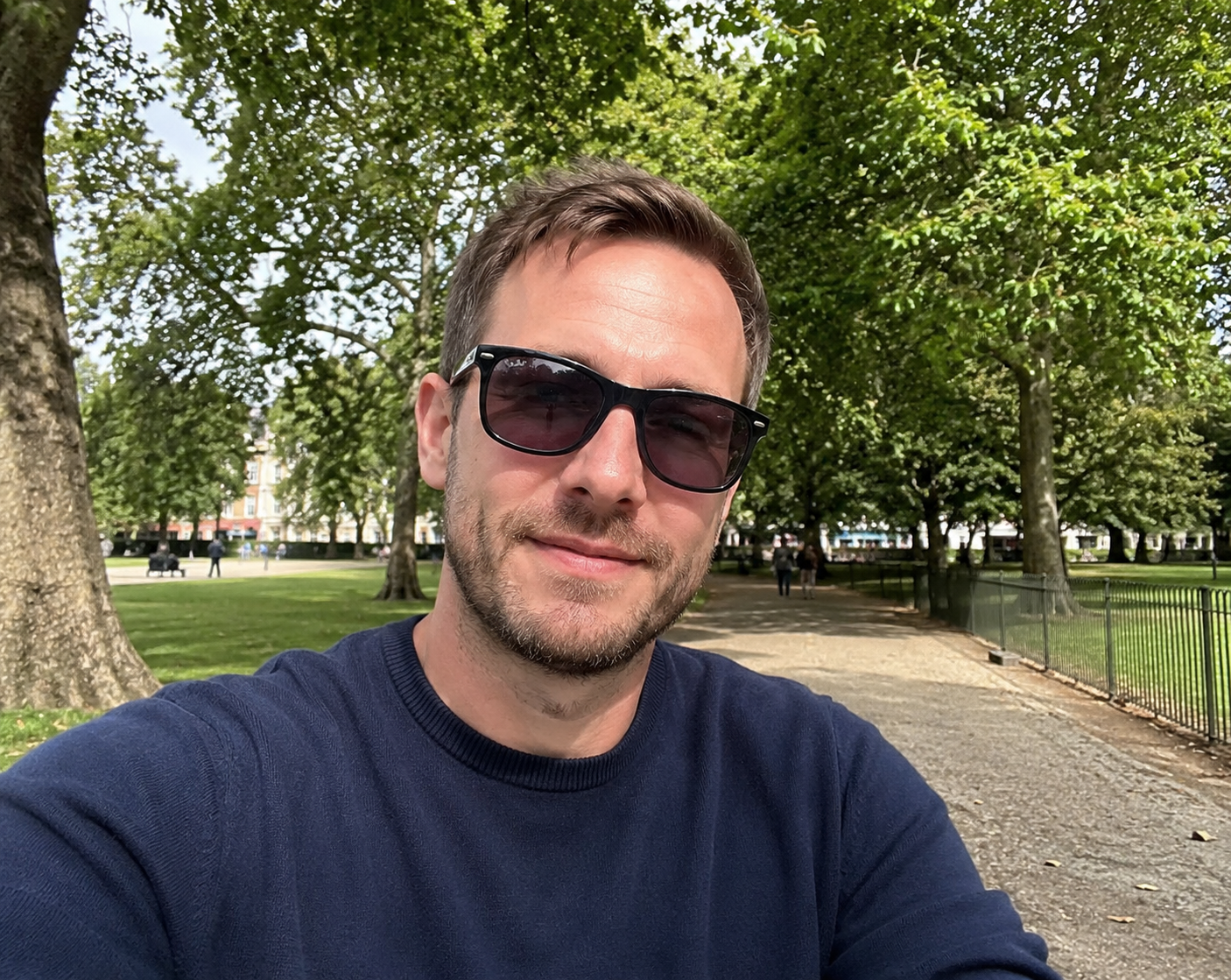
Steve visits every park featured on EKS Parks in person, checking practical details against councils, park operators and official sources. Every guide is based on a personal visit, and the photographs published with it are his own.
About Steve