

Victoria Park
86 hectares · Tower Hamlets · opened 1845
I’ve been in London for a while now, and I thought I was starting to understand the city. But one thing I’ve realised is that the biggest mistake you can make is thinking you’ve already seen everything. That’s exactly how I felt at Victoria Park.
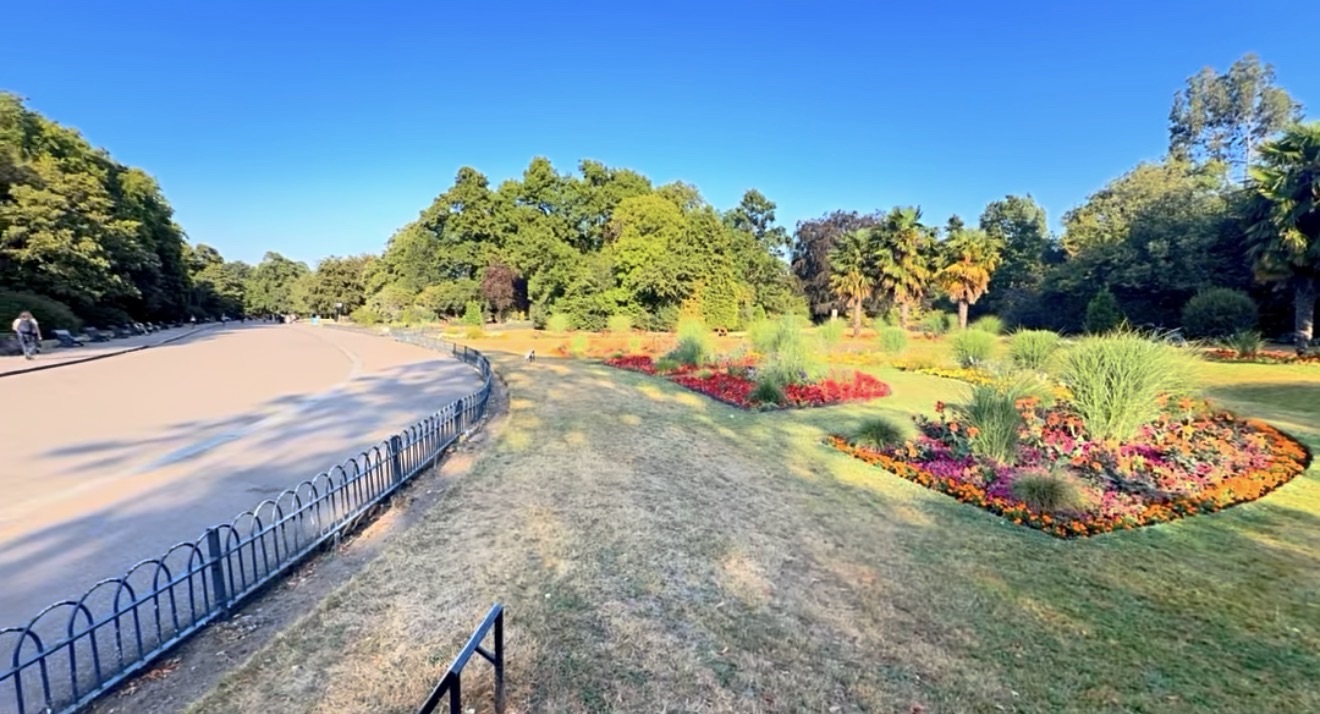
At first, it just seemed like another beautiful park in East London. It’s huge, around 86 hectares, with the lake, gardens, open spaces and plenty of people enjoying the day. But once you start looking around, you realise there’s so much history hidden here.
Discovery One: A Park Built by Petition, Not by Privilege
Thousands of signatures, one Act of Parliament
Victoria Park opened in 1845 after local people pushed for a public green space in an area that was suffering from overcrowding, poor sanitation and disease. Thousands of people supported the campaign, and Parliament passed an Act in 1841 to allow it. What makes that especially interesting is that this wasn’t created as a private garden for wealthy people. It was created as a public park for ordinary people, and that idea is still there today. It’s still free, it’s still open to everyone, and people are still using it for exactly what it was intended for.
Discovery Two: A Pagoda That Started Life Somewhere Else Entirely
From Hyde Park exhibition piece to island landmark
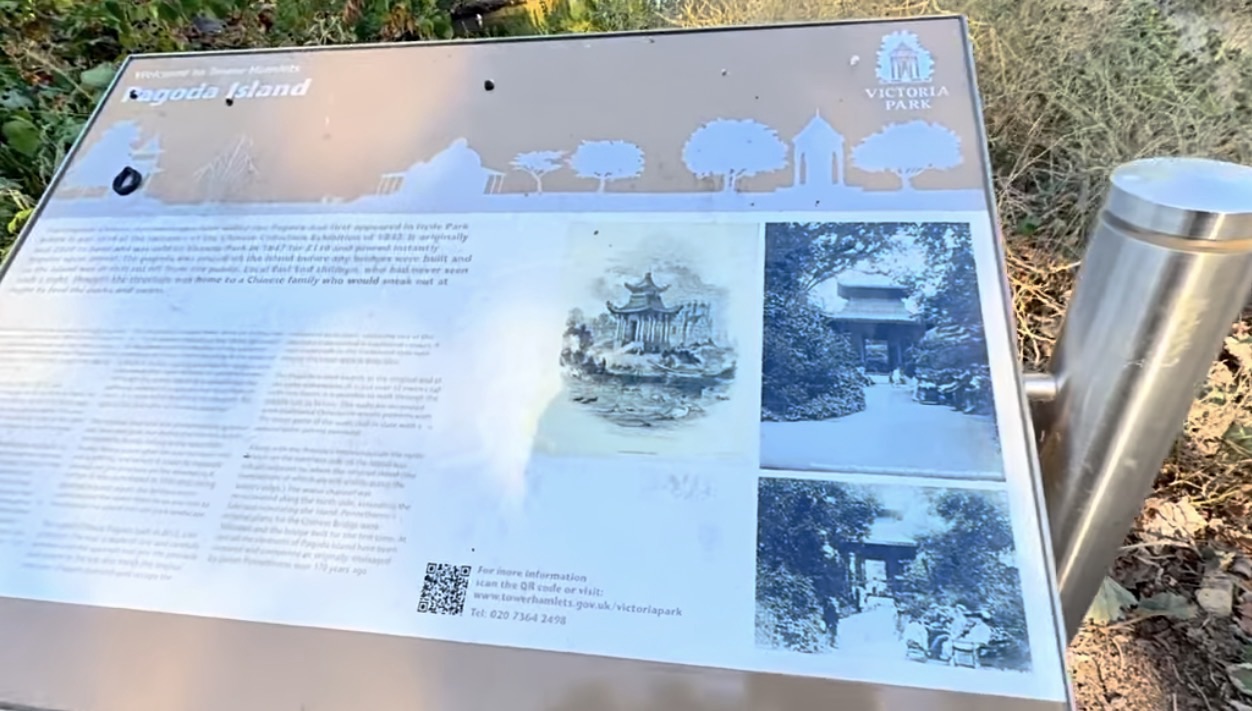
A board on the island fills in a history most visitors would never guess from the replica structure alone. The pagoda did not start life here at all: it first stood in Hyde Park in 1842, built as the entrance piece for a Chinese Collection exhibition, and cost £800 to construct. Victoria Park bought it secondhand in 1847 for a fraction of that, £110, and it proved popular from the moment it arrived.
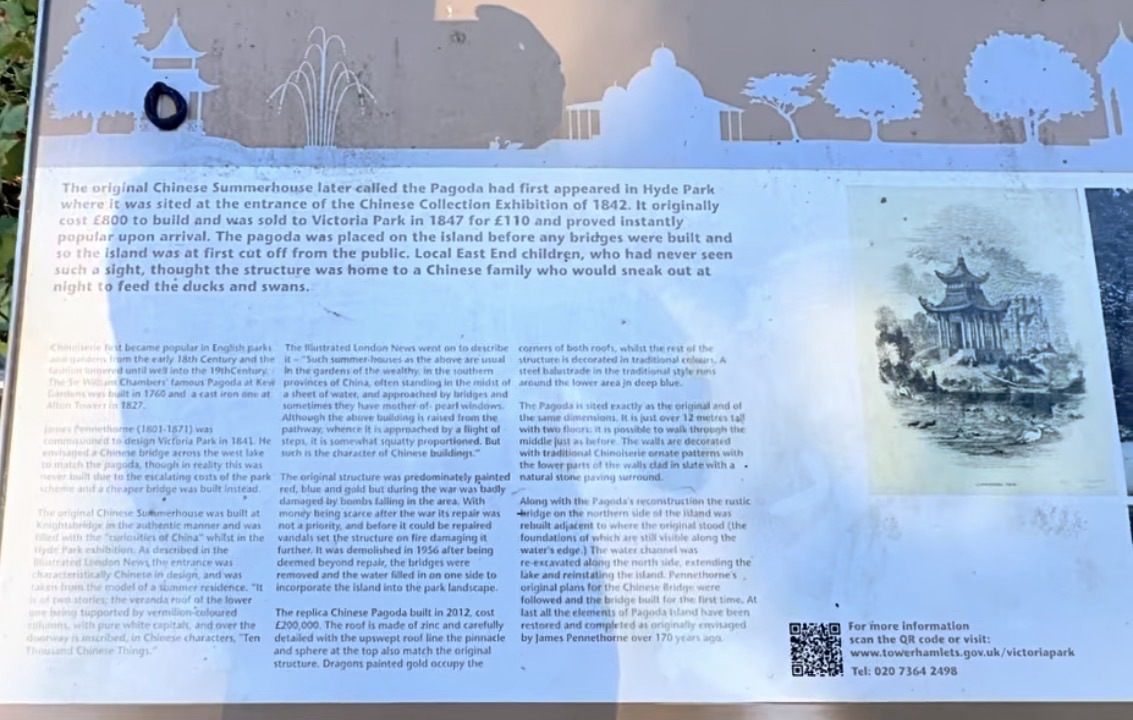
Because the pagoda arrived before any bridge connected the island to the shore, local children grew up believing a Chinese family secretly lived inside, sneaking out at night to feed the ducks and swans. The original structure survived until 1956, when arson finished what wartime neglect had started. What stands on the island today is a faithful replica completed in 2012 at a cost of £200,000, built to the same twelve-metre height, right down to the gold dragons on the roofline.
Discovery Three: Stone Dogs With a Legend Attached
The Dogs of Alcibiades, guarding the water since 1912
There are also the huge stone Dogs of Alcibiades, which have stood here since 1912. There’s even an old legend that they would come to life and rescue anyone who fell into the nearby canal. Obviously, I’m not planning to test that theory. But it does make you look at the statues differently once you know the story, especially knowing they’ve been through two World Wars, the Blitz and generations of Londoners coming and going.
Discovery Four: A Fountain With a Bigger Story Behind It
The Burdett-Coutts Memorial Drinking Fountain, 1862
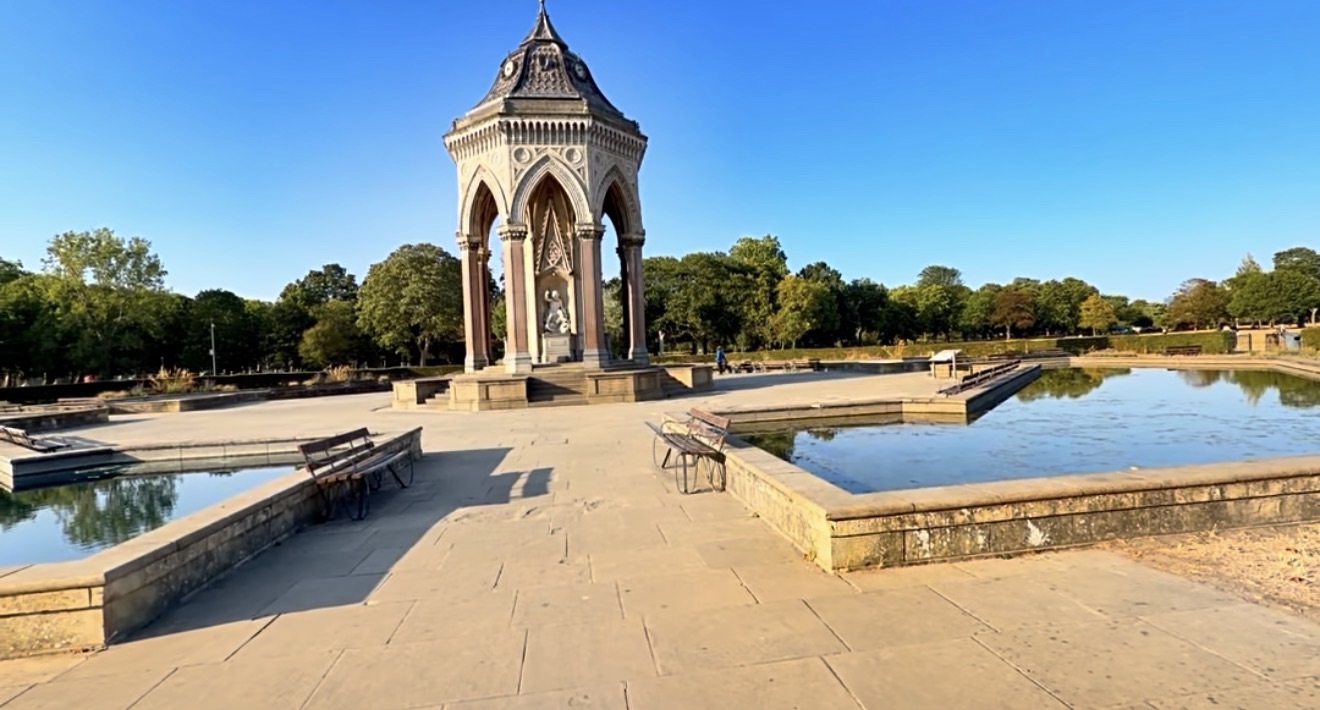
Another detail that’s easy to miss is the Burdett-Coutts Memorial Drinking Fountain from 1862. It’s connected to Angela Burdett-Coutts, one of Britain’s great philanthropists, who used much of her wealth to support people and charitable causes, including the National Society for the Prevention of Cruelty to Children and the Royal Society for the Prevention of Cruelty to Animals. The idea behind the fountain was connected to providing clean drinking water to the public, and there’s something quite powerful about standing in a park today and seeing something that was created more than 160 years ago for ordinary people.
Discovery Five: A Piece of the Old London Bridge, Hiding in Plain Sight
The alcoves that survived a demolition in 1831
But the biggest surprise for me was discovering the old London Bridge alcoves. Part of the historic London Bridge, which was demolished in 1831, survived and was moved here. Standing beside those old stones and thinking about how many people crossed that bridge generations ago was honestly quite surreal. There was no modern skyline back then, no Canary Wharf, no Shard, just the Thames, the old city and that enormous bridge carrying people across the river. Somehow, part of it survived, and it was moved from where it originally stood, but it still has meaning.
Now for the Practical Side: Choosing a Side, Not a Landmark
Its main avenues are used for running and cycling, the lakes and cafés draw slower morning visits, families have two different play areas, and on Sundays one stretch becomes a food market. Grove Road cuts through the middle, creating two sides that feel noticeably different. That division is the most useful thing to understand before choosing an entrance.
West Park
This side suits a slower first visit. The West Boating Lake, Pavilion Café, Chinese Pagoda and ornamental planting sit relatively close together, along with the Dogs of Alcibiades and Burdett-Coutts Fountain.
East Park
The eastern half is more activity-led. The Hub, larger playground, splash pool, skatepark, tennis courts, outdoor gym and sports pitches are concentrated here.
You can cross Grove Road and use both halves, but families in particular do not need to. The distance is manageable; the problem is that children can run out of patience long before adults run out of things to see.
The West Side Works Best as a Morning
The West Boating Lake gives this part of the park its strongest visual focus. The restored Chinese Pagoda sits on the island, while the Pavilion occupies the edge of the water near Crown Gate West.
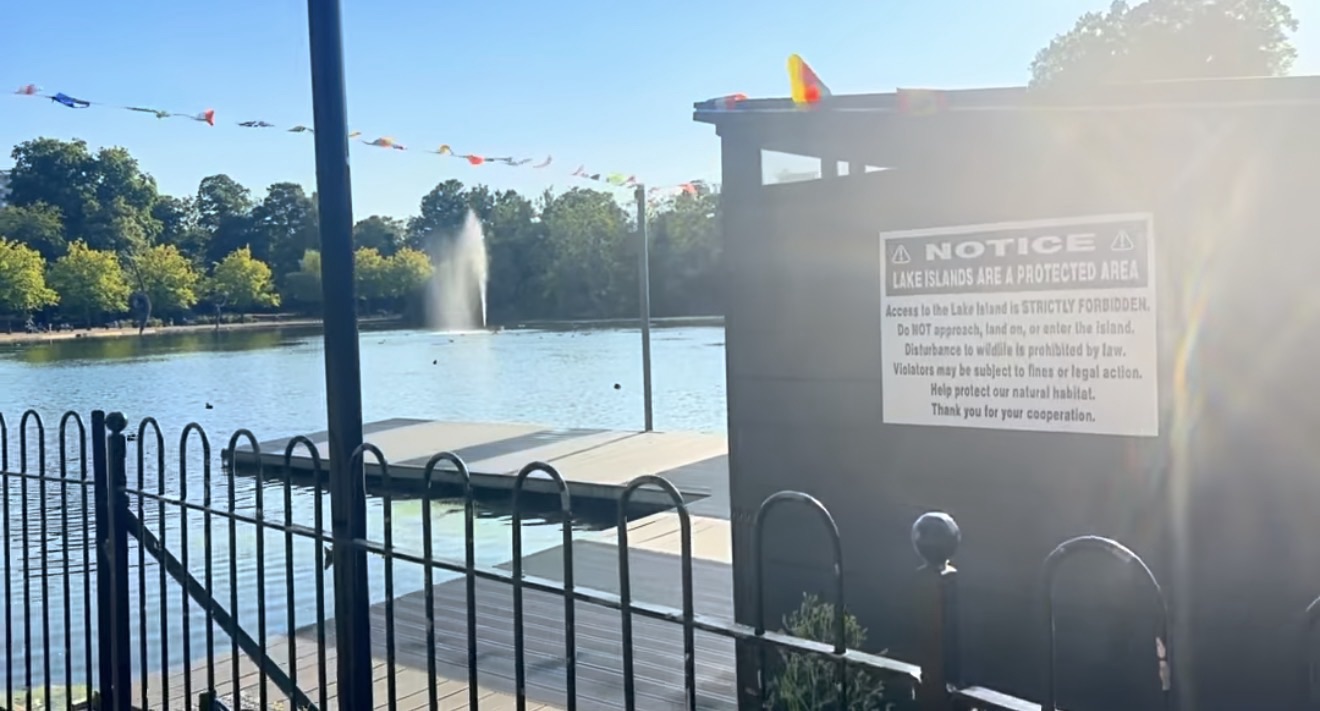
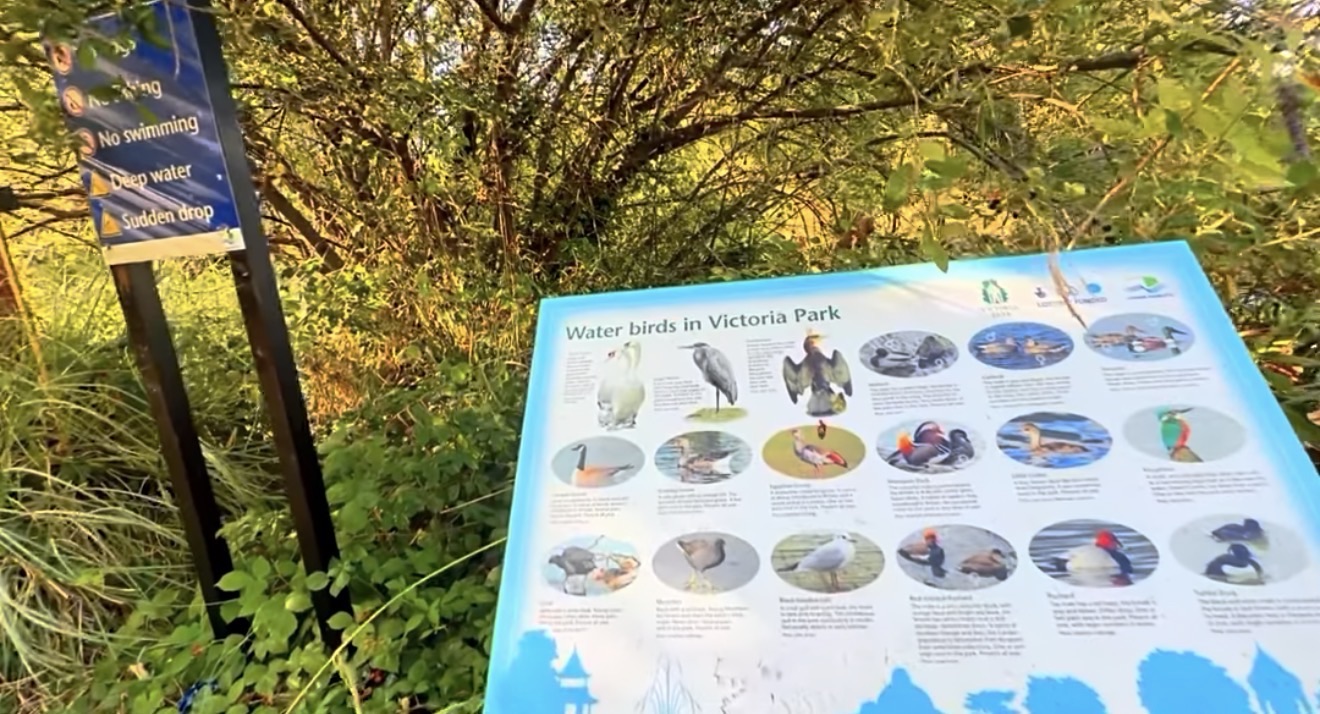
A sign fixed near the boat dock spells out the rule plainly: landing on the island is strictly forbidden, and disturbing wildlife there can lead to fines or legal action. It is a reminder that the swans, geese and ducks gathered around the water are wild birds under legal protection rather than park decoration.
Tower Hamlets still lists public rowing boats and pedalos through Regal Boat Hire, but operating times vary. Anyone travelling specifically to hire a boat should check with the operator first rather than assuming it runs every day.
The East Side Is Where Family Visits Become Longer
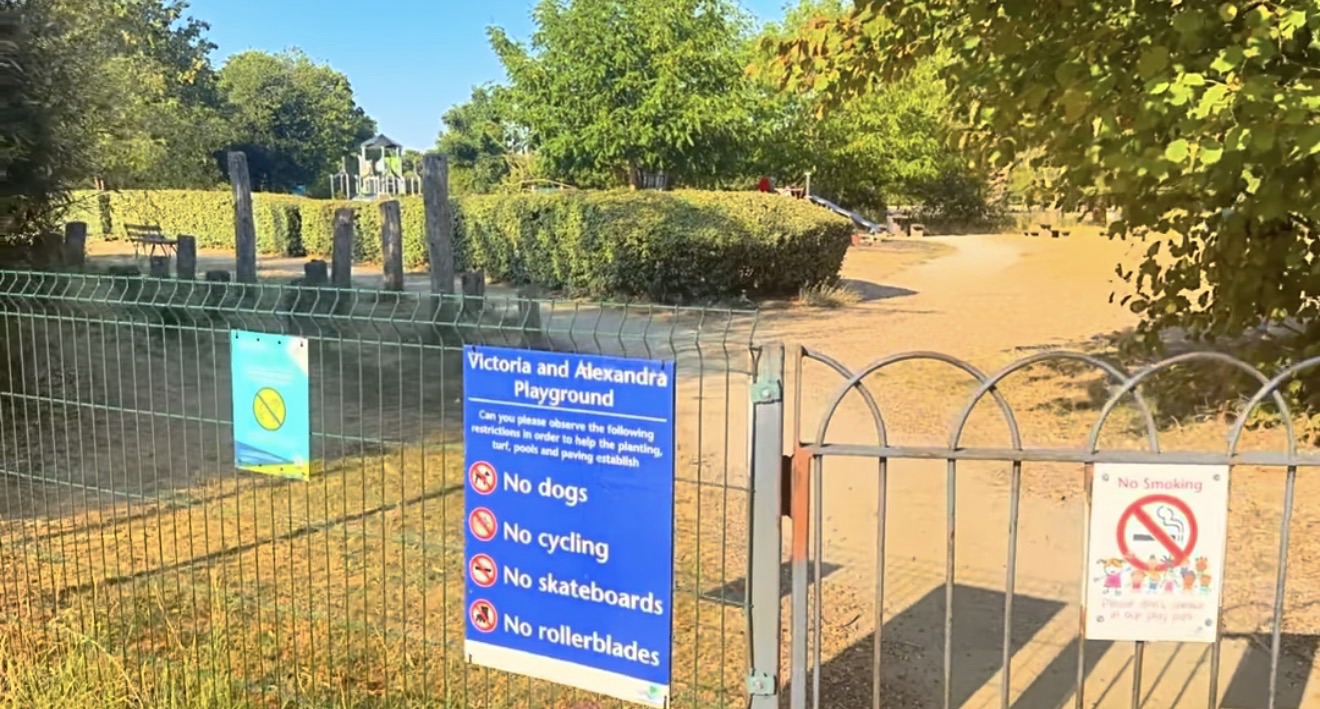
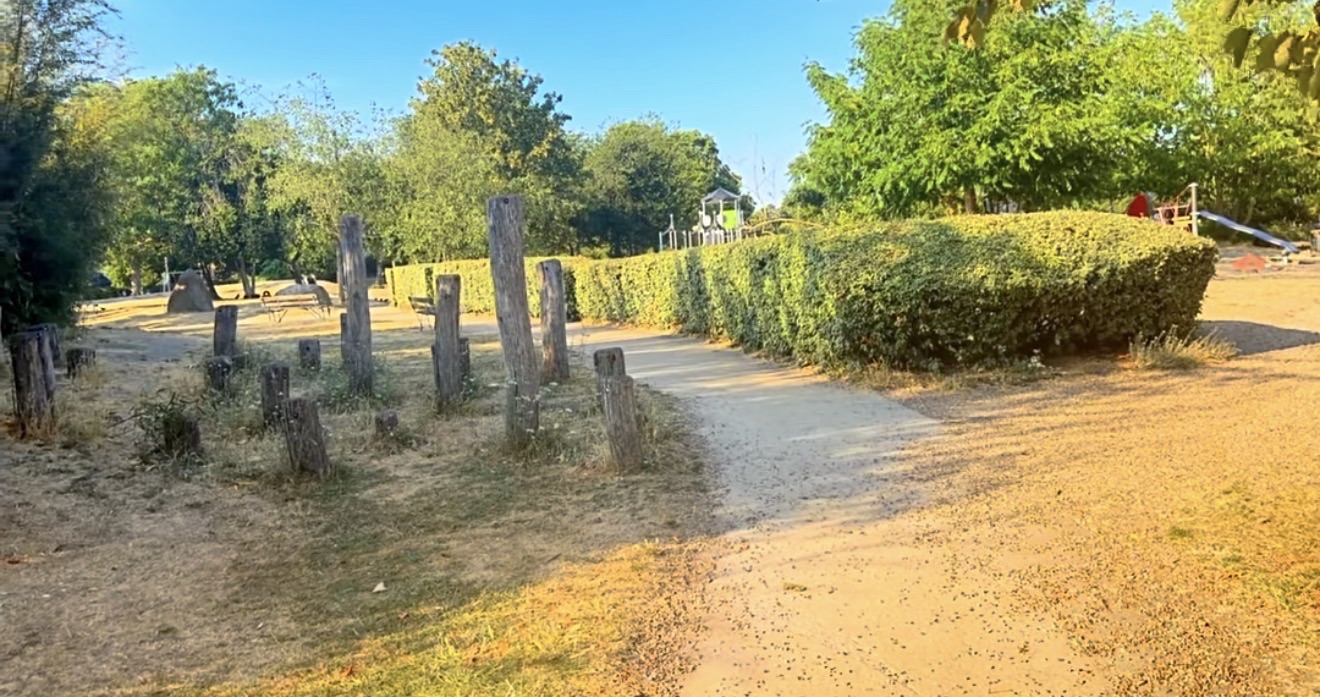
Victoria Park has two children’s play areas. The west-side V&A playground is fenced and aimed more towards younger children, with swings, climbing, sand and water pumps. The larger play area beside the Hub has bigger slides and climbing equipment and sits beside the splash-pool area and skatepark.
The Splash Pool Is Seasonal, and This Year’s Run Has Ended
For the 2026 school summer holidays, Tower Hamlets ran the splash pool from 23 July to 31 August, daily from 11:00am to 5:00pm, switched off whenever it rained. That season is now over, so anyone visiting from September onwards will find it closed until it returns next summer. Check the council’s page for next year’s dates closer to the time.
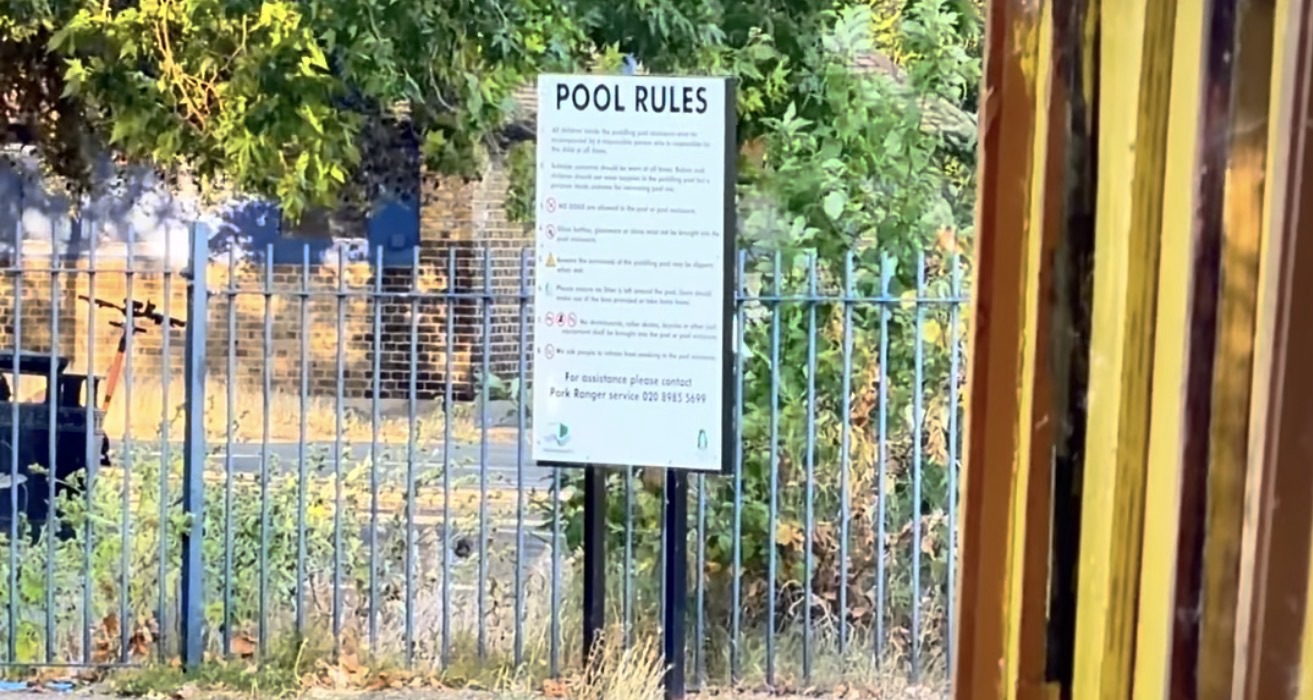
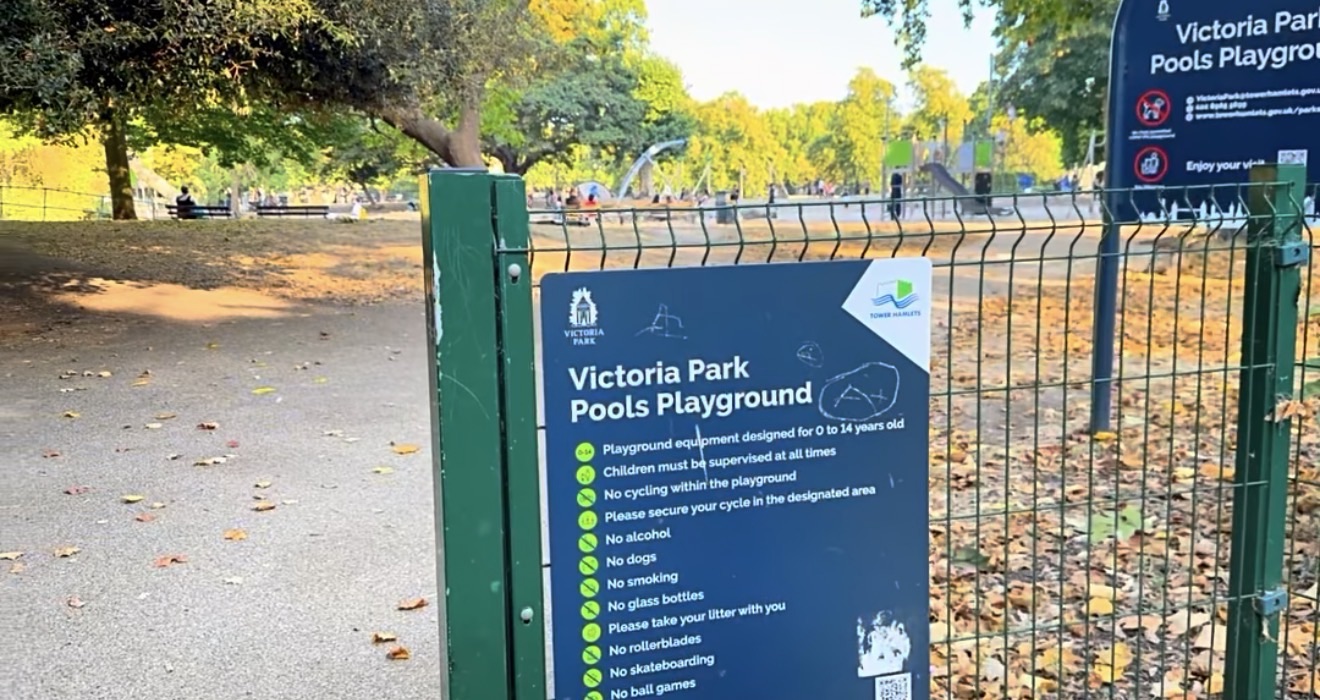
Even outside its published season, the empty pool is worth a look rather than a disappointment: on a quiet visit, it sat completely drained behind its railings, a reminder that this is a scheduled seasonal feature rather than something running year-round. Checking the current dates before travelling saves an unnecessary detour.
Three Ways the Park Changes Through the Week
Weekday Morning
Best for running, the lake, quieter paths and an uncomplicated café stop.
Sunday
The market becomes part of the visit, 10:00am–4:00pm between Bonner and Gore Gates.
Festival Period
Expect fencing, temporary infrastructure and route changes.
Accessibility and Toilets
The main park is generally level compared with hillier London spaces, and the broad surfaced routes are useful for wheelchairs and pushchairs. Tower Hamlets states that all public toilets have an accessible cubicle, both cafés are wheelchair accessible and both community buildings offer step-free access.
A Changing Places toilet is also available. Blue Badge holders may enter the park by vehicle and are encouraged to use the designated disabled parking bays.
Choose Transport by the Part of the Park You Need
Rules Worth Knowing Before You Arrive
- Victoria Park opens at 7:00am and closes at dusk, 365 days a year.
- Cars are not permitted inside except for Blue Badge access.
- Barbecues are not permitted.
- Cycling is allowed, but the council asks riders to be considerate and safe.
- Dogs are not allowed in children’s play areas.
- Boat hire, café hours, booked sport and events operate separately from general park opening times.
Summer Events
Victoria Park’s event programme is part of its identity, but it is also the biggest variable when planning a normal walk. Large music events can introduce fenced areas and temporary access changes before and after the public dates.
The free In the Neighbourhood programme, with music, sport, family theatre, film and workshops, ran from 24–27 August 2026 and has now finished for the year. The park’s event calendar is worth checking before any future summer visit, since fencing and access changes only apply around the specific dates an event is scheduled.
Frequently Asked Questions
Which side is better for children?
The east side has the larger playground, splash pool, skatepark, Hub café and nearby toilets. The west-side V&A playground is more suitable for younger children.
Is the splash pool open in summer 2026?
It ran from 23 July to 31 August 2026, 11:00am–5:00pm daily, and that season has now finished. It will return next summer; check the council’s page closer to the time for updated dates.
When is Victoria Park Market?
The official market runs every Sunday from 10:00am to 4:00pm on the Nightwalk between Bonner Gate and Gore Gate.
Where does the old London Bridge stonework come from?
Stone alcoves from the historic London Bridge, demolished in 1831, were preserved and later moved into Victoria Park rather than being lost entirely.
Is the park wheelchair accessible?
The principal routes are broad and generally level. Public toilets include accessible cubicles, both cafés are wheelchair accessible, community buildings have step-free access and there is a Changing Places toilet.
Research Method
This guide is based on a personal visit to the park, combined with independent research. Photographs on this page are original. The Pagoda Island board, the lake’s protected-habitat notice and the water birds panel were read and photographed on site. Opening times, vehicle and dog rules, cycling, toilets, accessibility and the 2026 splash-pool dates were checked against Tower Hamlets Council. Market times come from the market’s own site. Boat hire, café hours and event access change most often, so confirm them before travelling.
Official & Useful Sources
Tower Hamlets Council: Victoria Park
Confirms size, opening times, transport, vehicle rules, cycling, dogs, toilets and accessibility.
https://www.towerhamlets.gov.uk/lgnl/leisure_and_culture/parks_and_open_spaces/victoria_park/victoria_park.aspx
Tower Hamlets Council: Victoria Park Leisure
Source for playgrounds, cafés, boat hire, sports facilities and the outdoor gym.
https://www.towerhamlets.gov.uk/lgnl/leisure_and_culture/parks_and_open_spaces/victoria_park/leisure.aspx
Tower Hamlets Council: Victoria Park History
Traces the park’s origins, public petition, Pagoda history and People’s Park context.
https://www.towerhamlets.gov.uk/lgnl/leisure_and_culture/parks_and_open_spaces/victoria_park/history.aspx
Tower Hamlets Council: Splash Pool 2026
Gives the current summer dates, hours and rain closure policy.
https://www.towerhamlets.gov.uk/News_events/Events/2026/July/Splash-pool.aspx
Victoria Park Market
Confirms the weekly Sunday market time and location.
https://victoriaparkmarket.com/
On-site interpretation read during the visit
The Pagoda Island history board, the lake’s protected-habitat notice and the water birds identification panel.
Last checked: 10 September 2026
Author

Steve visits every park featured on EKS Parks in person, checking practical details against councils, park operators and official sources. Every guide is based on a personal visit, and the photographs published with it are his own.
About Steve