

Lloyd Park is one of those London parks where the quietest and busiest parts sit surprisingly close together. Behind the William Morris Gallery are formal gardens, mature planting and water. Move farther into the park and children, skaters, tennis players, dog walkers and community groups begin to take over the landscape.
That contrast is more useful to understand than a long list of facilities. Lloyd Park is not enormous, and it does not need a complicated route. What changes the visit is the order in which you meet its different personalities.
A first visit works particularly well when it begins with the historic and quieter side, then gradually moves towards play, sport and the more active parts of the park.
I spent some time exploring Lloyd Park myself, and there was quite a lot to see just walking around. One of the first things that caught my attention was the open green area with the flower beds: colourful flowers along the paths, plenty of benches, and the Gallery building sitting behind it all, which made this part of the park feel quite different from a normal stretch of grass.
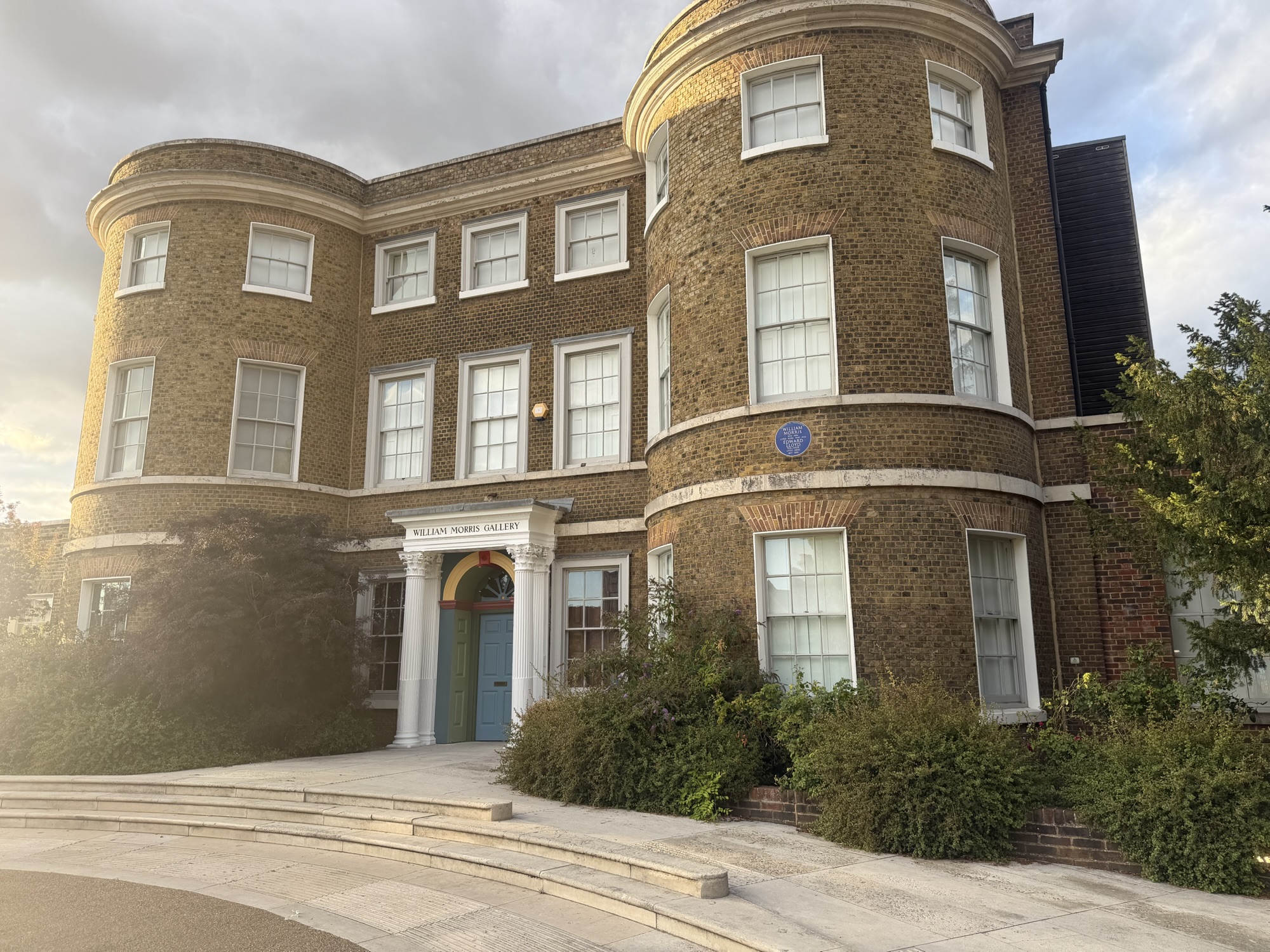
The building itself really stands out, with its old brick exterior, large windows and curved sections at the front. Even just walking around the outside while it was closed for renovation, it was interesting to look at.
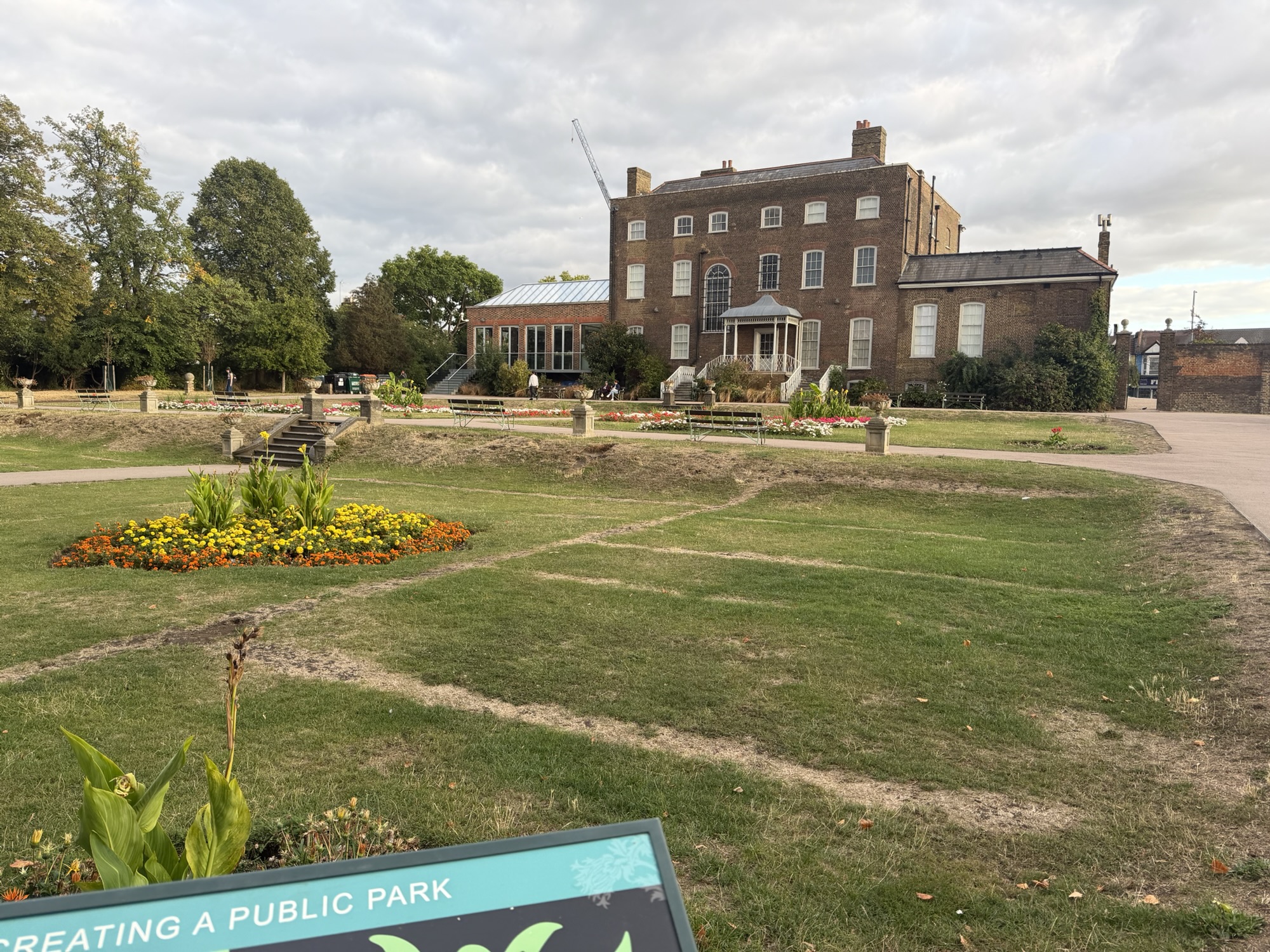
Start Quiet. Finish Active.
The most natural flow through Lloyd Park is almost the reverse of a typical family attraction day.
Begin around the William Morris Gallery and gardens while everyone is still happy to walk and look. Continue around the moat and mature landscape. Leave the playground, skatepark and sports areas until later, when sitting still has become less appealing.
For families especially, that order avoids the familiar problem of trying to persuade children to leave a good playground so adults can look at a garden afterwards.
The William Morris Side Gives the Park Its Identity
Lloyd Park would still function perfectly well as a neighbourhood park without its famous cultural connection. But the former family home of William Morris changes the way the surrounding landscape can be read.
Morris lived here during part of his childhood, and nature later became one of the strongest influences on his textile and wallpaper designs. Leaves, stems, flowers and repeating plant forms appear throughout his work.
That makes the gardens behind the Gallery particularly relevant rather than simply attractive landscaping around a museum.
The William Morris Gallery Has Reopened
When I visited in August 2026, the Gallery building was closed for its 2026 renewal project, so the photos of the house in this guide show it from the outside only.
The Gallery’s own website now lists it as open Tuesday to Sunday, 10am to 5pm, with free entry. Check the William Morris Gallery website before travelling for exhibitions and any one-off closures.
Deeney’s Café has reopened, and outdoor programming linked with the Gallery continues in Lloyd Park.
Anyone visiting specifically for the museum should note that it is closed on Mondays.
The park itself is worth the trip on any day.
The William Morris Garden Rewards a Slower Ten Minutes
The formal and planted areas near the Gallery can easily be missed when the playground is the main purpose of the trip.
That would be a shame, because this is where the relationship between Morris and the landscape is easiest to understand.
Flowers, foliage and repeating natural structures create the same type of visual rhythm that later appeared throughout his design work.
Volunteer gardeners work in the William Morris Garden on Thursdays from 10:00am–1:00pm, carrying out planting, pruning and general horticultural care.
That regular involvement is also part of Lloyd Park’s identity: several parts of the site are actively shaped by local volunteers rather than being maintained only as a council landscape.
What the History Boards Around the Park Actually Say
Lloyd Park has more history dotted around it than a first walk-through suggests, mostly told through a set of interpretive boards near the Gallery and the moat. Reading a few of them changes how the rest of the park feels.
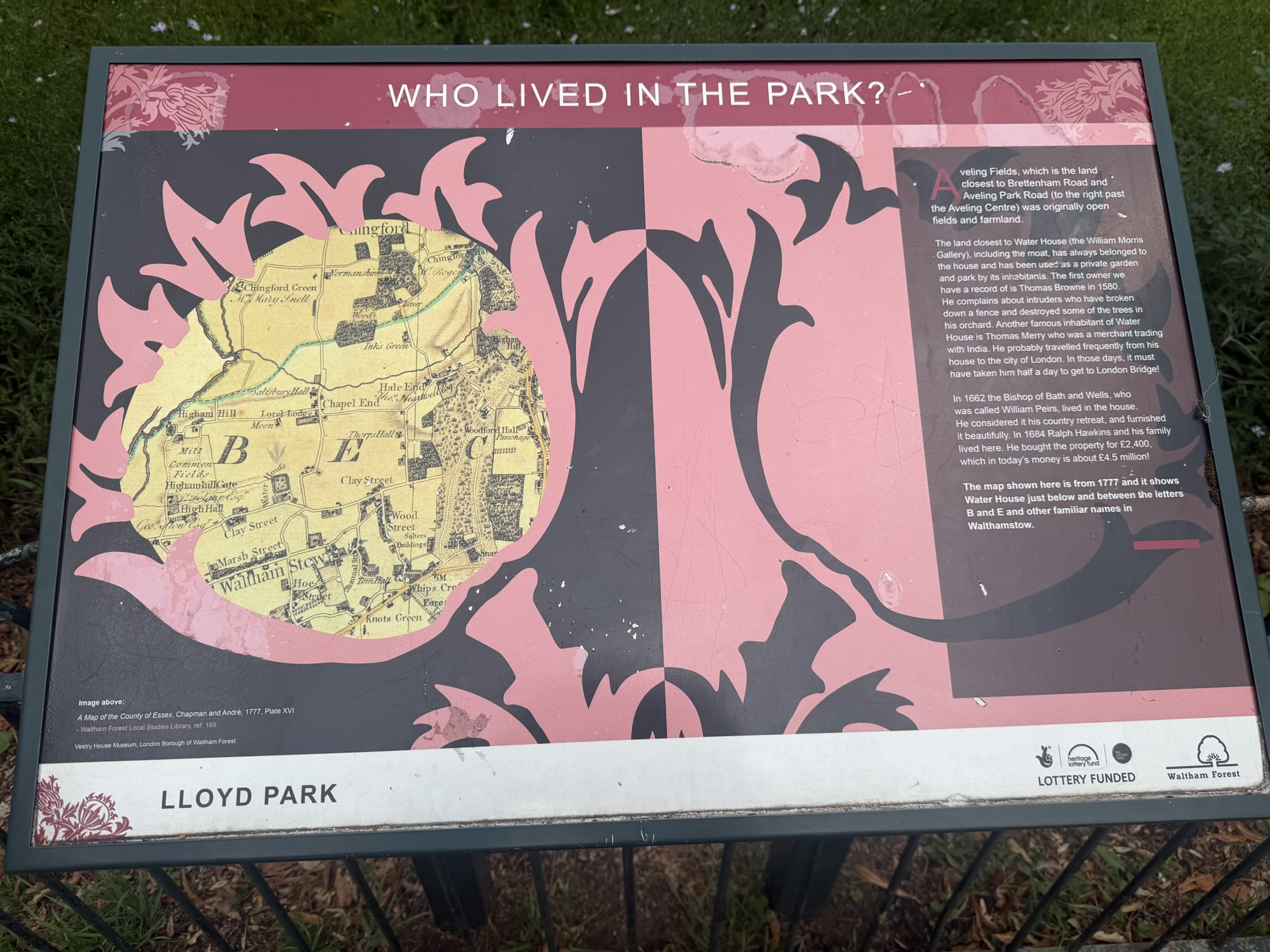
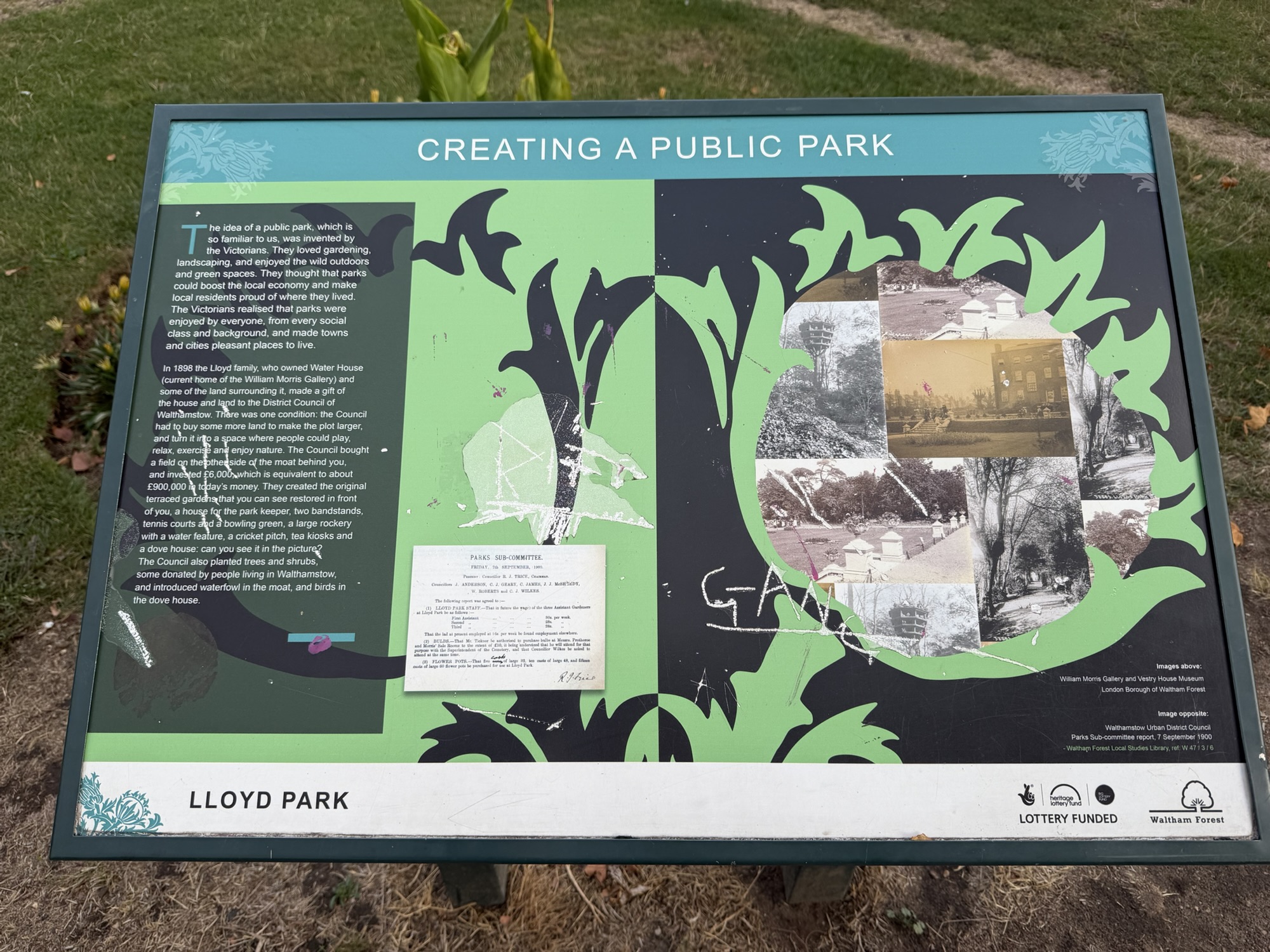
A building and a moat have stood on this site since very early times, with records going back to the 1500s. The earliest named owner of Water House, the building now known as the William Morris Gallery, was Thomas Browne in 1580, who complained about intruders breaking down fences and damaging his orchard. Later owners included the Bishop of Bath and Wells, who treated the house as a country retreat in 1662, and in 1857 the publisher Edward Lloyd bought the estate. Lloyd’s newspaper, the Daily Chronicle, outsold The Times, the Telegraph and the Evening Standard combined by 1914.
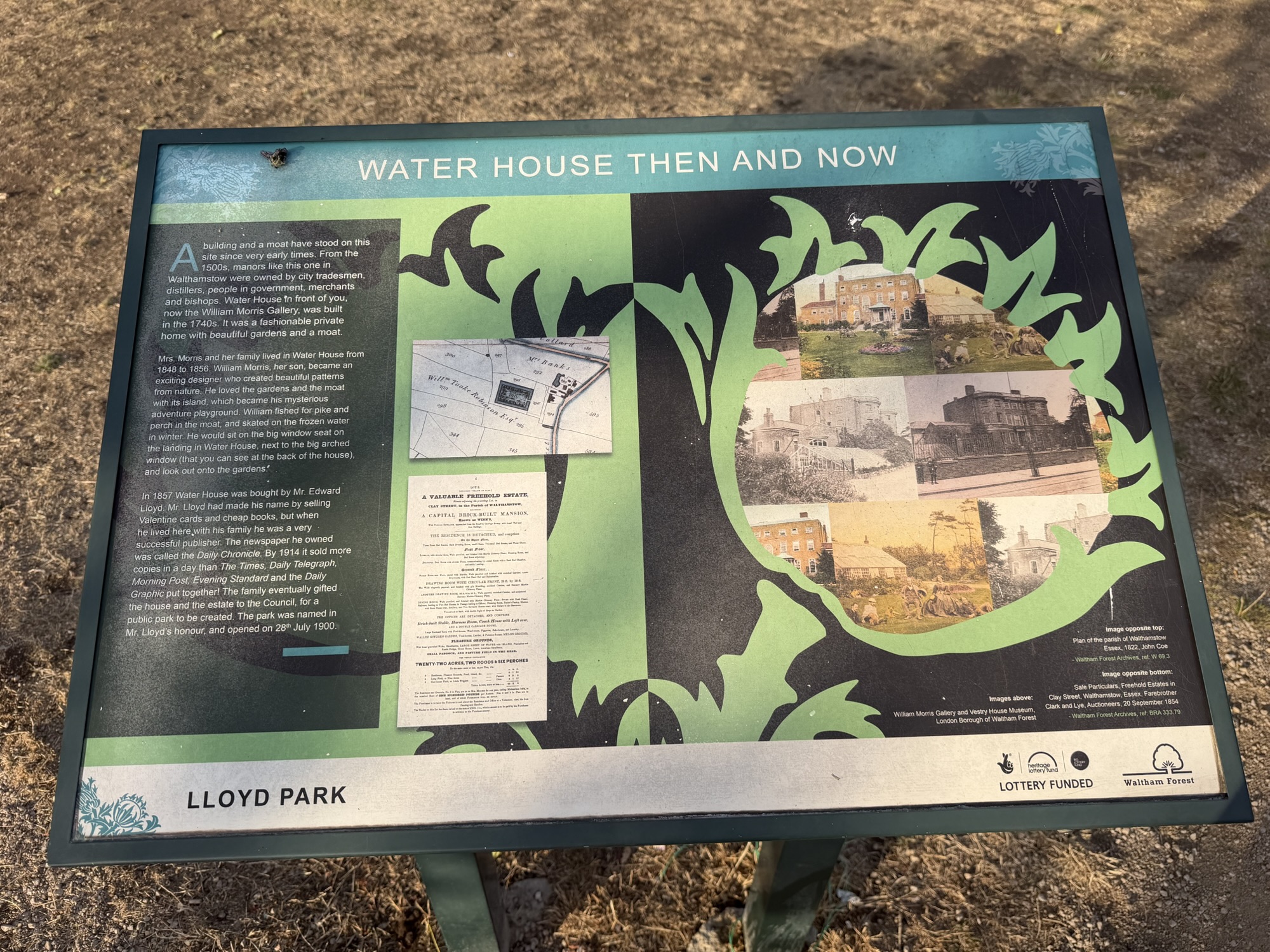
William Morris himself lived in the house as a child, between 1848 and 1856, and the moat was part of his childhood playground: he fished for pike and perch in it and skated on the ice in winter. The Lloyd family later gifted the house and land to the council in 1898, on condition that it be turned into a proper public park, and it opened to the public on 28 July 1900.
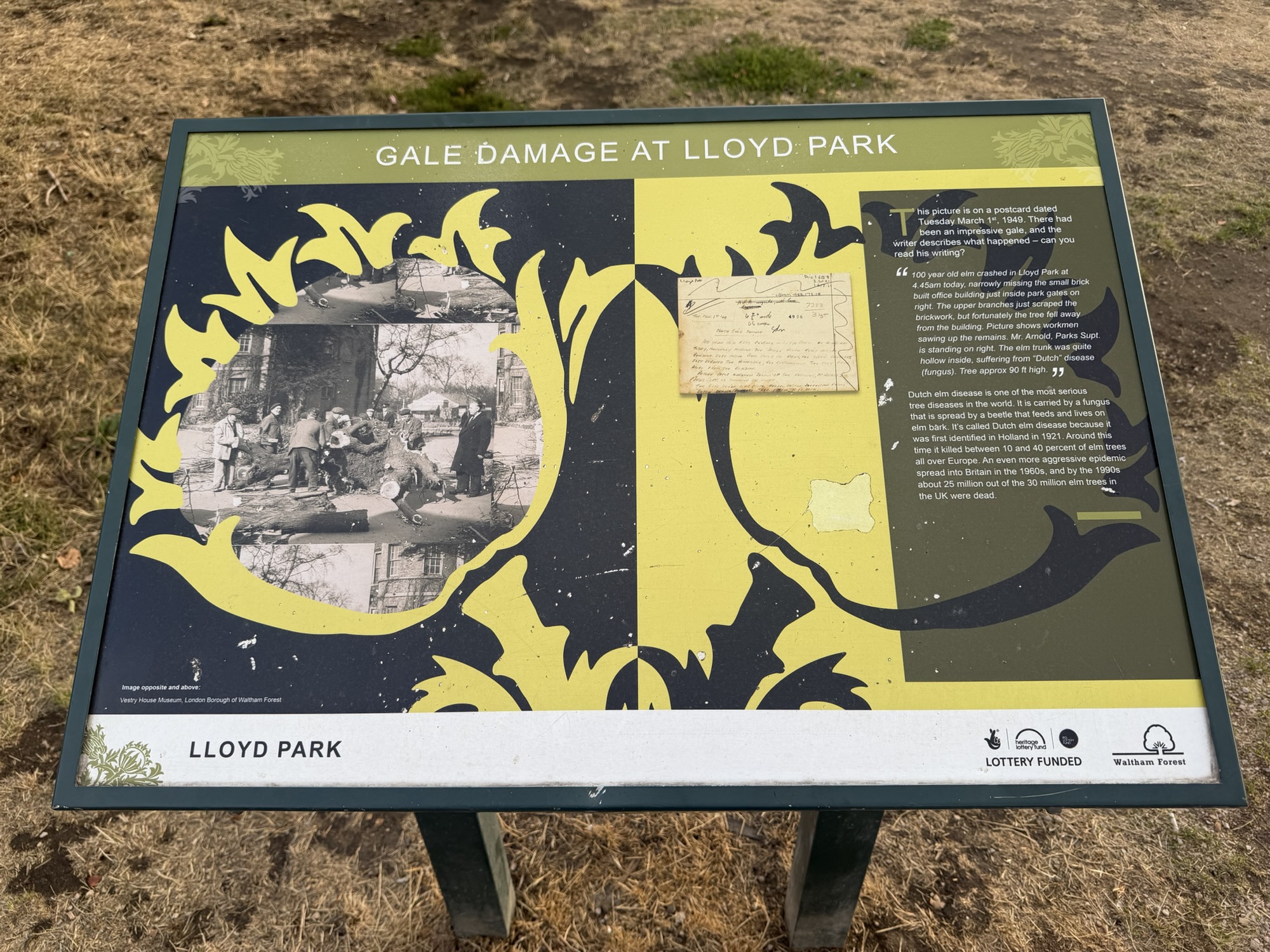
Not everything in the park’s history has been gentle. A board near the Gallery describes a gale in March 1949 that brought down a 100-year-old elm, narrowly missing the park keeper’s office. The tree turned out to be hollow, suffering from Dutch elm disease, a fungus that went on to kill around 25 million of the UK’s 30 million elm trees by the 1990s.
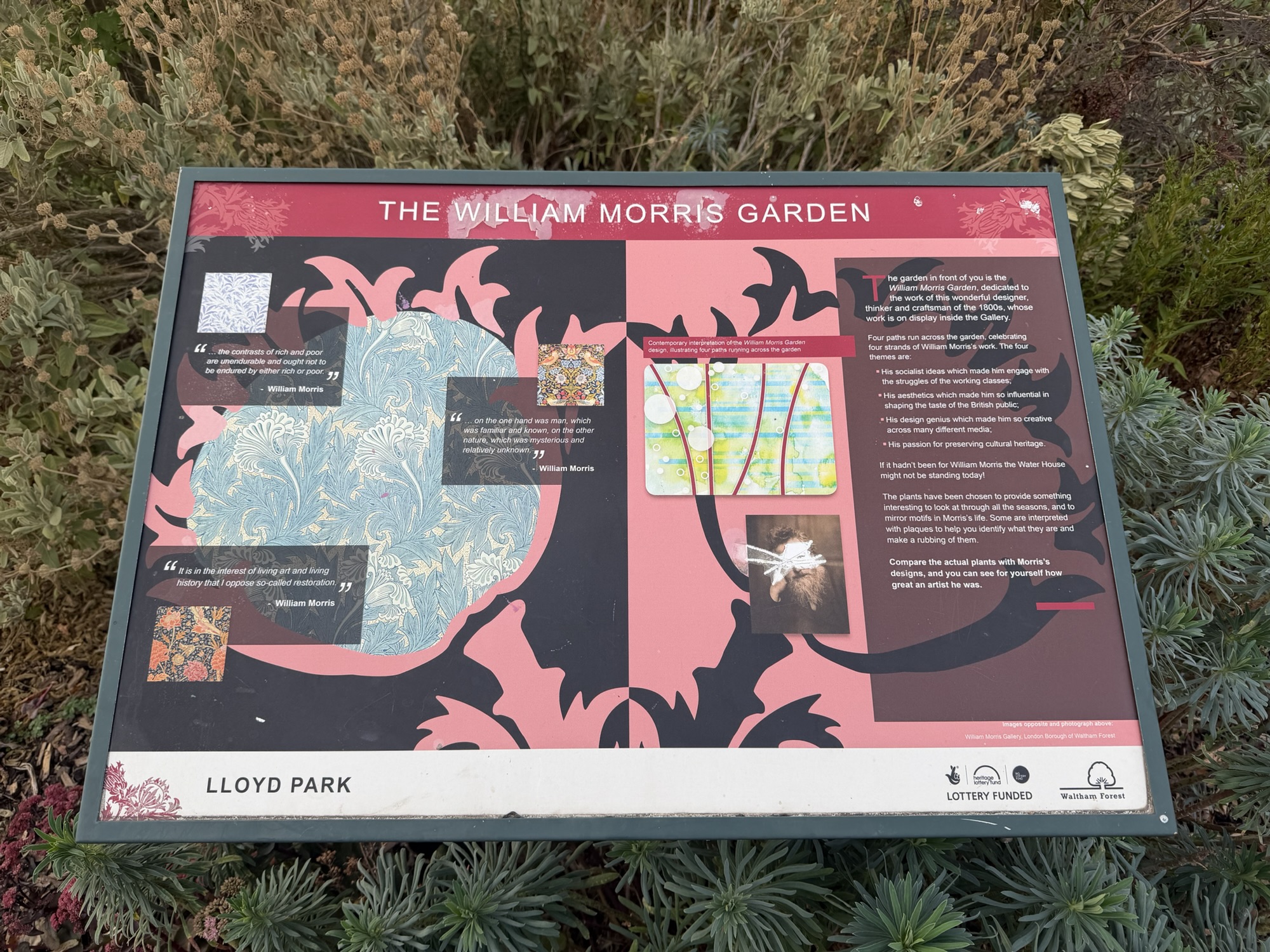
The William Morris Garden itself, laid out behind the Gallery, is organised around four paths representing four strands of Morris’s life and work: his socialist ideas, his aesthetics, his design genius, and his passion for preserving cultural heritage. It’s a nice bit of context for what otherwise just looks like an attractive flowerbed.
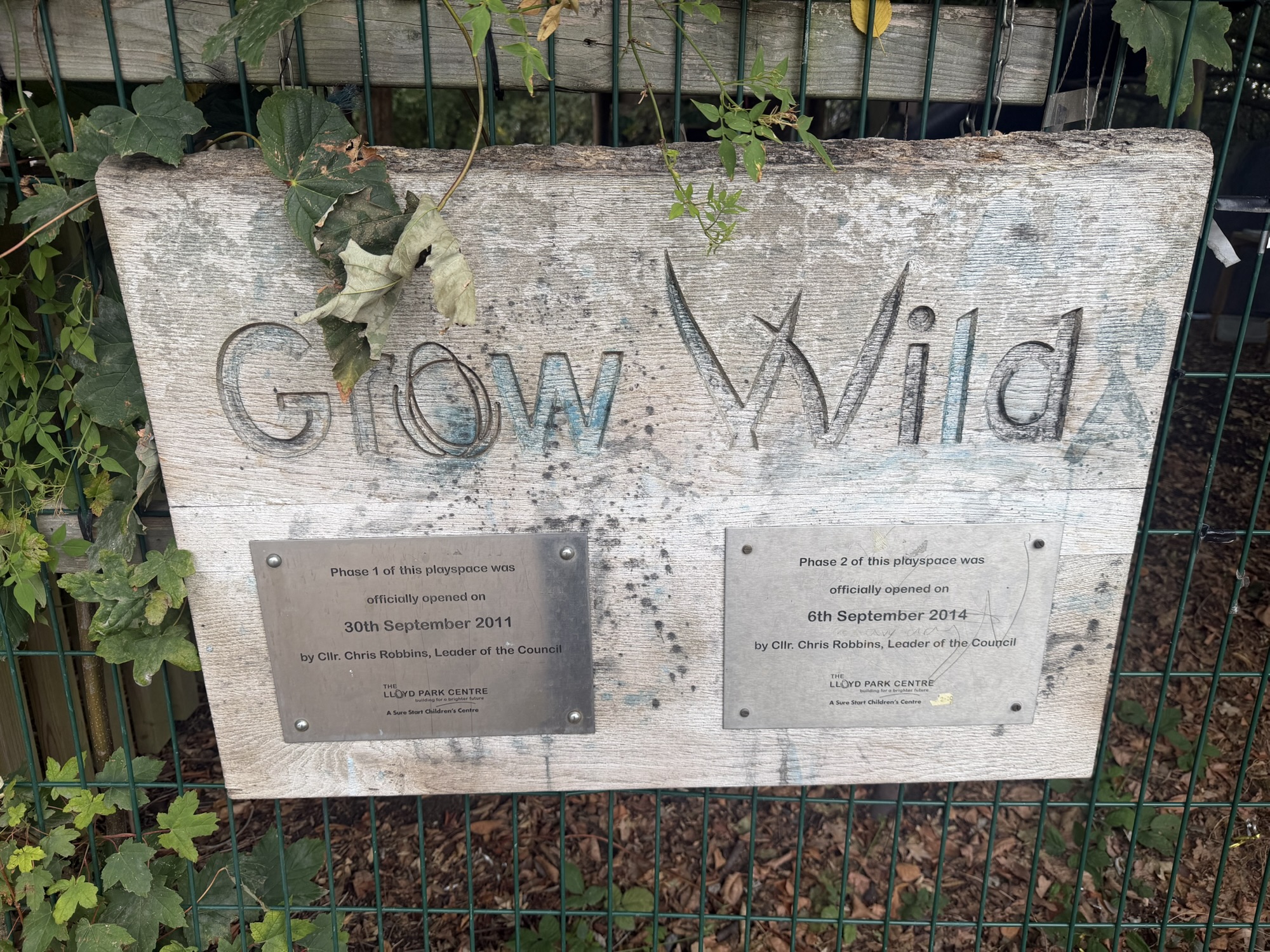
Closer to the playground, a weathered sign records that the Grow Wild playspace opened in two phases, in September 2011 and September 2014, run through the Lloyd Park Centre as a Sure Start Children’s Centre project.
The Moat Is the Point Where History Turns Back Into an Ordinary Park Walk
The moat and island provide the strongest visual link between the formal Gallery landscape and the wider public park.
Ducks, geese and moorhens are commonly present, while the island and mature trees create a more contained setting than the open recreation fields.
The water is a landscape and wildlife feature rather than a paddling area. Children and dogs should not enter it.
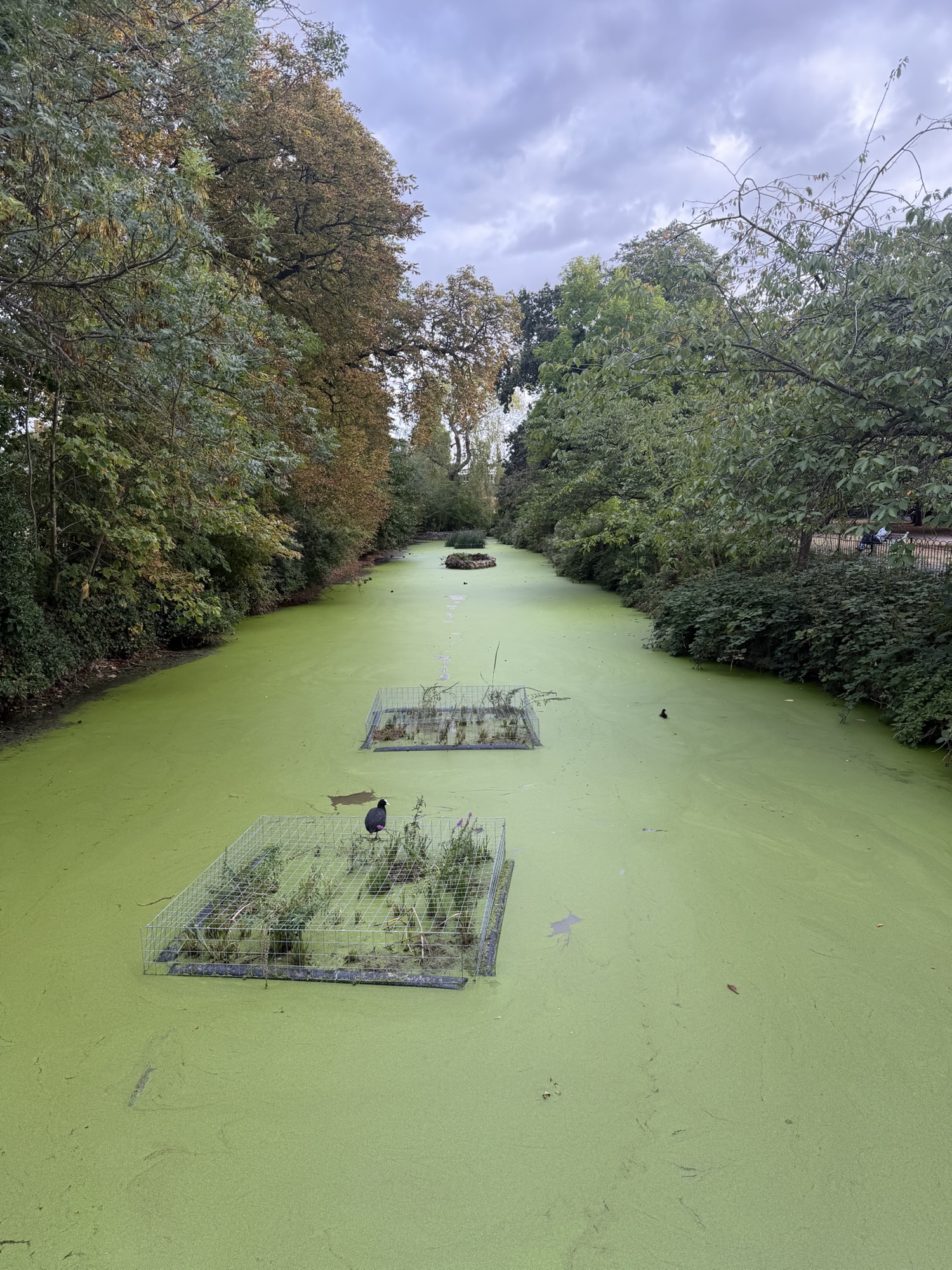
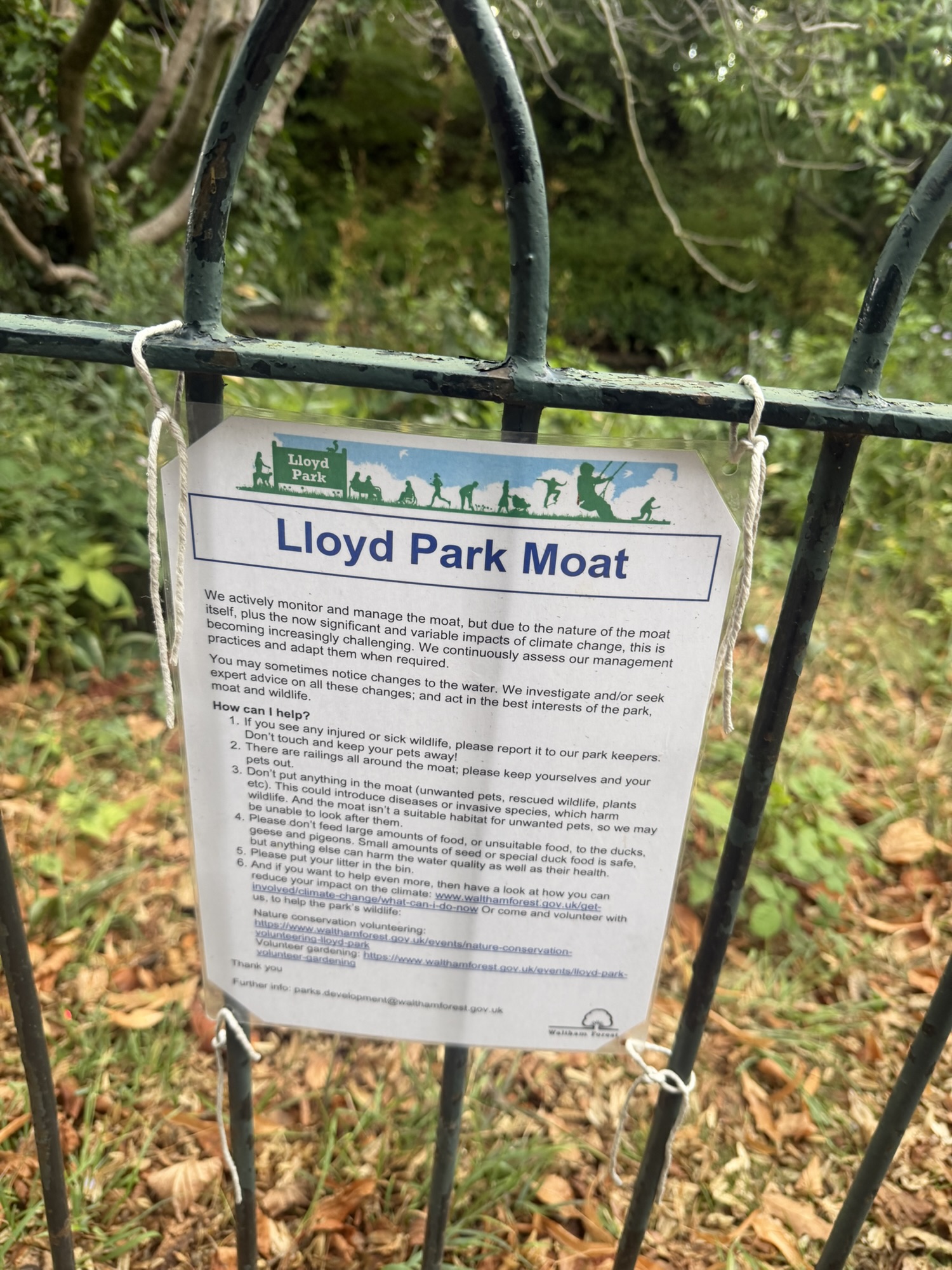
On my visit the moat was covered in a thick layer of green duckweed, with small wire-caged planting islands set into the water and a coot perched on one of them. It felt much quieter here than the rest of the park, closed in by trees on both sides. A sign on the railings explains that the council actively monitors and manages the moat, but that its condition can vary with the weather and climate.
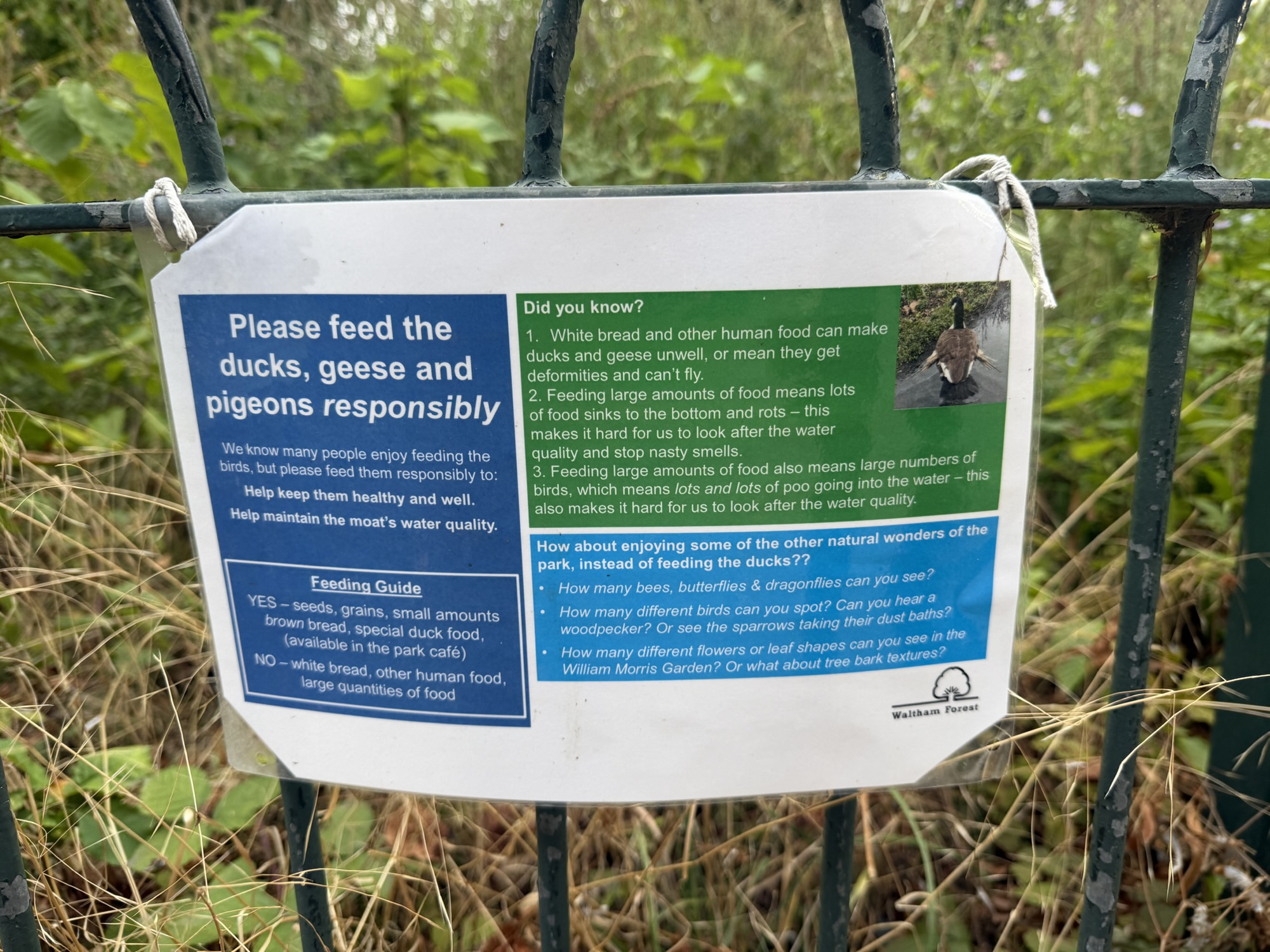
Nearby signs also ask visitors to feed the ducks, geese and pigeons responsibly: seeds, grains and small amounts of brown bread are fine, but white bread and large quantities of any food harm the birds and the water quality.
Then Let Children Take Over the Visit
Lloyd Park has several forms of play rather than one playground trying to serve every child.
Logs and less prescriptive features give children room to climb, balance and invent games.
More conventional equipment and sand-based play suit younger children and families looking for familiar facilities.
Useful when children simply need space to run rather than another fixed activity.
This variety makes Lloyd Park particularly useful for families with children who do not all want the same thing.
A playground visit also does not have to mean the adults lose every other part of the day. Gardens, water, café and open parkland are close enough to remain part of the same visit.
The Café Helps Make Family Visits Longer
The main park café operates from the Aveling Centre.
Waltham Forest currently lists normal summer opening from 9:00am–5:00pm, with winter closing moving to 4:00pm.
Public toilets are available during café hours, including accessible provision and baby changing.
Deeney’s at the William Morris Gallery provides another food option near the more historic side of the park.
Older Children Do Not Have to Pretend They Still Like the Playground
One of the park’s most useful strengths is that it continues to offer something as children get older.
A dedicated skate and scooter area provides a genuine older-child and teenage activity rather than a token ramp beside the playground.
Outdoor practice areas are available free of charge and do not require booking.
Outdoor tables are free to use. Visitors need to bring their own bats and balls.
Public courts are available through the borough’s booking system. Current availability and charges should be checked before travelling specifically to play.
Exercise equipment adds a reason for adults to use the park actively without entering an indoor leisure centre.
Bowling greens and pétanque broaden the recreation offer beyond youth-focused sport.
A Quieter Skate Session Can Be Much Better for Beginners
A busy wheeled-sports area has an informal rhythm that experienced riders understand automatically.
Beginners should watch where riders are entering, crossing and landing before stepping into a line. Children with little experience are likely to feel more confident outside the busiest after-school and weekend periods.
A helmet and appropriate protection are sensible even when other riders choose not to wear them.
On Saturdays, Part of the Park Becomes a Food Market
This changes the shape of a Saturday visit enough that it is worth planning around rather than stumbling into.
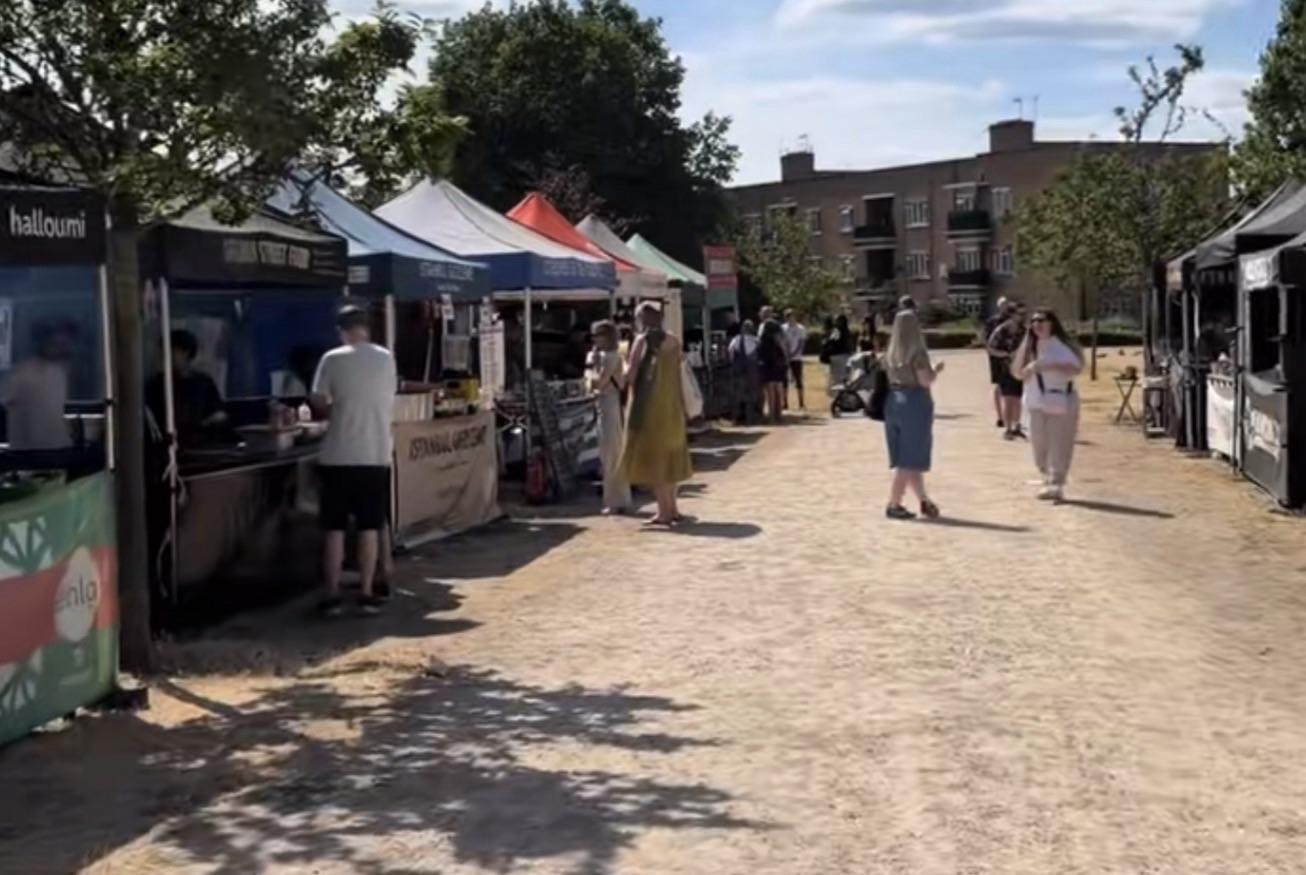
Lloyd Park Market runs every Saturday, 10:00am to 4:00pm. It occupies the avenue near the Gallery end of the park, with rows of gazebos on both sides of the path.
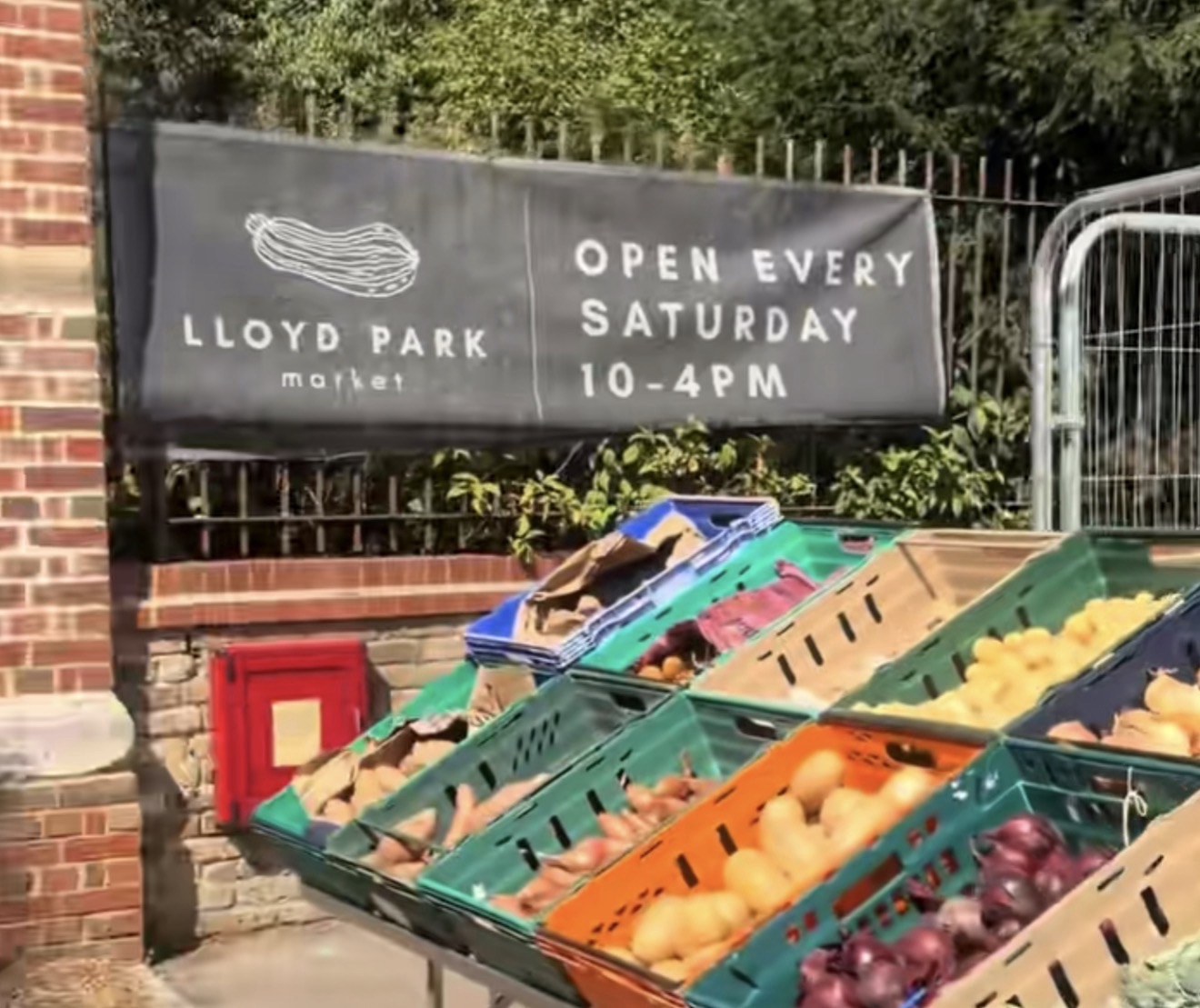
It is not a farmers’ market in the polite, half-empty sense. It is a working street-food market with a genuine queue culture, mixed in with fruit and vegetable stalls selling by the crate.
What is actually there
The mix leans strongly international. Stalls seen on a recent Saturday included Himalayan dumplings, Istanbul street food, halloumi, a Walthamstow hot dog trader and fresh sugarcane juice pressed on the spot. Prices sit in normal London street-food territory: a mix-and-match dumpling box ran from around £8.50 for six up to £12.50 for ten, with rice boxes alongside.

Why this matters for planning
Two practical consequences follow.
First, you do not need to bring lunch on a Saturday. The café at the Aveling Centre is not the only option, and the market gives considerably more choice than a standard park kiosk.
Second, the market sits on the route between the Gallery end and the rest of the park. If your plan was a quiet garden walk, a Saturday between ten and four is the busiest possible time to attempt it. Move the garden part of the visit to earlier in the morning, or choose a weekday.
Most stalls are card-friendly, but some smaller traders still prefer cash.
The Community Side Is More Important Than It First Appears
Lloyd Park does not function only because people visit it. Local groups actively contribute to the place.
Gardening
Volunteers work weekly in the William Morris Garden, maintaining planting and improving the appearance of the formal landscape.
Green Gym
A conservation group works on activities including tree planting, meadow management and wetland maintenance.
The site also includes creative studios, community rooms, gallery space and facilities that can host organised local activity.
This makes Lloyd Park slightly different from a park where community involvement happens mainly through using the playground or attending occasional events.
Accessibility and Practical Facilities
The Wayfinding Sign Is Worth Reading on Arrival
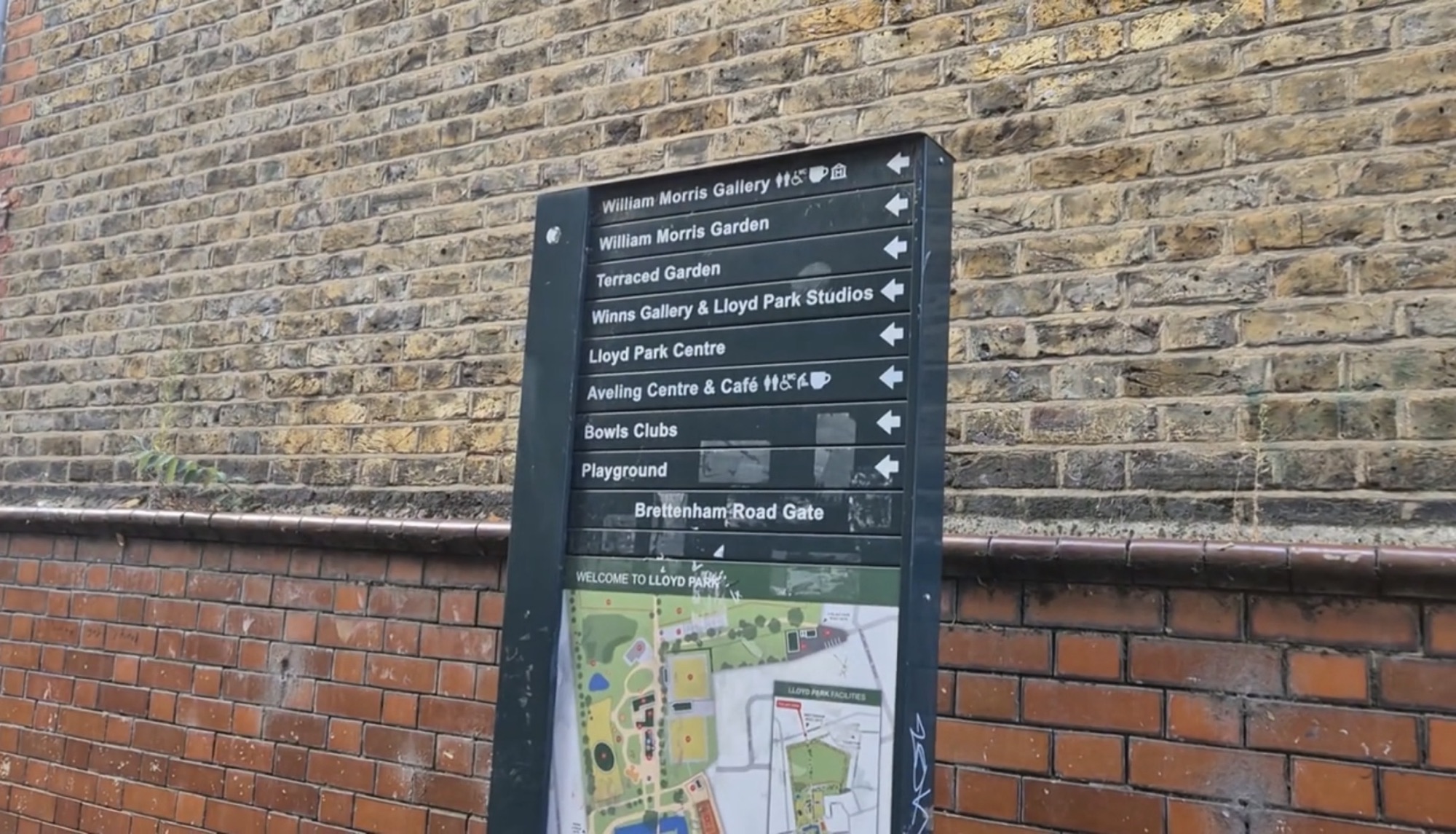
Lloyd Park holds more separate buildings than most visitors expect, and the signboard at the Forest Road entrance lists them all in one place. Beyond the Gallery and its garden, the park contains a Terraced Garden, Winns Gallery and Lloyd Park Studios, the Lloyd Park Centre, the Aveling Centre and Café, bowls clubs and the playground, with a further exit at the Brettenham Road Gate.
Winns Gallery is a separate exhibition space from the William Morris Gallery, so it is a second cultural stop in the park alongside the main building.
Waltham Forest publishes a dedicated access map and guide for Lloyd Park.
Available at the Aveling Centre during café opening hours.
Available alongside the main toilet provision.
Provision is available near the main entrances, including arrangements close to the William Morris Gallery.
The park is relatively compact, but visitors with specific surface or step-free needs should use the current council access map.
Getting There
Lloyd Park is on Forest Road, Walthamstow, London E17 4PP.
The most useful main station, served by the Victoria line and London Overground. The council gives a walking time of around 15 minutes.
Routes including 34, 97, 123, 215, 275 and 357 serve nearby roads.
Cycle racks are provided at several entrances and activity areas.
Public transport is usually simpler than driving, particularly on warm weekends and during community events.
Parking
A pay-and-display car park is available beside the Forest Road entrance via Bedford Road.
Spaces are limited, and the William Morris Gallery also warns that parking in the area can become busy.
Blue Badge provision is available, including spaces close to the Gallery by arrangement.
Dogs
Dogs are welcome across suitable areas of Lloyd Park, but Waltham Forest publishes a dedicated dog map showing where restrictions and off-lead areas apply.
This is preferable to assuming one rule covers the entire site.
Children’s play areas, sport, formal gardens and wildlife around the moat all require more control than the open field areas.
When to Visit
Weekday mornings are the strongest option for gardens, a quieter moat walk and general park use before after-school activity increases.
Warm weekends bring the strongest family atmosphere around playgrounds and café areas.
Spring and early summer suit the William Morris Garden particularly well.
Autumn keeps sport and everyday use active while mature trees give the park more colour.
On Mondays, remember that the William Morris Gallery itself is closed. The park, gardens and café remain usable.
How Long Makes Sense?
45–60 minutes is enough for gardens, moat and a general circuit.
90 minutes to two hours is more realistic for families using the playground.
Two to three hours works when older children also want skating or sport and the visit includes food.
Combining the museum with the park can comfortably justify a longer half-day visit.
Frequently Asked Questions
Is Lloyd Park free?
Yes. General park entry, playgrounds, skate and scooter facilities, basketball, outdoor gym and several recreation areas are free. Some sports bookings and organised activities have separate charges.
Is the William Morris Gallery open?
Yes. After its 2026 renovation, the Gallery lists its hours as Tuesday to Sunday, 10am to 5pm, with free entry. It is closed on Mondays, so check its website before travelling.
Does Lloyd Park have a playground?
Yes. There is natural play, a more conventional play area and sand-based play.
Is there a skatepark?
Yes. Lloyd Park has a dedicated skate and scooter facility suitable for a range of ages and abilities.
Is there a market at Lloyd Park?
Yes. Lloyd Park Market runs every Saturday from 10:00am to 4:00pm on the avenue near the Gallery end. It is a street-food and produce market with international hot food stalls alongside fruit and vegetable traders, so there is no need to bring lunch on a Saturday.
Is Lloyd Park suitable for wheelchairs?
Waltham Forest provides a dedicated access guide and map. Accessible toilets and parking are available, but visitors with specific route requirements should check the current access information.
Research Method
This guide combines two personal visits to the park with independent research. Photographs on this page are original.
The Saturday market, its opening hours and trader mix, the Gallery closure notices and the entrance wayfinding sign were recorded on site during a visit in August 2026. A second visit in September 2026 covered the William Morris Garden, the moat, and the history boards placed around the park, which are the source for the historical details on Water House, the Lloyd family, the 1949 gale damage and the Grow Wild playspace. Food prices quoted are those displayed at the stall on that day and will change.
Current facilities, accessibility, cafés, sport, volunteering, transport and parking were checked against the London Borough of Waltham Forest. Information relating to the William Morris Gallery’s 2026 closure and renovation was checked against the Gallery’s official information.
Gallery access, café hours, market trading and sports bookings can all change, so check official information when a specific part of the visit is essential.
Last checked: 9 September 2026
Official & Useful Sources
Nearby guides: Walthamstow Wetlands, Epping Forest and Lee Valley Regional Park
Author

Steve visits every park featured on EKS Parks in person, checking practical details against councils, park operators and official sources. Every guide is based on a personal visit, and the photographs published with it are his own.
About Steve