

Updated September 2026: this guide was first published in July 2026 and has been fully rewritten after my own visit in late August 2026, with my own photos.
I visited Hyde Park on a properly hot day in late August, and getting there was half the story before I’d even reached a tree. There were no trains running from where I was coming from, so it was a mix of walking and buses to get in. Once inside, I didn’t have a fixed plan, I just picked a direction and let the park decide the rest.
How I got there: no trains that day, so I pieced the journey together on foot and by bus. By the time I actually reached the park gates, the heat had already made itself known, which turned out to set the tone for the whole walk.
Getting OrientedThe Broad Walk, and a River That Turned Out to Be a Lake
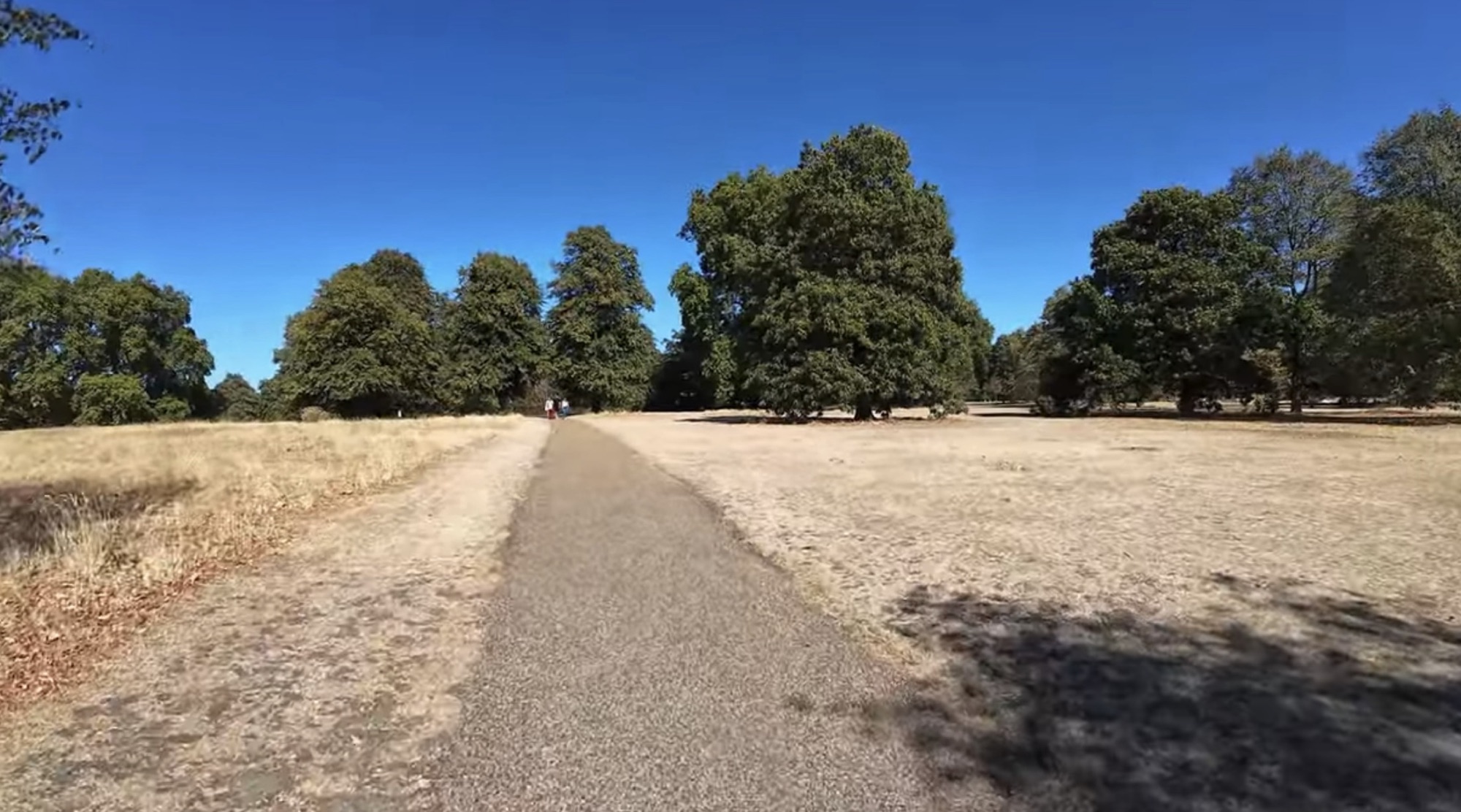
I started along the Broad Walk, which runs roughly parallel to Park Lane. It was very warm, but the walk itself was pleasant enough, with plenty to look at on either side rather than just open grass to trudge across.
Partway along I noticed water through the trees and changed direction to get a closer look. I called it the Serpentine River in my head at the time, it was only afterwards that I realised it’s actually the Serpentine Lake, not a river at all, despite the winding shape that clearly gave it the name.
The SerpentineBoats, a Restaurant, and Two Warning Signs
Down by the water there’s a restaurant right beside the lake, and boats are available to hire nearby. I didn’t go out on one myself, but watching them go past brought back memories of doing something similar a long time ago, and I made a mental note to come back and actually do it next time rather than just watch.
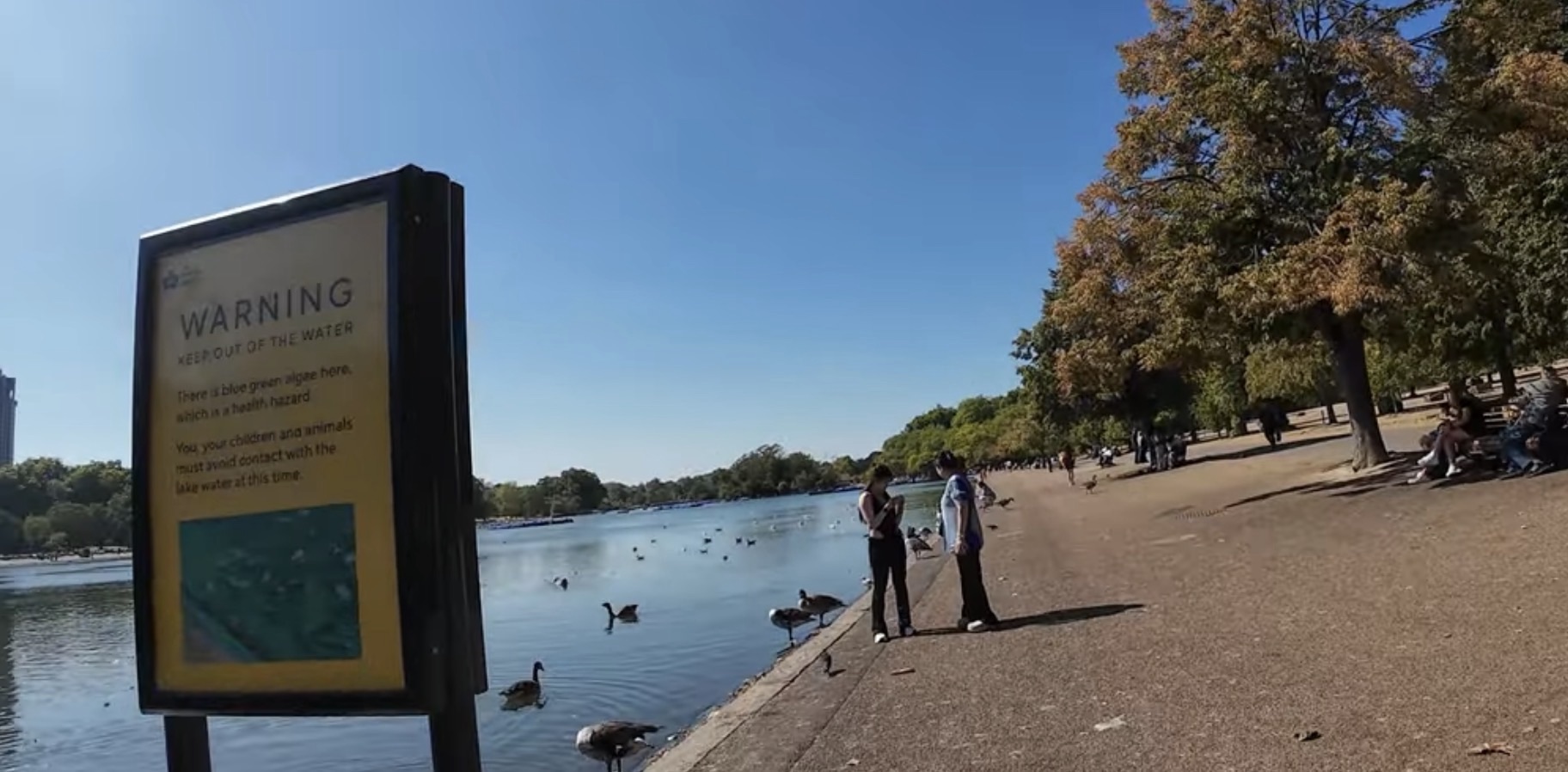
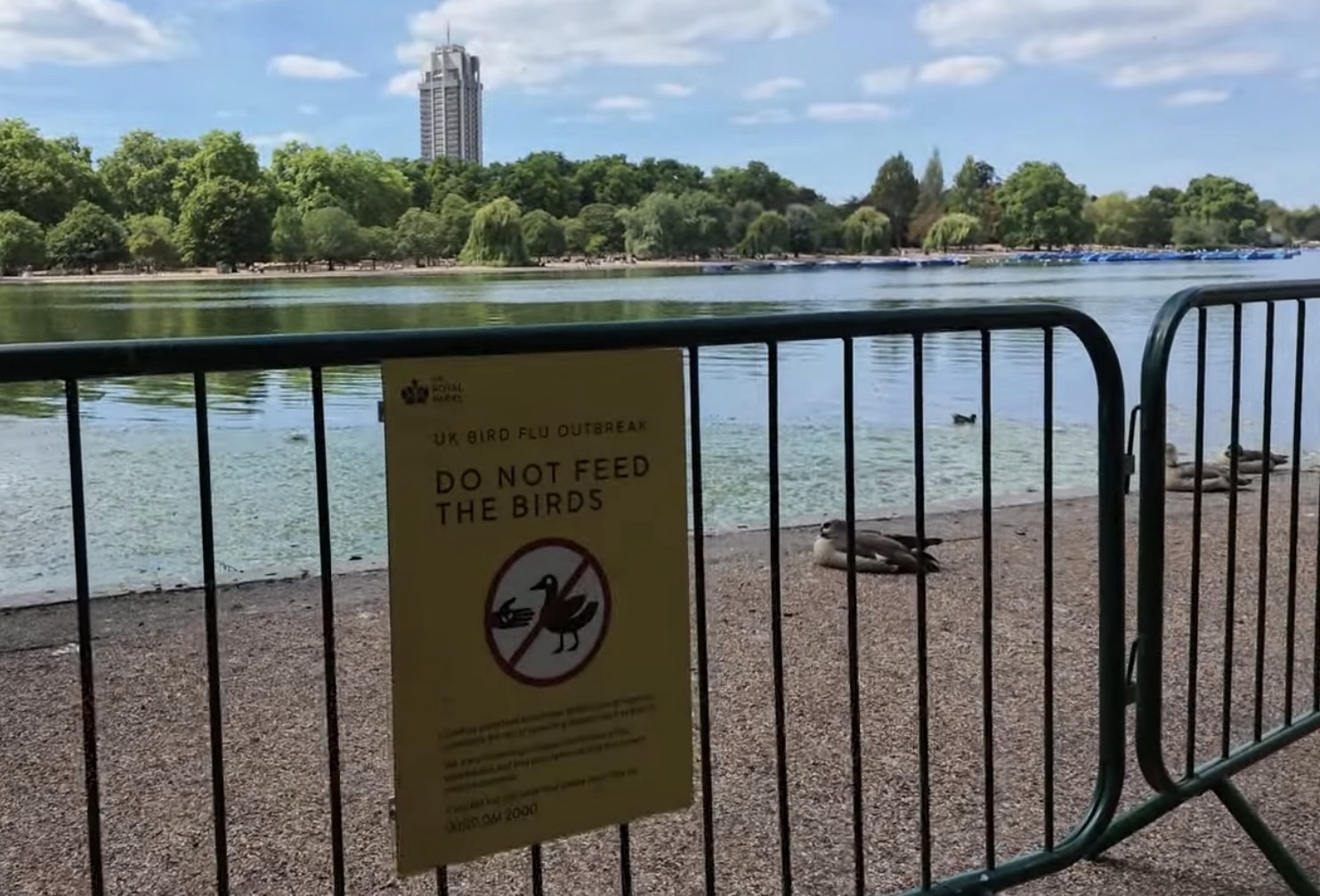
Between the two of them, it was a reminder that a lake this popular with both people and wildlife needs constant managing, even on a day when everything looked calm and blue from a distance.
The Norwegian Navy StoneA Piece of History I Almost Walked Past
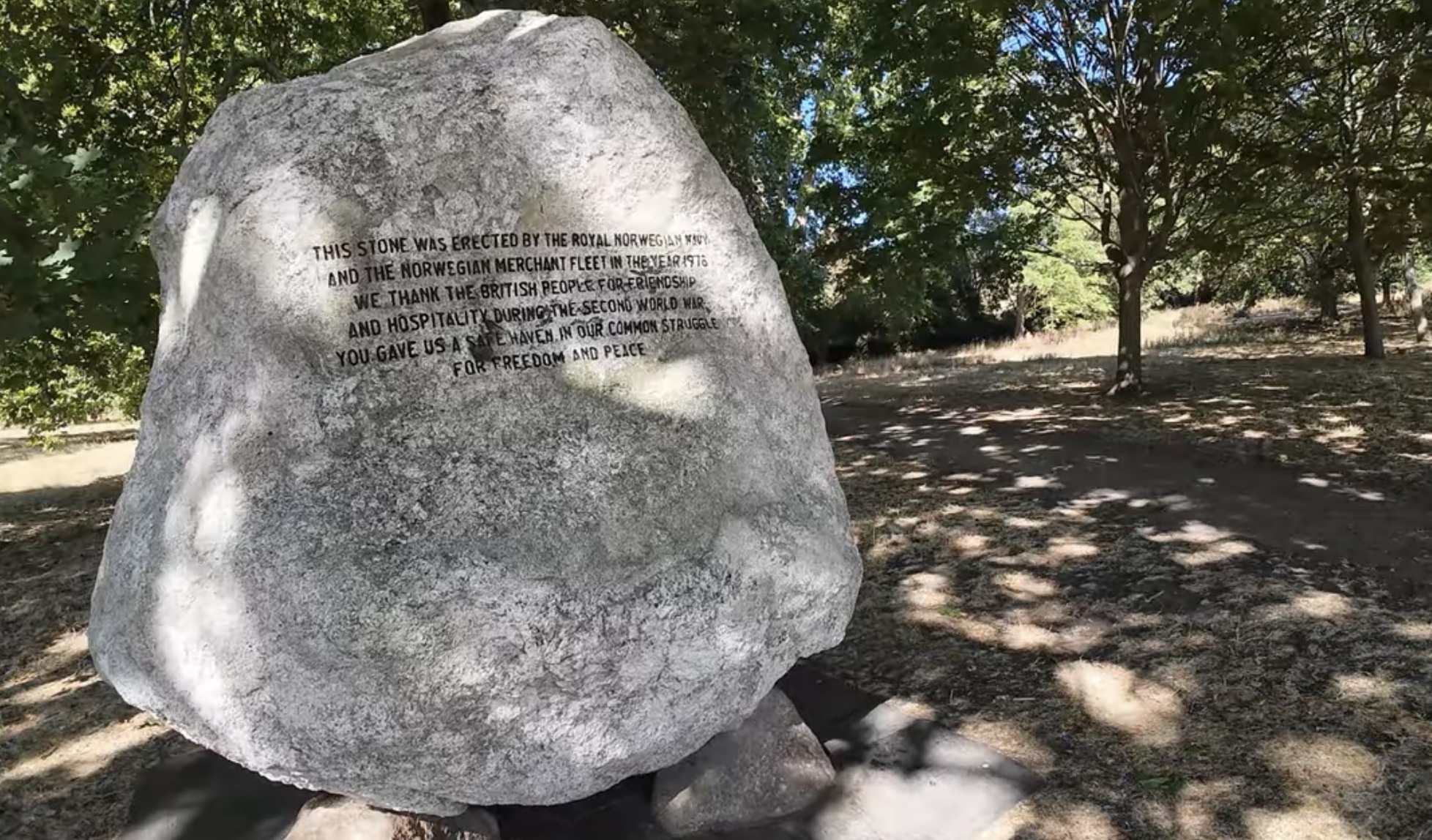
This was the find of the day. The stone was given by the Royal Norwegian Navy and the Norwegian Merchant Fleet in 1978, thanking Britain for the friendship and hospitality shown to Norwegians during the Second World War, the inscription describes the safe haven Britain gave them in their common struggle for freedom and peace.
Reading the ParkMaps, a Volunteer Hut and a Fingerpost
A little further on I stopped at one of the large map boards to work out where I actually was relative to Kensington Gardens next door, the two run into each other without an obvious line, and the board made that much clearer than my own sense of direction had managed.
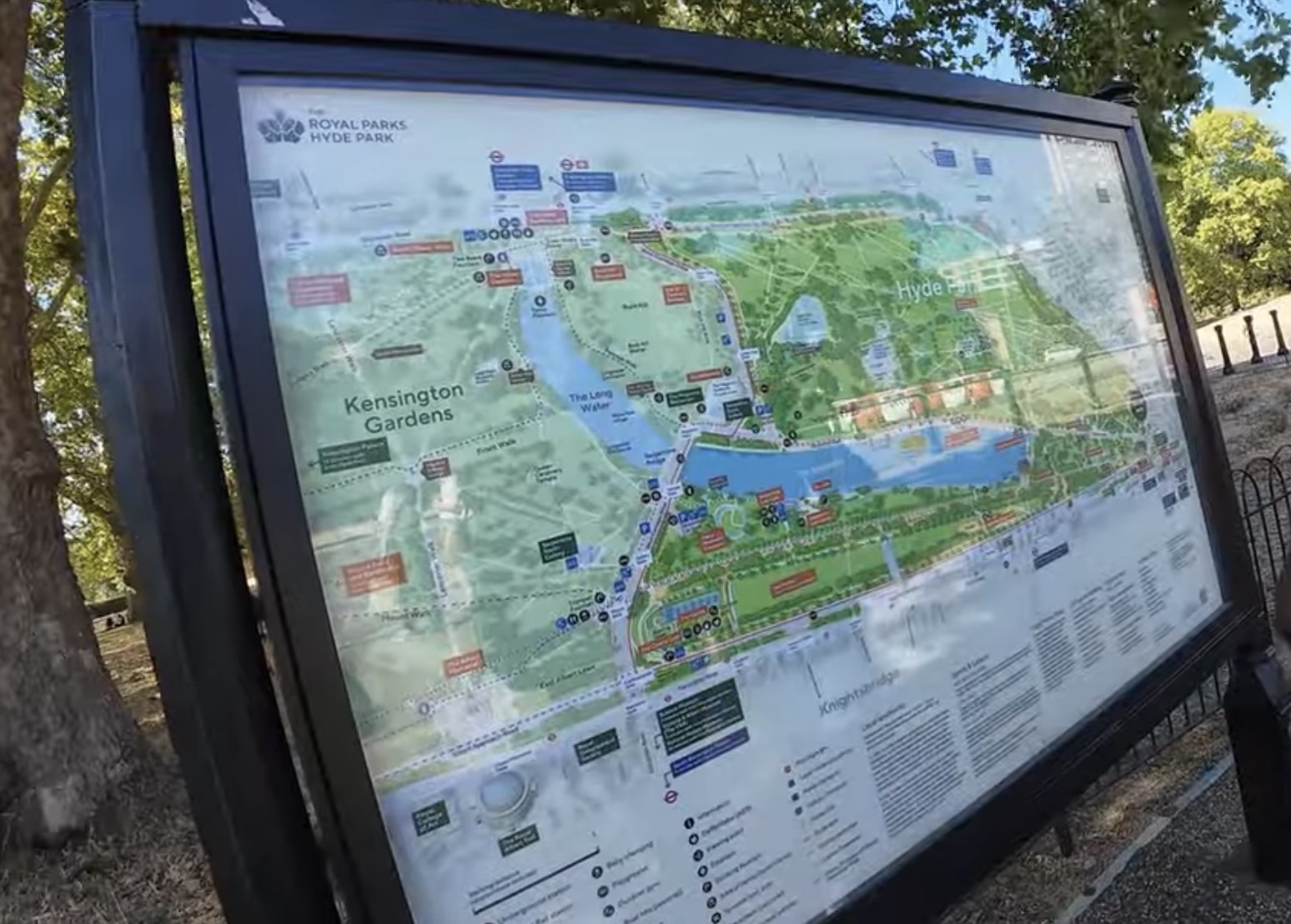
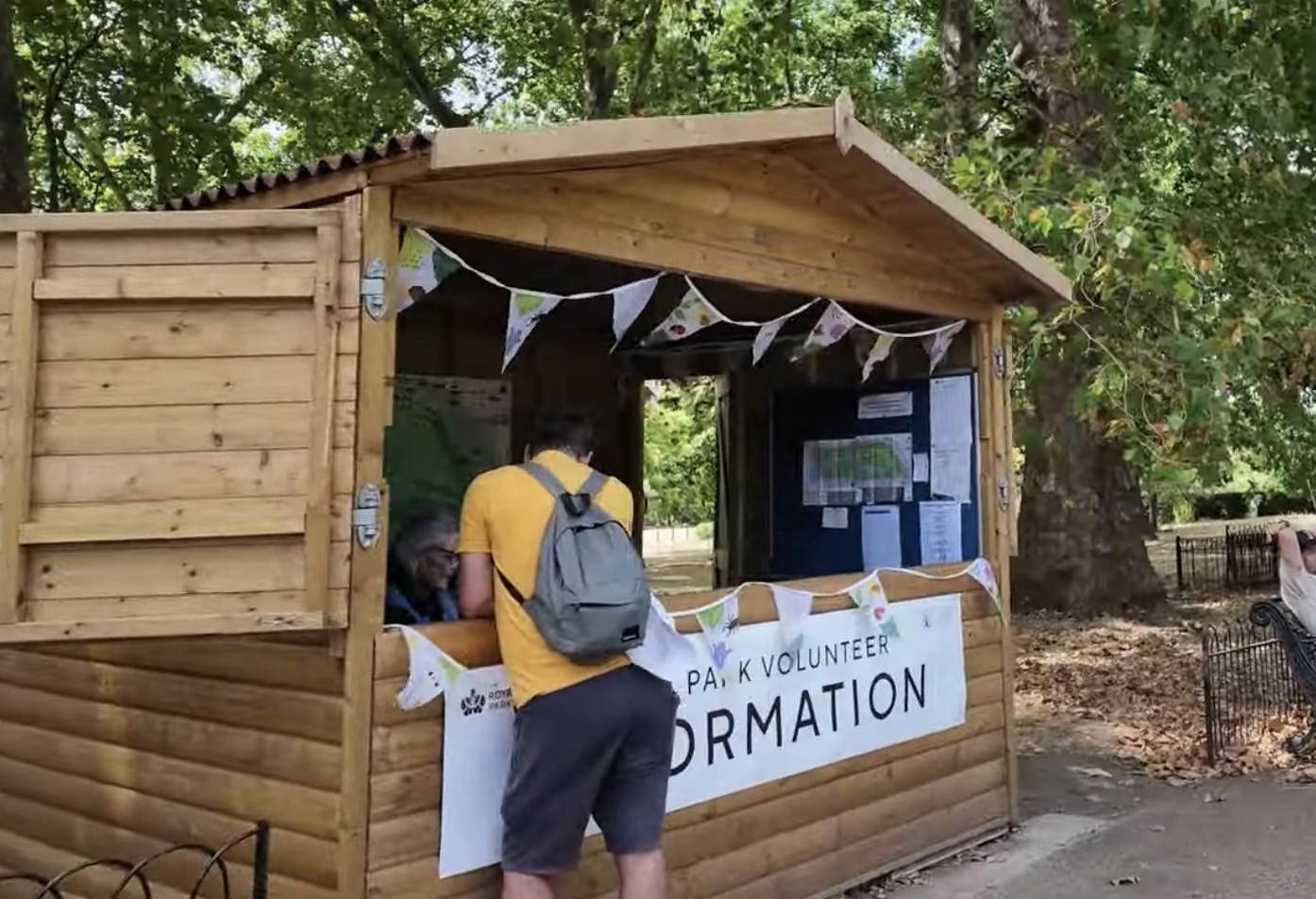
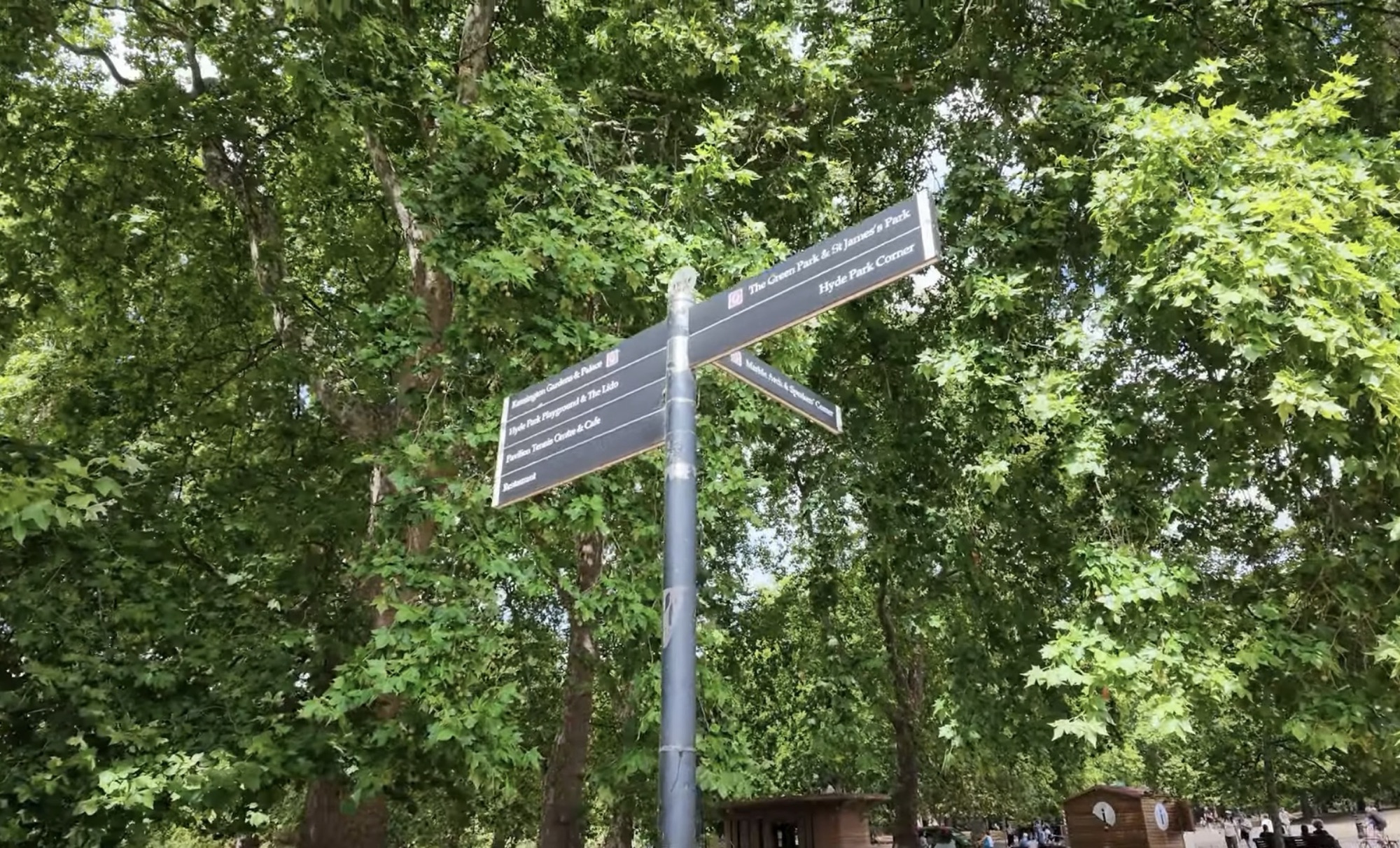
Between the map board, the volunteer hut and the fingerposts scattered through the trees, I got the sense the Royal Parks assume, correctly, in my case, that most people walking through Hyde Park have no real plan and need occasional help remembering where the exits are.
Along the WayGates, a Gallery and an Ice Cream Van
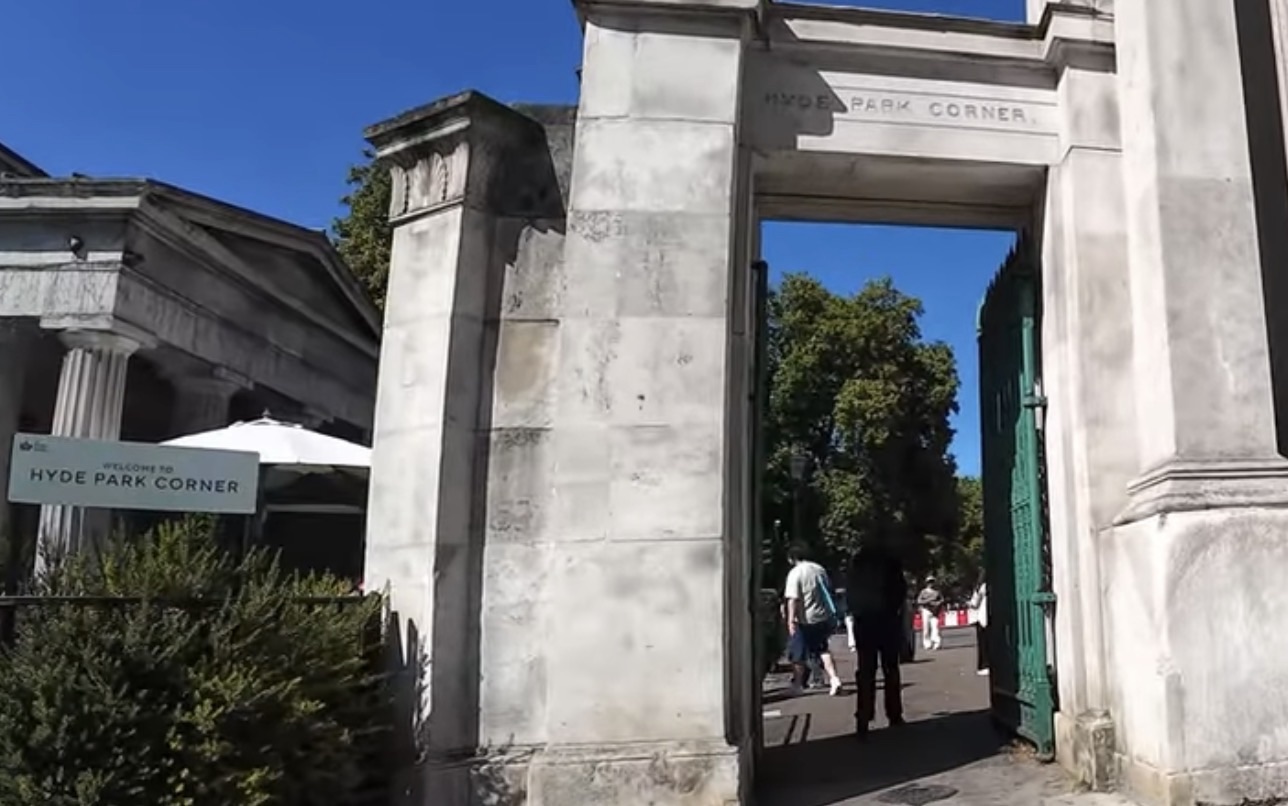

I hadn’t expected Hyde Park Corner to feel quite this grand as an entrance, tall columns, an arched gateway, green gates standing open. It’s a very different way into the park compared with just wandering off the Broad Walk.
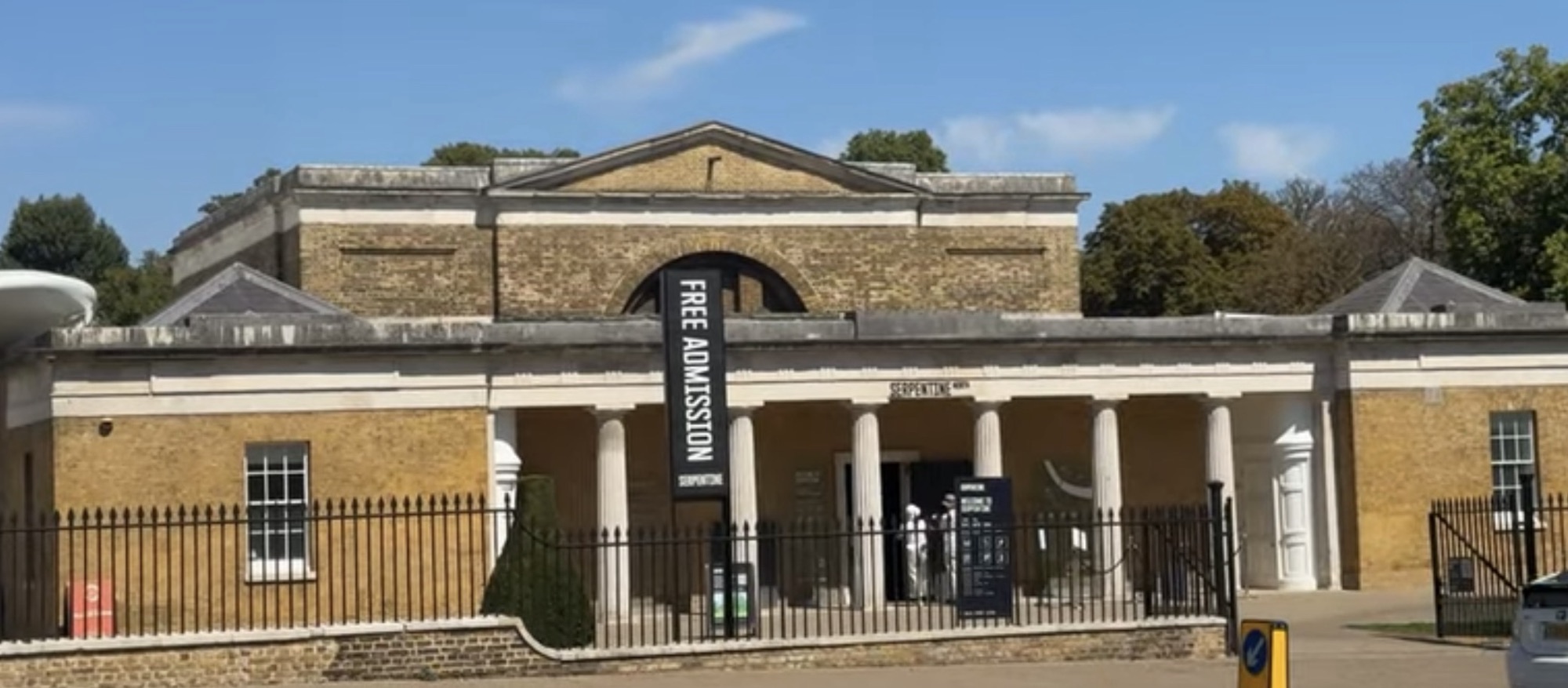
I also passed a building with a Free Admission banner hanging over its columned entrance, right by the water, the kind of thing you stumble across in Hyde Park almost by accident, since nothing about the walk had been aimed at finding it.

And then, close to where I eventually left the park, a genuinely classic-looking ice cream van, the kind with a hand-painted menu board rather than a printed one. It felt like the most fitting possible thing to see on a day this warm, even though I didn’t actually stop for one.
Heading OutTired, Warm, and Glad I Hadn’t Planned It Out
By the time I turned back towards an exit, the heat had properly caught up with me. I hadn’t set out with a checklist of things to see, I mainly wanted to walk and let the park show me whatever it was going to show me, and between the lake, the Norwegian stone and the general noise and life of the place, it did that well enough on its own.
It was tiring by the end, no question, but visiting Hyde Park on a hot day in late August was still a genuinely good way to spend a few hours, even without the boat ride or the ice cream I kept nearly having.
My TakeWhat I Would Actually Recommend for a First Visit
If this is your first time visiting Hyde Park, I would not try to “complete” the park. It is large enough that ticking off every landmark can turn a relaxed visit into a long walk without much payoff. Based on the route I took, the better approach is to choose one part of the park and give yourself enough time to notice what is around you.
For a first visit, my own route would be the Broad Walk → Serpentine → Norwegian Navy Stone → Hyde Park Corner. It gives you a mixture of open walking space, the lake, a small piece of overlooked history and one of the park’s more impressive entrances without requiring you to follow a rigid sightseeing checklist.
Which part suits which kind of visit?
- For a first London visit: start around the Serpentine, where the park feels immediately recognisable and there is plenty happening around the water.
- For a quieter walk: move away from the busiest lake areas and use the paths through the trees. The Norwegian Navy stone is a good example of the smaller discoveries that reward slowing down.
- For history: do not only look for the famous monuments. The Norwegian Navy stone is easy to overlook, but its inscription gives a very different and more personal connection with London’s wartime history.
- For families: allow extra time rather than trying to cover a huge distance. The park is more enjoyable when the visit has room for stops, food and wandering.
- For a hot day: plan less walking than you think you can manage. I visited in late-August heat, and by the end the temperature had become a much bigger factor than it seemed at the entrance.
What I would check before setting off
Hyde Park is easy to reach, but the practical details of a visit can change. If you are coming specifically for the Serpentine, boating, swimming or another bookable activity, check the current information before travelling rather than assuming that a service seen on a previous visit will be operating. The same applies to temporary notices around the lake.
I would also check the weather and give yourself more time than the map initially suggests. My own visit was not a tightly planned sightseeing trip, and the combination of heat, walking and stopping to investigate things made the park feel much larger than a simple list of distances suggests.
Editorial VerdictWhat Makes Hyde Park Worth Visiting?
Hyde Park works best when you treat it as a place to explore rather than a checklist of attractions. The Serpentine gives the visit an obvious centre, but some of the things I found most memorable were not the headline attractions: the warning signs beside the water, the small Norwegian memorial stone, the volunteer information point and the way the park opens and closes visually as you move between trees, paths and formal entrances.
That is also what separates Hyde Park from a generic “best parks in London” recommendation. You can arrive with a completely different purpose and still find something useful: a short walk, a longer route, a historical detail, a place to sit beside the water or simply a way of getting across central London without feeling that you are walking through another built-up street.
My recommendation: give yourself at least a couple of hours, choose a rough starting point rather than a strict itinerary, and leave enough time for the unexpected details. On my visit, the things I had not planned to look for ended up being the parts I remembered most.
Frequently Asked Questions
Is Hyde Park free to enter?
Yes. General entry to Hyde Park is free, with charges only for extras like boat hire, swimming at the Lido, and bookable sports facilities.
Is the Serpentine a river or a lake?
It’s a lake, created in the eighteenth century for Queen Caroline. The winding shape makes it easy to mistake for a river at first glance, which is exactly what happened on this visit.
What is the Norwegian Navy stone?
A memorial boulder given by the Royal Norwegian Navy and the Norwegian Merchant Fleet in 1978, thanking Britain for its hospitality to Norwegians during the Second World War. It sits among trees away from the main paths, with no large signpost pointing visitors to it.
Can I feed the birds on the Serpentine?
Not during a bird flu outbreak, according to signage seen on site warning visitors not to feed the birds. Always follow the current signage at the lake, as advice can change with the situation.
Before You Go
Opening hours: pedestrian gates are open from 5am to midnight, every day, and entry is free.
Getting there: Hyde Park Corner and Knightsbridge (Piccadilly line) are at the southern end, Marble Arch (Central line) is at the north-east corner, and Lancaster Gate (Central line) is on the northern side.
Plan around the lake: the Serpentine sits in the middle of the park, so pick the side you want before you set off. My route in via the Broad Walk and out at Hyde Park Corner covered the main sights without doubling back.
Opening hours were checked against The Royal Parks in October 2026.
Research Method
This guide is based on a personal, solo visit to Hyde Park on a hot day in late August, walking in via the Broad Walk and leaving through Hyde Park Corner. The editorial recommendations above are my own judgement based on this visit and are not presented as official park guidance. All photographs above are original and were taken on site, including the Norwegian Navy stone, the Serpentine warning signs, the Royal Parks map board, the volunteer information hut and fingerpost, and the gates at Hyde Park Corner. Signage reflects what was in place at the time of the visit; check current notices with The Royal Parks before travelling, particularly around lake water quality and bird flu advice.
Official & Useful Sources
The Royal Parks, Hyde Park
Used to verify current park management and general information.
https://www.royalparks.org.uk/visit/parks/hyde-park
On-site interpretation read during the visit
The Norwegian Navy memorial stone inscription, the Serpentine blue-green algae and bird flu warning signs, and the Royal Parks map board near the lake.
Last checked: 1 September 2026
Nearby guides: Kensington Gardens, The Green Park and St James’s Park
Author

Steve visits every park featured on EKS Parks in person, checking practical details against councils, park operators and official sources. Every guide is based on a personal visit, and the photographs published with it are his own.
About Steve