

Holland Park
Holland Park is actually a really nice place. I didn’t expect it to feel this big when I first got there. It’s one of those parks where you start walking and then realise there’s actually so much more behind it.
Holland Park is one of those London parks that is easy to misread from photographs. Kyoto Garden gets most of the attention, yet it occupies only a small part of a 54-acre landscape that also includes woodland, formal gardens, two playgrounds, sports facilities, an Ecology Centre and the surviving parts of Holland House.
The first thing I noticed was the greenery and all the different flowers. It was a really warm summer day, so everything looked bright and full of colour, and every few minutes the scenery changed: you walk around one corner and suddenly there are flowers, then you find the water, then another garden, then another open area. It doesn’t feel repetitive.
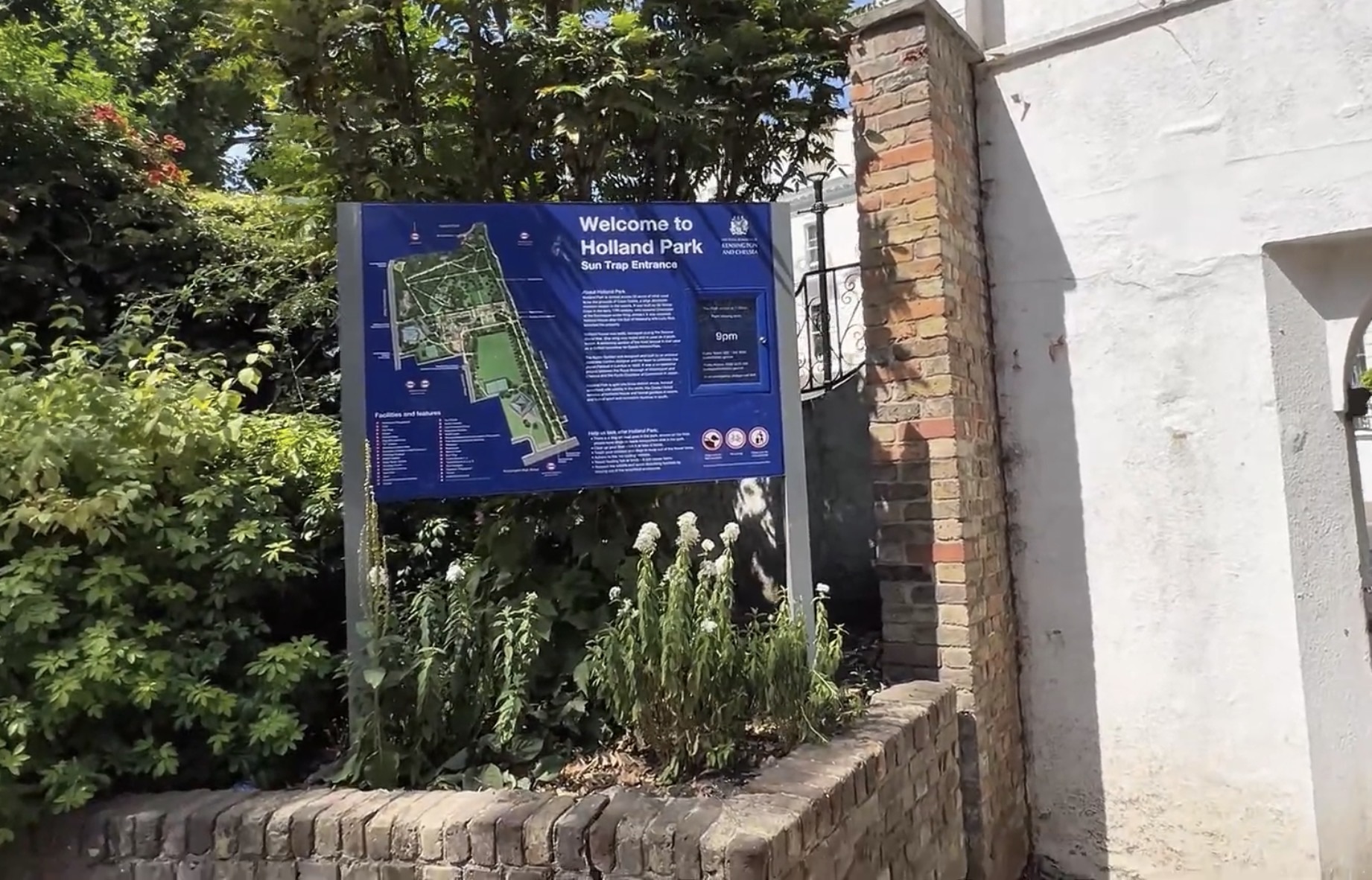
Then You Reach Kyoto Garden
As soon as you get there, the atmosphere changes completely. It’s quieter, there’s water, trees, flowers and this really nice Japanese-style garden. A small sign inside gives a more precise date than most sources: Kyoto Garden first opened in September 1991, a gift from the city of Kyoto. Its waterfall, koi pond, stone bridge and carefully controlled planting make it the most recognisable part of the park.
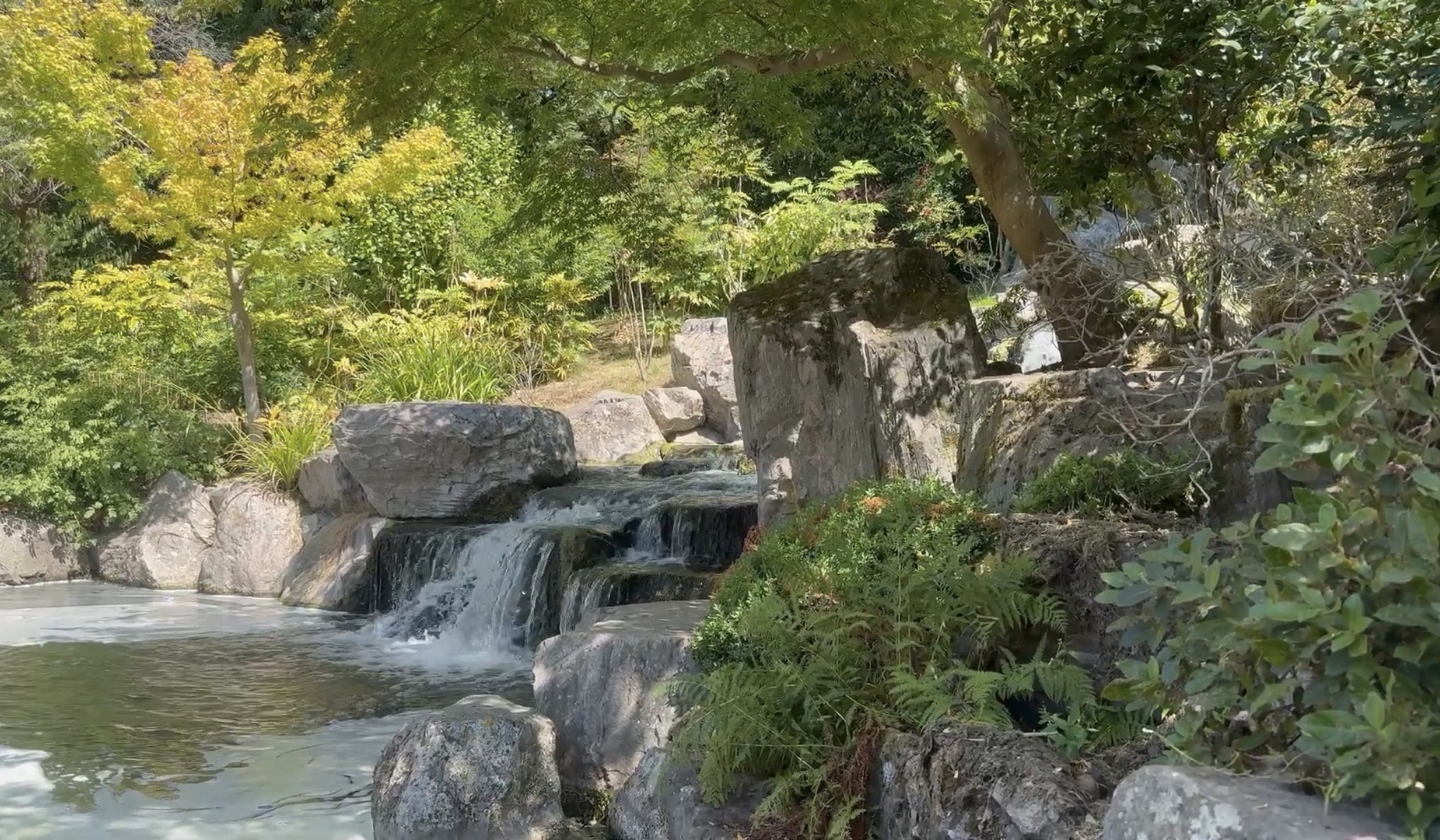
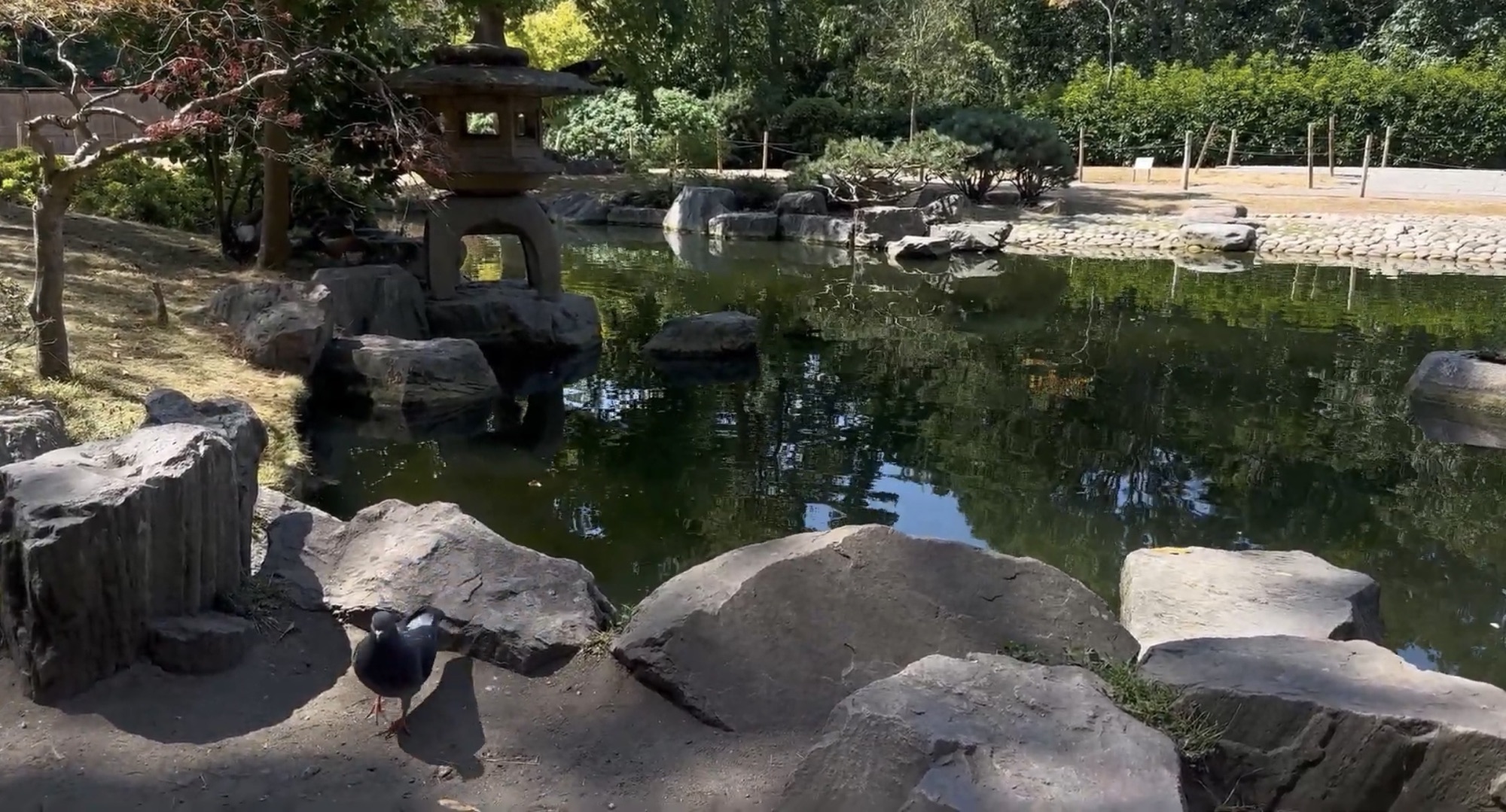
There’s a pond as well, and you can actually see some pretty big fish swimming around in there, much bigger than I expected. I could have stood there for quite a while just watching them. They just slowly move around the water and come quite close to the edge. It’s one of those simple things, but you end up standing there longer than you planned.
There are also so many little details around the garden that you don’t really notice until you start walking slowly. The flowers were probably one of my favourite things: roses, lilies and lots of other colours, some really standing out when the sun hits them.
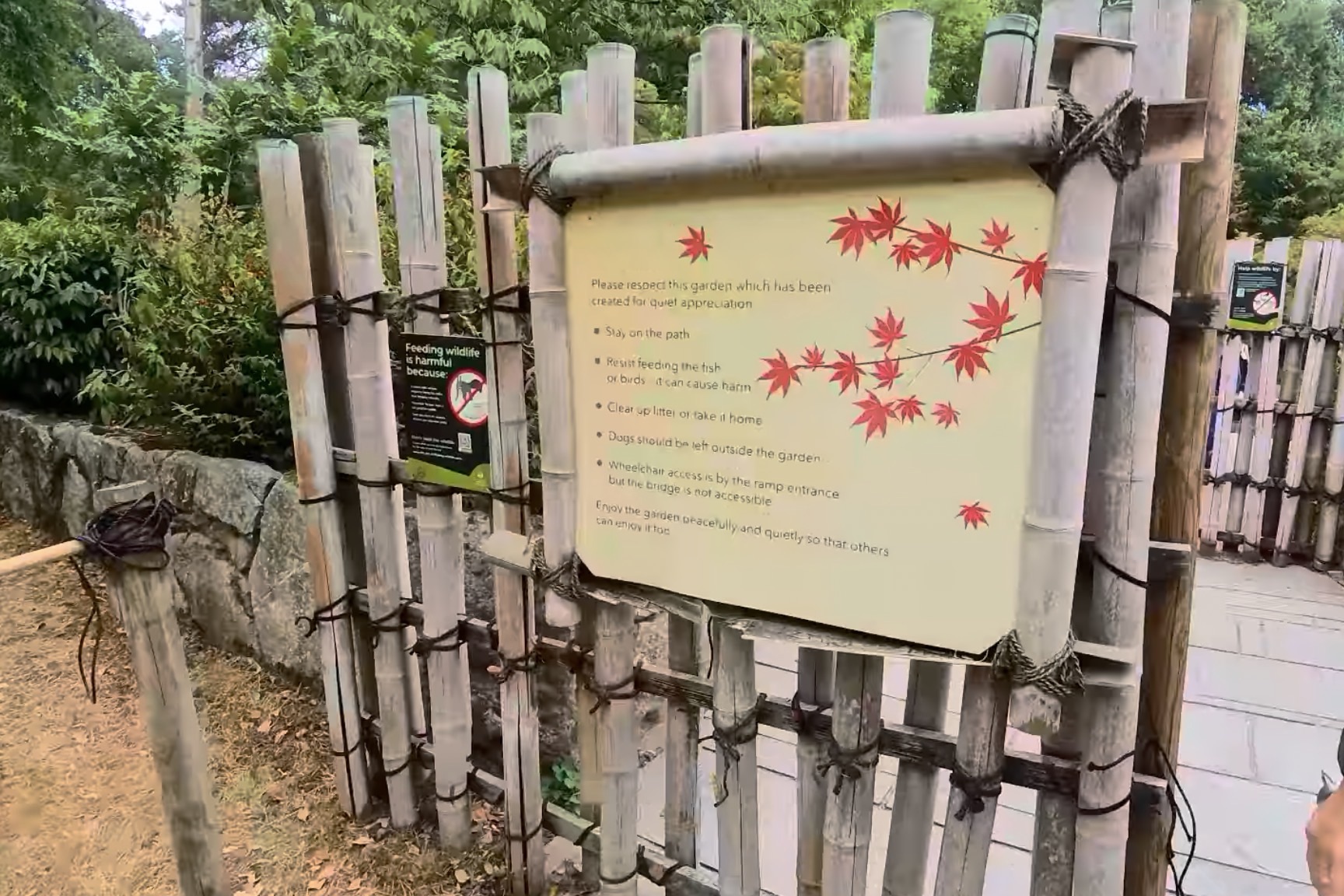
Its scale matters too. This is a compact garden with narrow circulation rather than a large Japanese landscape. When several groups stop for photographs at the same point, movement slows quickly. A bamboo-framed sign at the entrance asks visitors to stay on the path, resist feeding the fish or birds, and keep dogs outside the garden, useful rules to know before joining the crowd around the pond.
Wildlife adds its own colour to the visit. Young Egyptian geese are often seen preening on the cobblestones at the water’s edge, entirely unbothered by passers-by, while the pond itself holds carp and other fish moving beneath the reflections of the maples.
Away From the Crowd
Fukushima Memorial Garden
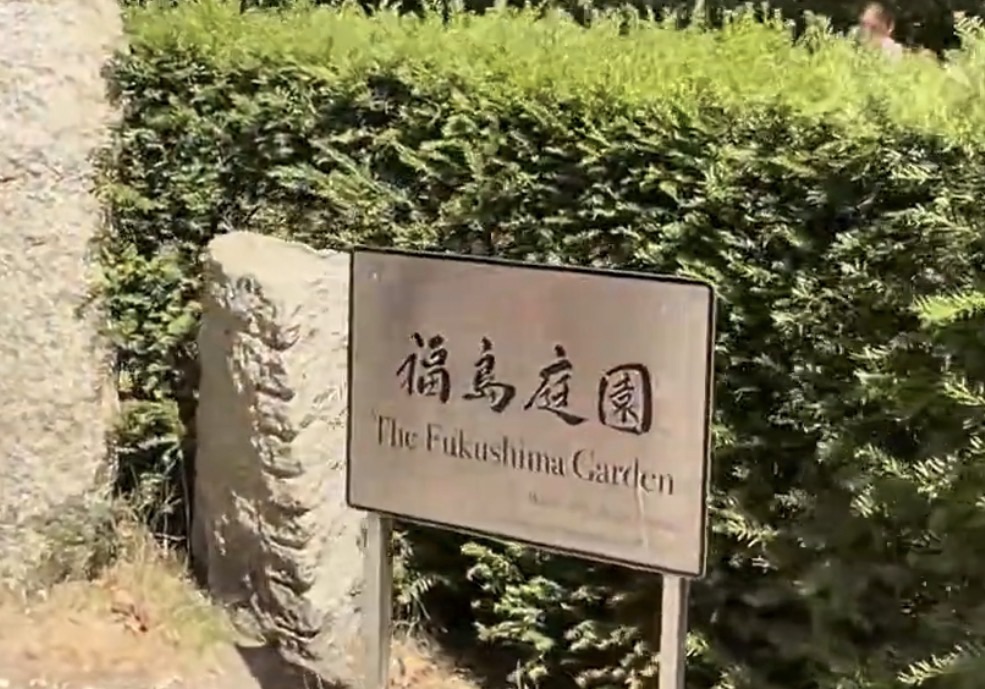
Built in 2012 to honour friendship and remembrance, its bilingual entrance stone, carved with both Japanese and English, sits just along the path from Kyoto Garden and makes a natural, quieter continuation.
Woodland
The wooded centre feels less manicured and gives the park its strongest contrast with the formal gardens.
Formal Gardens
The Dutch Garden, terraces and seasonal planting are more spacious places to slow down when the Japanese garden is under pressure.
The woodland is particularly useful because it changes the pace of the visit. Paths become less formal, tree cover is heavier and the park starts to feel further from Kensington High Street than it really is. Some areas are open and spacious, while others are much more enclosed with trees and gardens, and honestly, that’s what kept it interesting for me.
A First Visit That Does Not Feel Like a Checklist
Use Ilchester Place or another level entrance to reach the central facilities without starting on one of the steep approaches. See Kyoto Garden early, but don’t let a queue consume the morning. Move through Fukushima Garden and the woodland, where the park starts to feel larger and less like a single attraction. Then choose either family play or the historic side, and finish with food rather than another detour.
Families Have More Here Than the Photos Suggest
Holland Park has two separate play areas. The council lists an under-fives playground and an adventure playground for ages five to fourteen, including a zip wire, swings, slides and accessible equipment, a genuine destination within the park rather than a token set of swings beside a lawn.
The Ecology Centre Is an Activity Base, Not a Drop-In Museum
The Holland Park Ecology Centre sits beside the adventure playground near the Abbotsbury Road car park. It runs environmental education, Forest School, holiday activities, public events and conservation programmes. Many activities are scheduled or bookable, so the building’s presence on the map is not a guarantee of a casual public session at the exact time you arrive.
For summer 2026, the council has continued to publish bookable children’s nature activities through the centre, so it is worth checking the current events programme when planning a family day.
Statues and the Dutch Garden
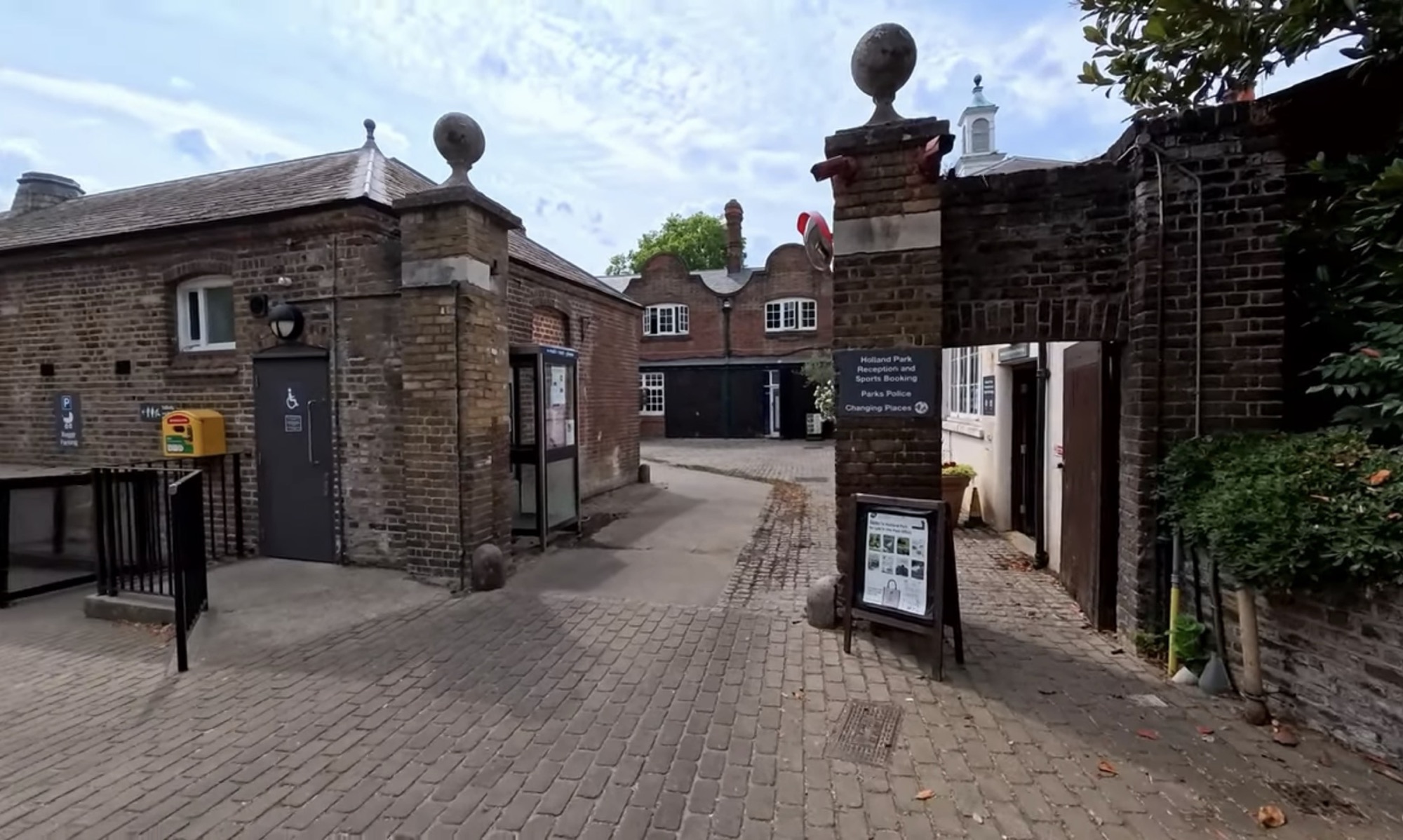
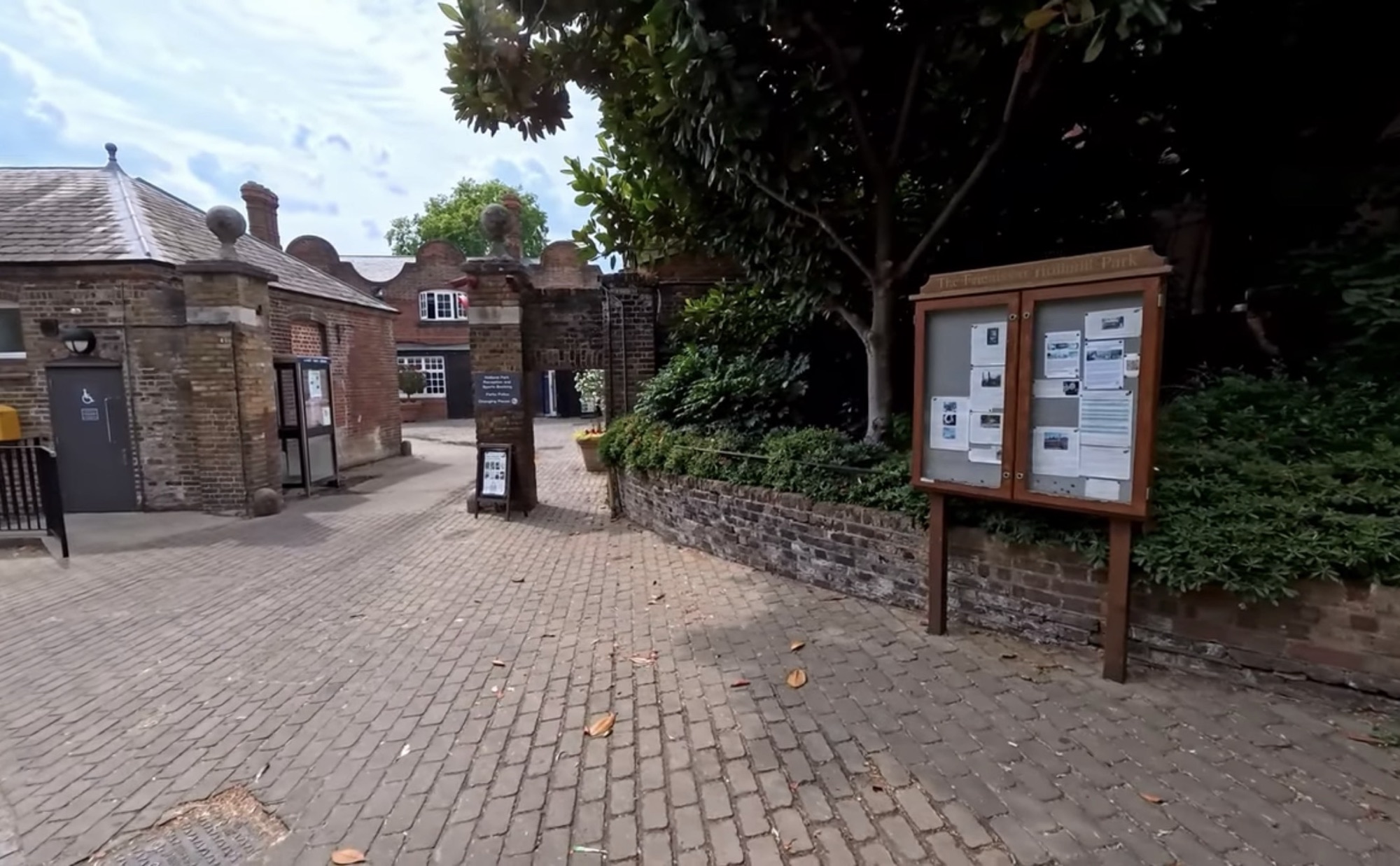
Walking from the Kensington High Street side, the route passes through the old stable courtyard first, now home to the park reception, sports booking office, Parks Police base and a Changing Places toilet, all built around brick pillars topped with stone finials.
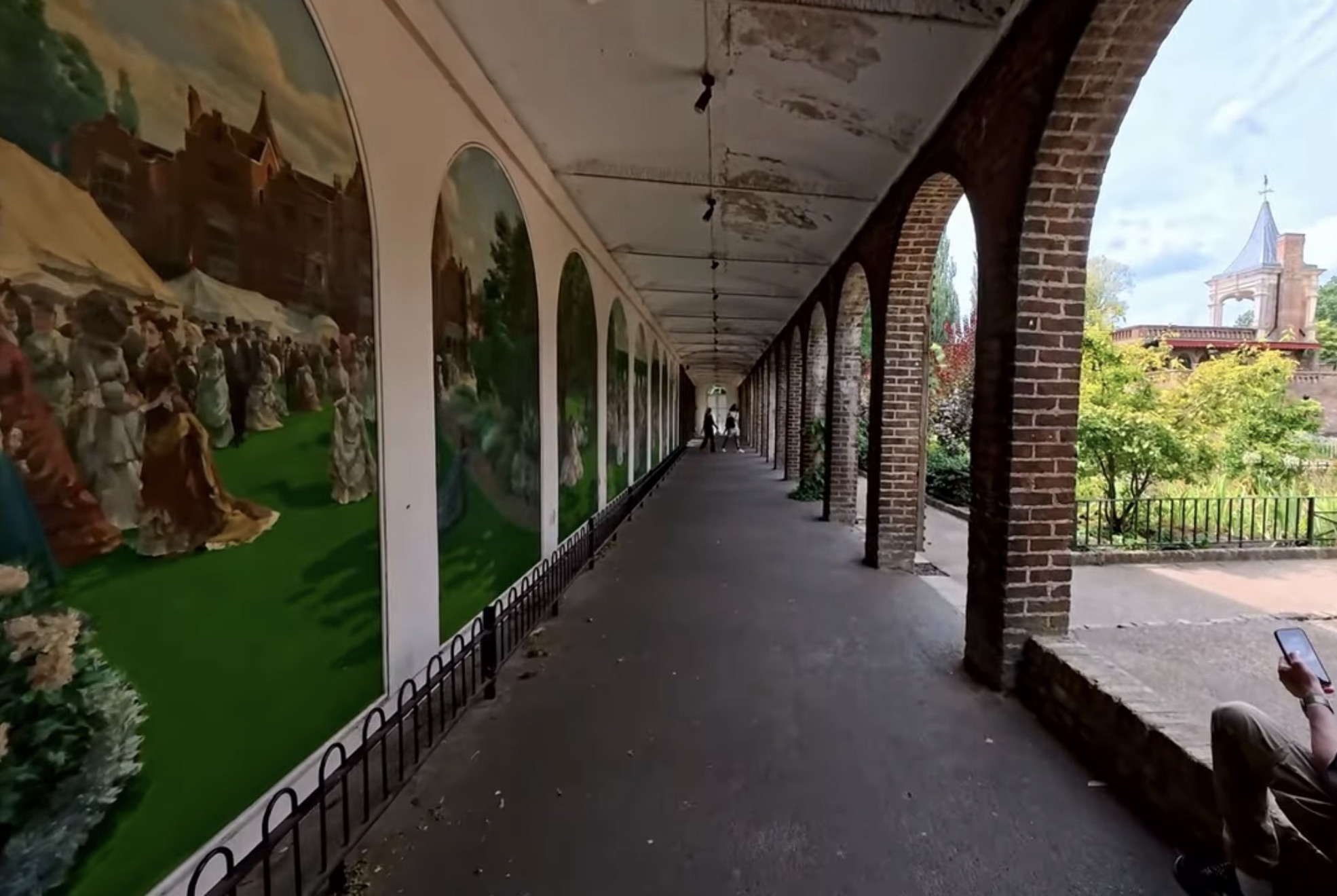
From here, a covered arcade lined with painted mural panels leads towards the Formal Gardens, showing Victorian garden-party scenes on a green lawn, a decorative touch easy to miss if you walk past without looking up.
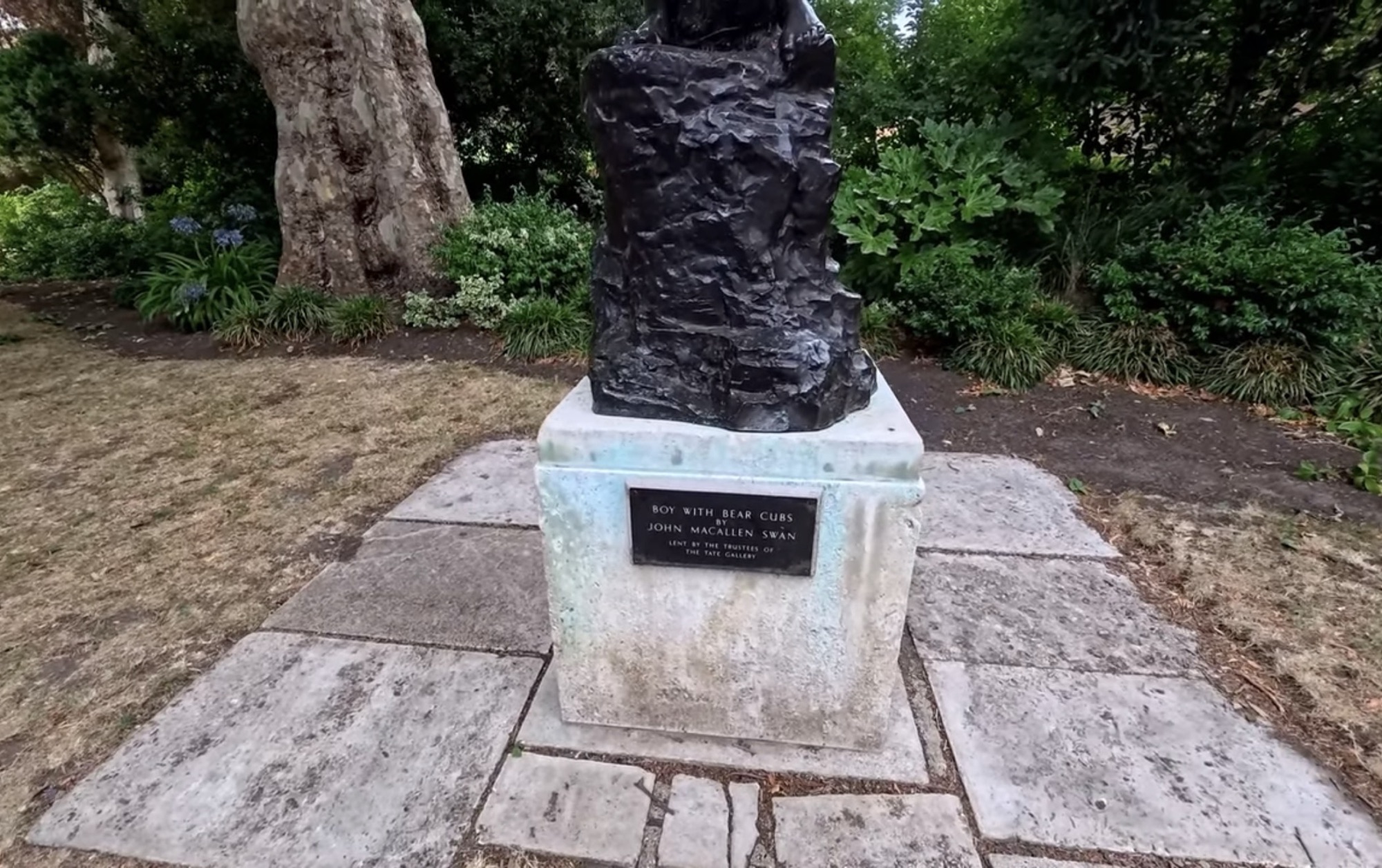
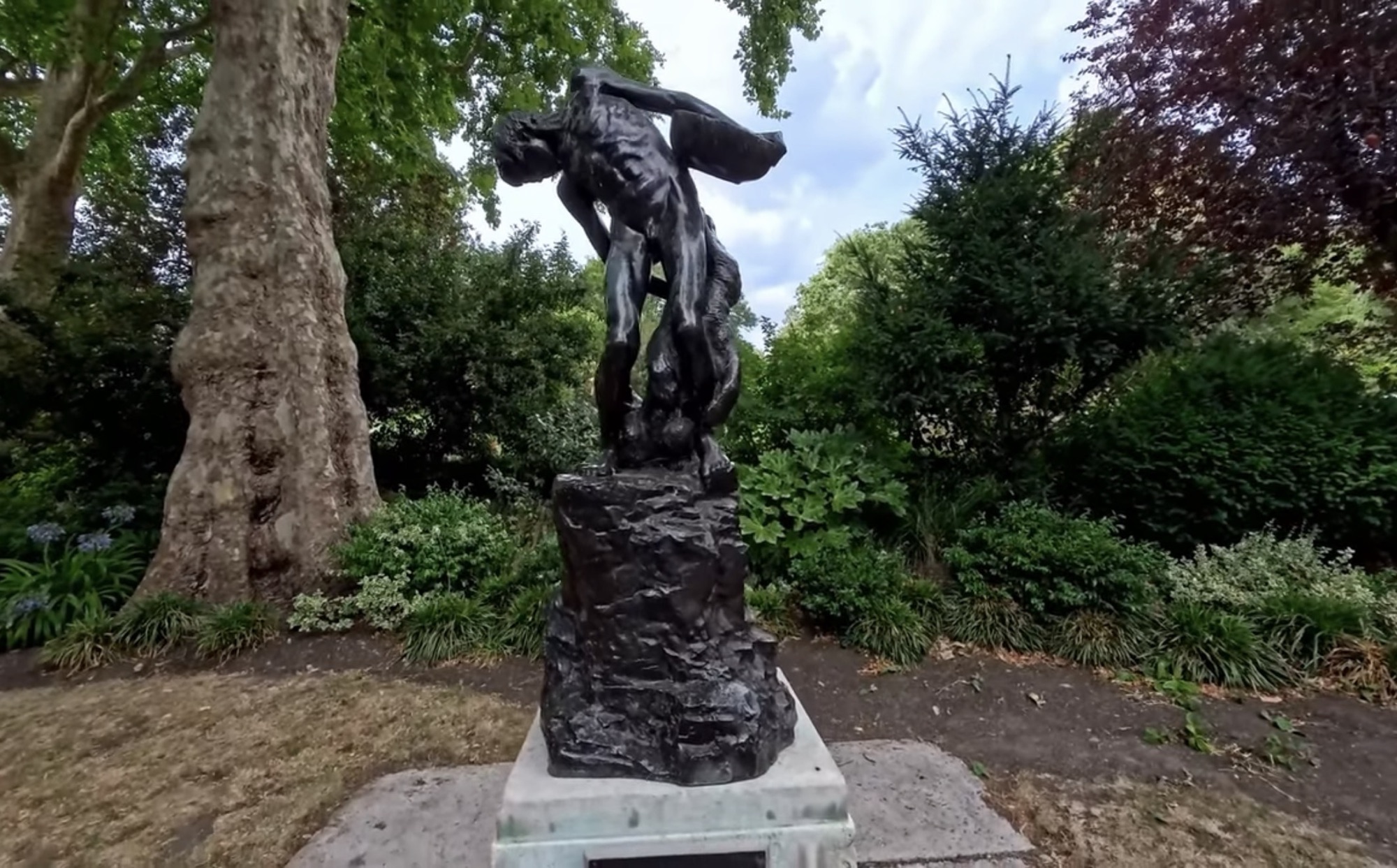
The Formal Garden, also known as the Dutch Garden, is where most of the park’s statues cluster. A bronze Boy with Bear Cubs, by the sculptor John Macallen Swan and lent by the Trustees of the Tate Gallery, stands among the shrubbery on its own plinth.
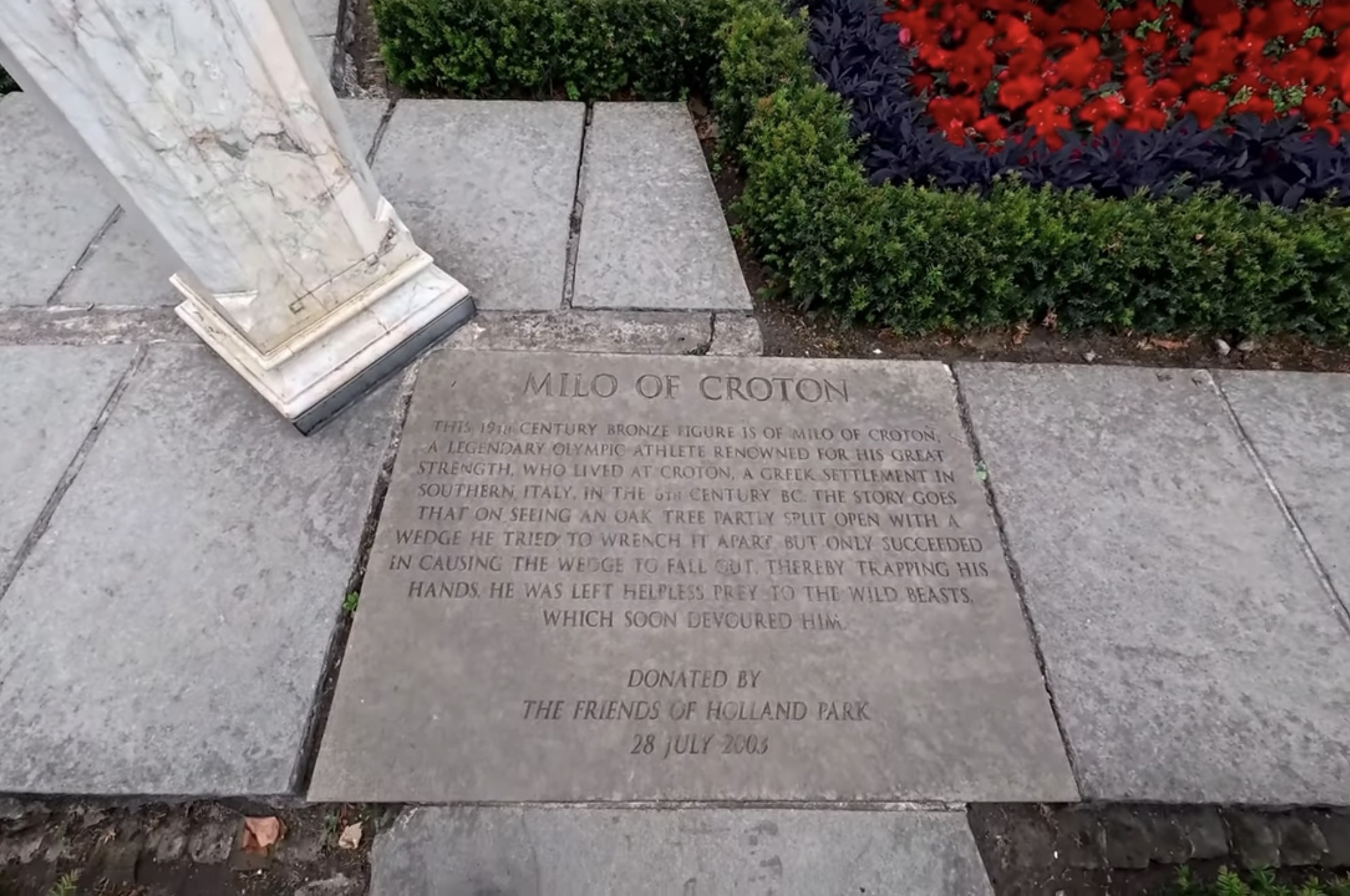
Close by is a more dramatic bronze: Milo of Croton, a 19th-century figure of the legendary Olympic athlete from 6th-century-BC Greece. According to the plaque, Milo tried to wrench apart a partly split oak tree, only for the wedge holding it open to fall out and trap his hands, leaving him helpless prey to wild beasts, which soon devoured him. The statue was donated by the Friends of Holland Park on 28 July 2003.
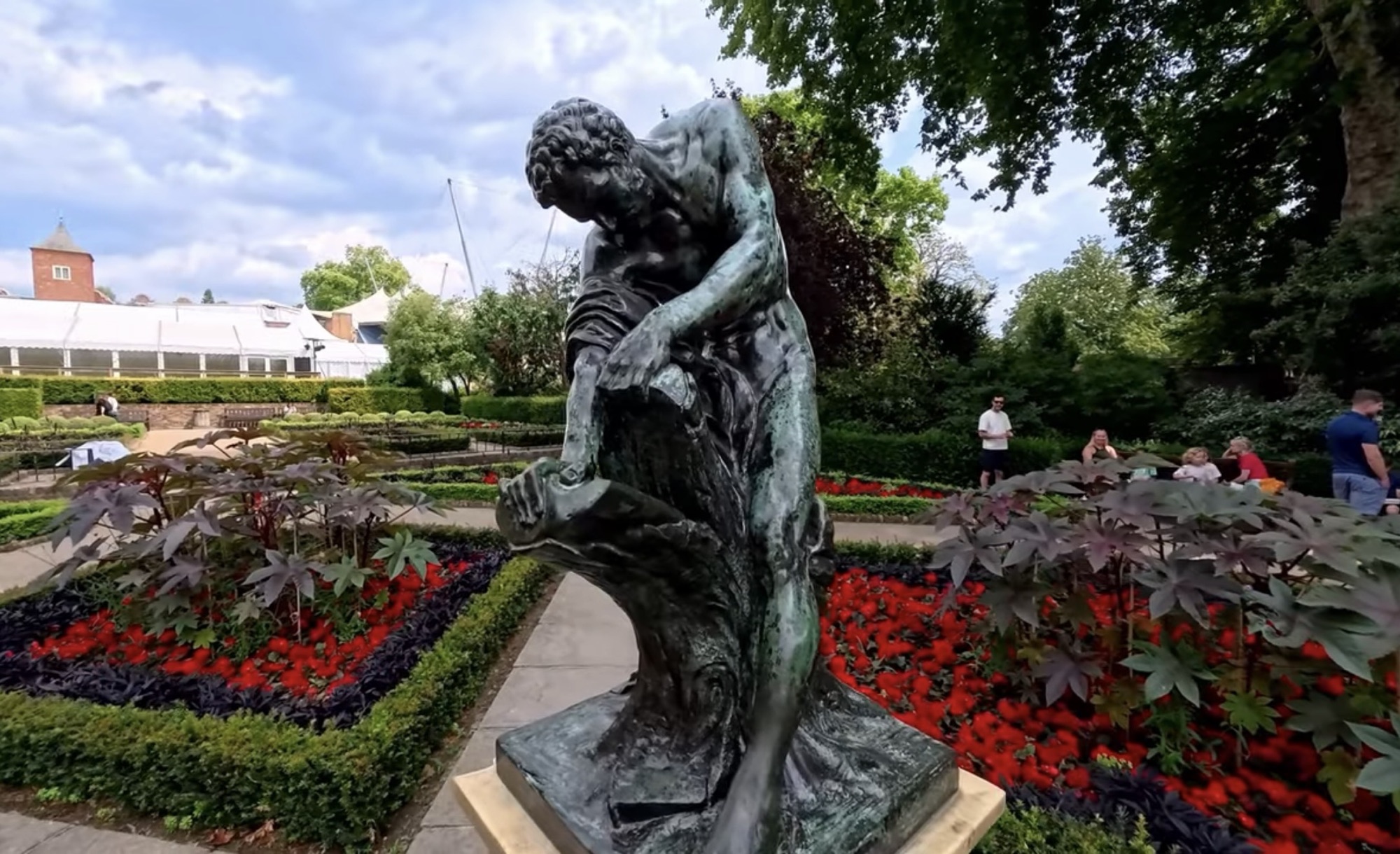
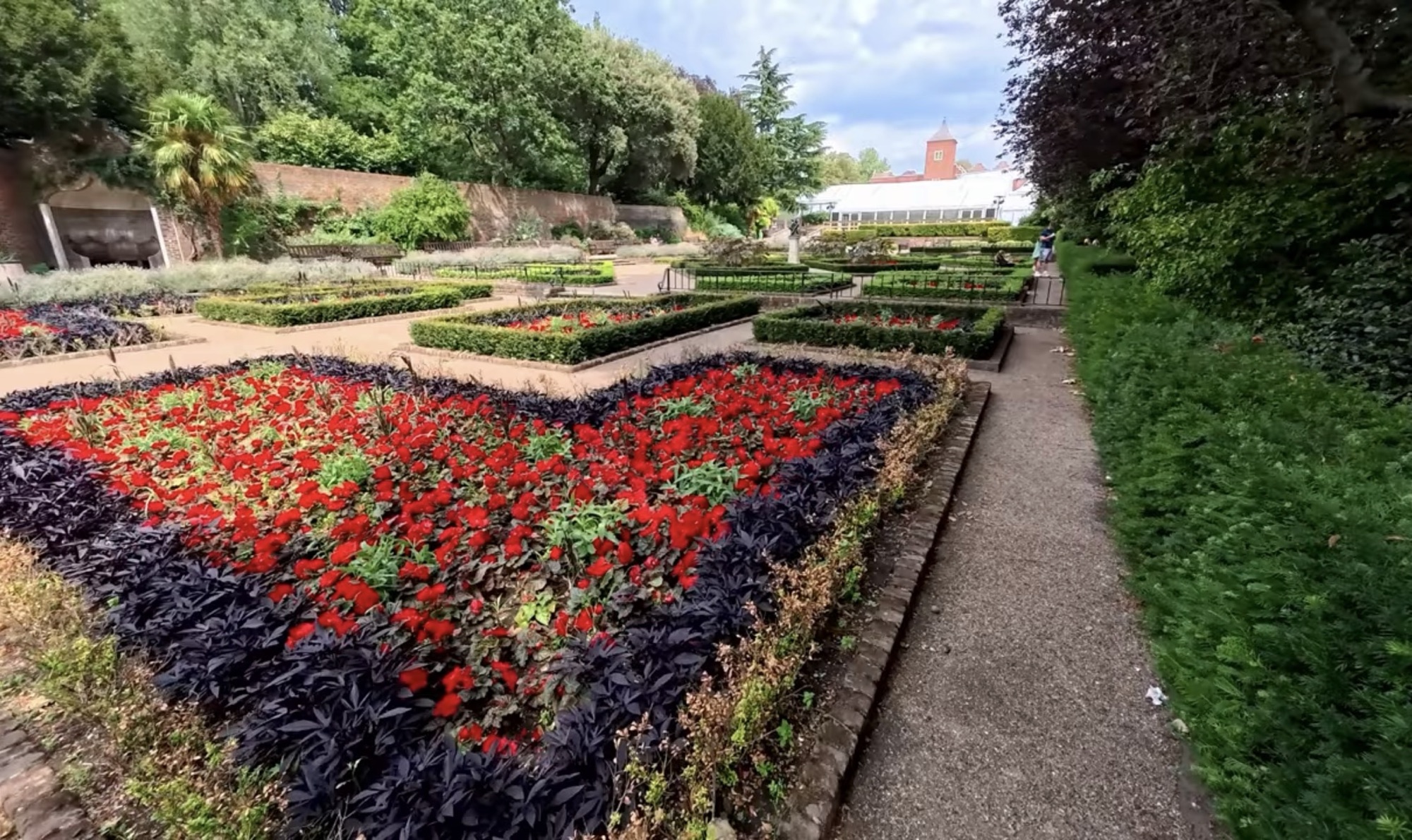
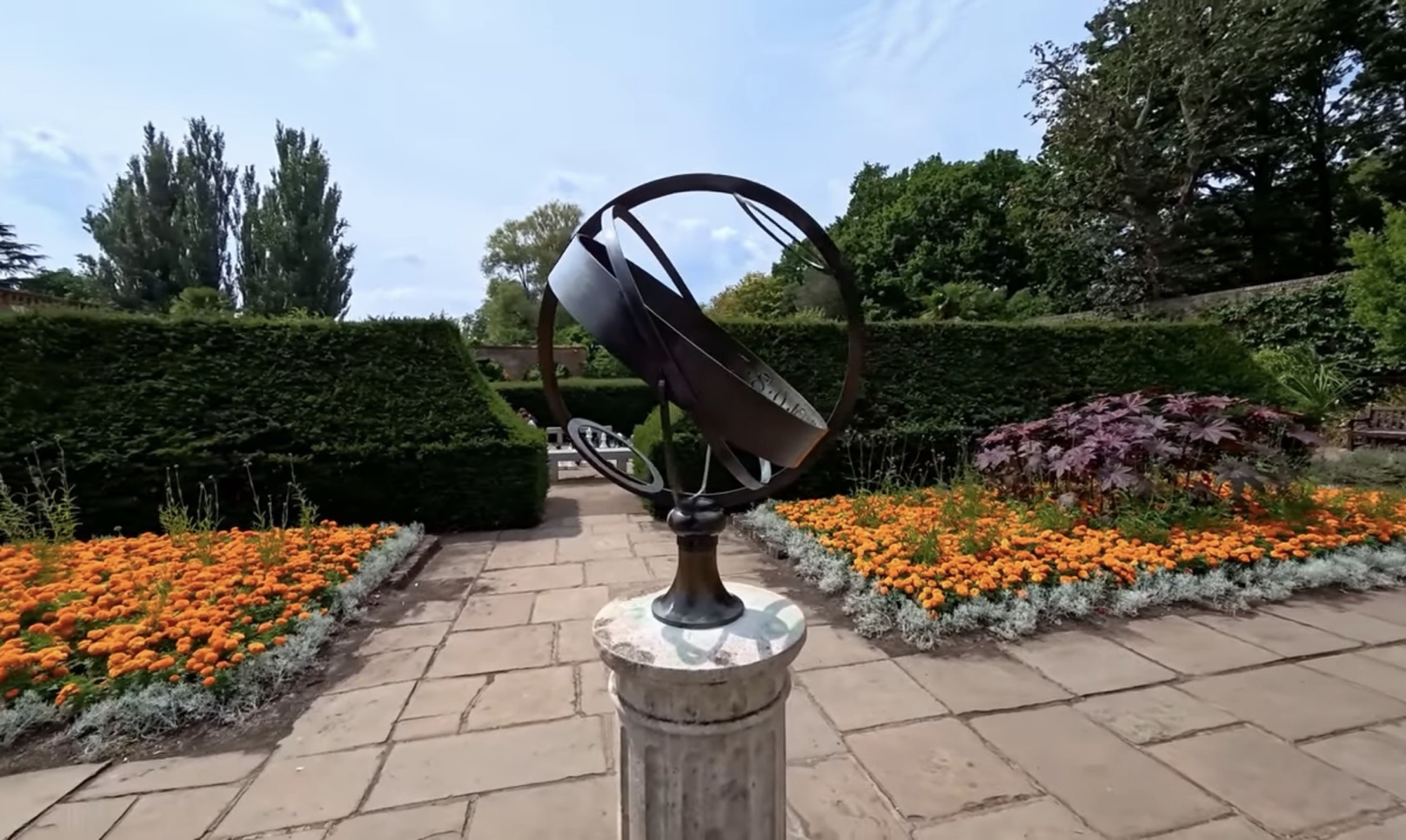
The garden itself is planted in bold geometric beds, deep red begonias against near-black foliage in summer, centred on a bronze armillary sphere sundial surrounded by marigolds.
A third statue is easy to walk straight past if you are not looking: Walking Man, a painted bronze by sculptor Sean Henry, purchased in 2014 with support from the Friends of Holland Park and the Public Art Panel. Life-sized and dressed in ordinary clothes, he stands mid-stride near Kyoto Garden and is startlingly easy to mistake for a real visitor at a glance.
Holland House Adds History Without Becoming a House Tour
The park occupies part of the former grounds of Cope Castle, later known as Holland House. The Jacobean house was badly damaged during the Second World War, and what survives today is not a conventional stately-home attraction with rooms to tour.
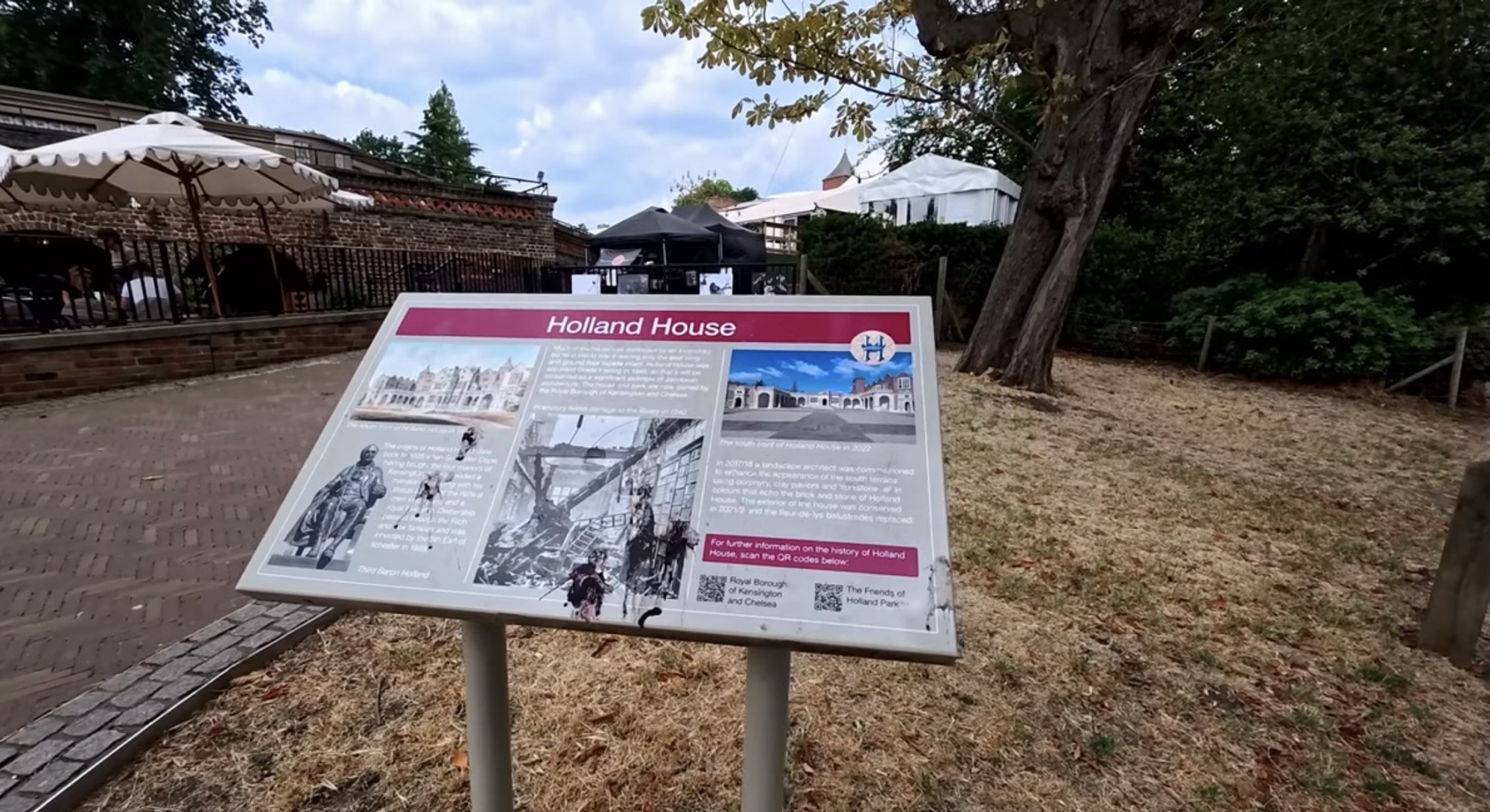
An interpretation board beside the surviving east wing fills in the detail: the house passed to the 3rd Earl of Ilchester in 1888 and was largely gutted by an incendiary bomb during the Blitz in 1940, leaving only the ground and east wing intact. In 2017/18 a landscape architect was commissioned to enhance the south terrace using porphyry, clay pavers and Yorkstone chosen to echo the house’s original brick and stone. The exterior was conserved in 2021/2 and the fleur-de-lys balustrades replaced.
The remaining terrace and architecture are more useful as context for the landscape than as a destination in themselves. In summer, the area becomes active again through Opera Holland Park, which builds its theatre here for the season. The 2026 opera programme marks thirty years since the company was founded and continues into August.
My Take
Overall, Holland Park has a really calm feeling to it. It’s beautiful without feeling too artificial, and there’s enough to explore that you can easily lose track of time. The summer weather definitely made it better as well, and even though you’re in West London, once you’re inside the park, it feels like you’ve moved away from the busy streets. You can just walk and not really have anywhere you need to be.
It didn’t feel too noisy either. People were sitting around, walking, relaxing, taking pictures and just enjoying the weather, and there are also plenty of places to sit down if you want to take a break. I found myself stopping quite a few times because there was always something else to look at.
The Kyoto Garden is definitely the part I’d spend the most time in, but I wouldn’t just come here for that. The rest of Holland Park is worth walking around as well, and the historic side gives it a character that a normal London park doesn’t always have. The park is around 54 acres, so it’s not somewhere you can walk through in five minutes and say you’ve seen everything: you can easily spend a couple of hours here, and if you get tired from walking around, the café is there for a coffee or something to eat.
I think that’s the best way to enjoy a place like Holland Park: just take your time and see what you find.
Food, Toilets and the Things That Decide Whether You Stay
Holland Park Café by Daisy Green is the main food stop inside the park. The operator currently lists opening from 8:00am until around thirty minutes before the park closes, with dogs welcome outside.
Public toilets are listed by the council as opening from 8:00am until dusk. Disabled access and baby-changing facilities are available, and the Stable Yard includes a Changing Places toilet.
Useful for Families
- Toilets close to central facilities
- Changing Places at Stable Yard
- Café and picnic options
- Playgrounds near the Ecology Centre
Worth Remembering
- Café tables can be busy in good weather
- Park and toilet hours are not identical
- Activities at the Ecology Centre may need booking
- Play areas are not beside Kyoto Garden
Accessibility Starts with the Entrance
The council identifies level access at North Abbotsbury Road, Ilchester Place, Duchess of Bedford Walk and High Street Kensington.
The Holland Park Road entrance and the southern Abbotsbury Road entrance are on steep inclines and may not suit some disabled visitors. The car park off Abbotsbury Road has disabled parking, but the same entrance is not recommended by the council for disabled pedestrians arriving without a vehicle.
The Current 2026 Water Restrictions Affect What You See
London’s hosepipe ban has changed some park maintenance this summer. In July 2026, the council switched off and drained the Iris Garden fountain. Ponds across the borough are being topped up only when necessary to protect fish and wildlife.
That means water features may not look exactly as they do in older photographs. The gardens remain open, but current conditions are worth understanding before judging them against spring or previous-year images.
Dogs, Bikes and Other Rules That Matter
- Dogs are not permitted in the Japanese Garden.
- Dogs must be kept on leads in woodland and formal gardens.
- Cycling is not permitted inside the park.
- Barbecues are not permitted.
- Events and professional photography require permission.
Cyclists can still reach the area easily: the Ecology Centre page lists cycle docking stations around Abbotsbury Road, Ilchester Place and Duchess of Bedford Walk, with bicycle locking points available.
Getting There Without Creating Extra Work
Holland Park Underground
Central line. Useful when Kyoto Garden and the northern side are the priority.
High Street Kensington
Circle and District lines. A good choice for the southern side and a level approach. Kensington Gardens is a short walk east from the same station.
Kensington (Olympia)
National Rail and London Overground access for the western side.
Bus
The council lists routes C1, 9, 23, 27, 28, 49, 94 and 328 around the park.
There is a pay-by-phone car park off Abbotsbury Road, but for a central West London park with several rail and bus options, public transport is usually the simpler plan.
When the Park Feels Most Different
| Time | What It Is Best For | What to Expect |
|---|---|---|
| Weekday morning | Kyoto Garden and woodland | The best chance of a quieter Japanese garden. |
| Weekend afternoon | Family play and social visits | More pressure around Kyoto Garden, café and playgrounds. |
| Spring | Fresh woodland and formal planting | Strong colour without relying only on autumn maples. |
| Autumn | Japanese garden colour | More photography interest around Kyoto Garden. |
| Summer evening | Opera and Holland House atmosphere | More event activity around the historic terrace. |
Frequently Asked Questions
When is Kyoto Garden quietest?
There is no guaranteed quiet period, but weekday mornings are generally the best bet. Sunny weekends can be much busier around the bridge and pond.
Does Holland Park have a playground?
Yes. There is an under-fives area and a separate adventure playground for ages five to fourteen, including a zip wire, swings, slides and accessible equipment.
Which entrance is best for step-free access?
Level entrances are listed at North Abbotsbury Road, Ilchester Place, Duchess of Bedford Walk and High Street Kensington. The Holland Park Road and southern Abbotsbury Road approaches are steep.
Can dogs go into Kyoto Garden?
No. Dogs are not permitted in the Japanese Garden and must be kept on leads in woodland and formal gardens.
Research Method
This guide is based on a personal visit to the park on a warm summer day, combined with independent research. Photographs on this page are original. The Kyoto Garden, Fukushima Garden, Holland House and Milo of Croton boards were read and photographed on site. Accessible entrances, park rules, toilet provision, playground age ranges and the 2026 hosepipe-ban measures were checked against the Royal Borough of Kensington and Chelsea; café hours with Daisy Green. Opera season and Ecology Centre programmes change, so check before travelling.
Official & Useful Sources
Royal Borough of Kensington and Chelsea: Holland Park
Used to verify size, facilities, accessible entrances, park rules, parking, history and sports.
https://www.rbkc.gov.uk/parks-leisure-and-culture/parks/your-local-park/holland-park
Royal Borough of Kensington and Chelsea: Holland Park Ecology Centre
Used to verify the centre’s location, public transport information and activity role.
https://www.rbkc.gov.uk/environment/ecology-biodiversity-and-nature-conservation/holland-park-ecology-centre
Royal Borough of Kensington and Chelsea: Public Toilets
Used to verify Holland Park toilet hours, disabled access and baby-changing provision.
https://www.rbkc.gov.uk/environment/environmental-health/public-toilets
Royal Borough of Kensington and Chelsea: 2026 Hosepipe Ban Measures
Used to verify the Iris Garden fountain closure and current pond-management approach.
https://www.rbkc.gov.uk/newsroom/protecting-parks-and-wildlife-hosepipe-ban-comes-effect
Holland Park Café by Daisy Green
Used to verify the café’s current opening pattern and outdoor dog policy.
https://www.daisygreenfood.com/location-hollandpark
On-site interpretation read during the visit
The Kyoto Garden entrance sign, the Fukushima Garden entrance stone, the Holland House board, and the Milo of Croton plaque.
Last checked: 10 September 2026.
Author

Steve visits every park featured on EKS Parks in person, checking practical details against councils, park operators and official sources. Every guide is based on a personal visit, and the photographs published with it are his own.
About Steve