
I went to the Horniman Museum and Gardens for the first time on a bright afternoon, and I left thinking there is far more here than I expected.
Most places on this site are parks with something in them. The Horniman is the other way round: a museum with sixteen acres of gardens attached, and the two are free to walk into. I did the museum first, then the gardens, and this guide follows that order.
- The Museum
- The Gardens
- World Gallery
- Natural History Gallery
- Kusuma Nature Play
- Animal Walk
- Aquarium
- Butterfly House
- Some temporary exhibitions
That split is the single most useful thing to know before you go. You can have a full day here without paying for anything, and the two ticketed attractions are add-ons rather than the main event.
The Museum
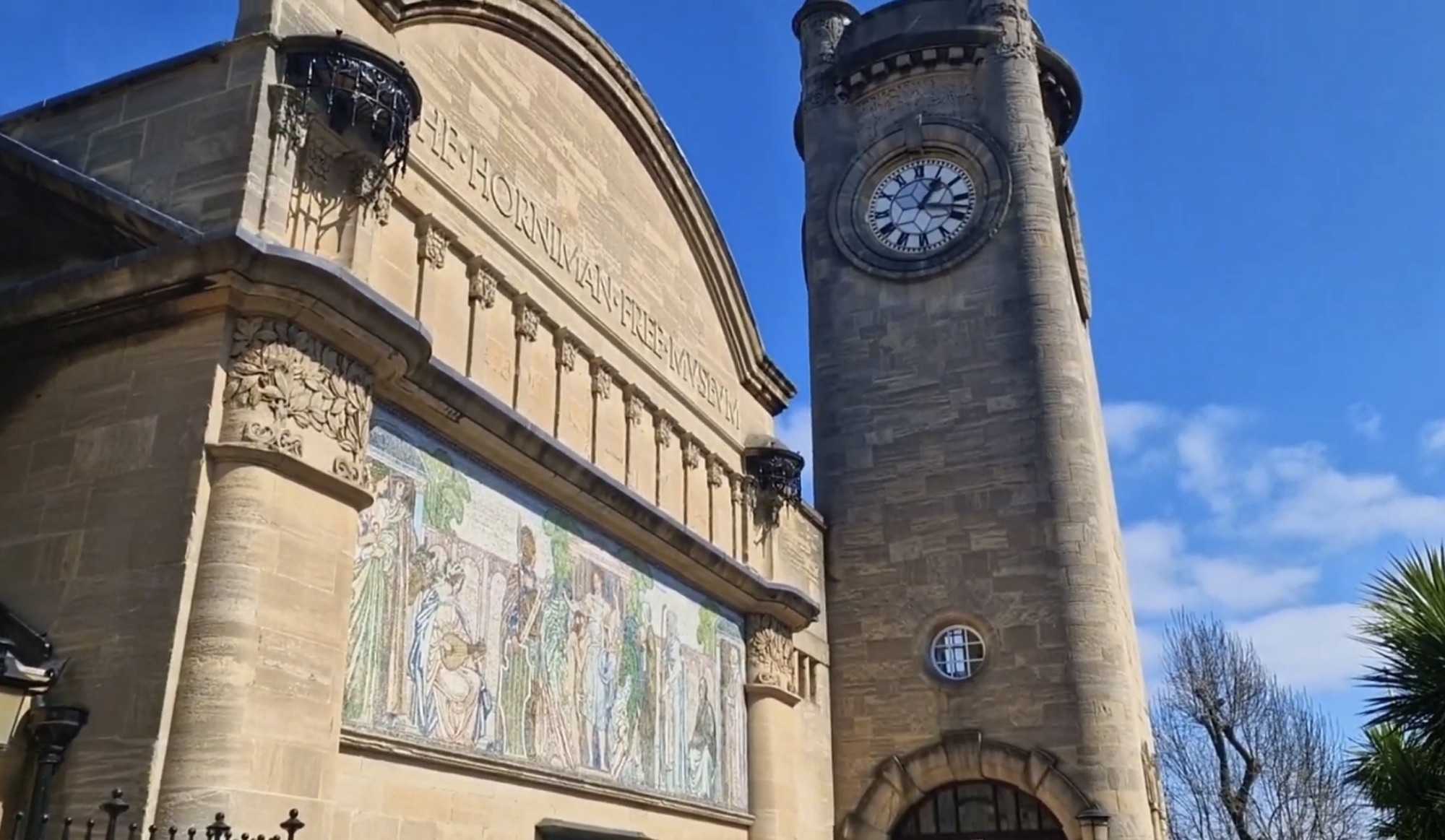
The building itself is worth a minute before you go in. Carved across the front are the words The Horniman Free Museum, which is not a slogan added later, it is what the place was built as. Beside it stands the clock tower, and below the lettering there is a large mosaic panel set into the stone.
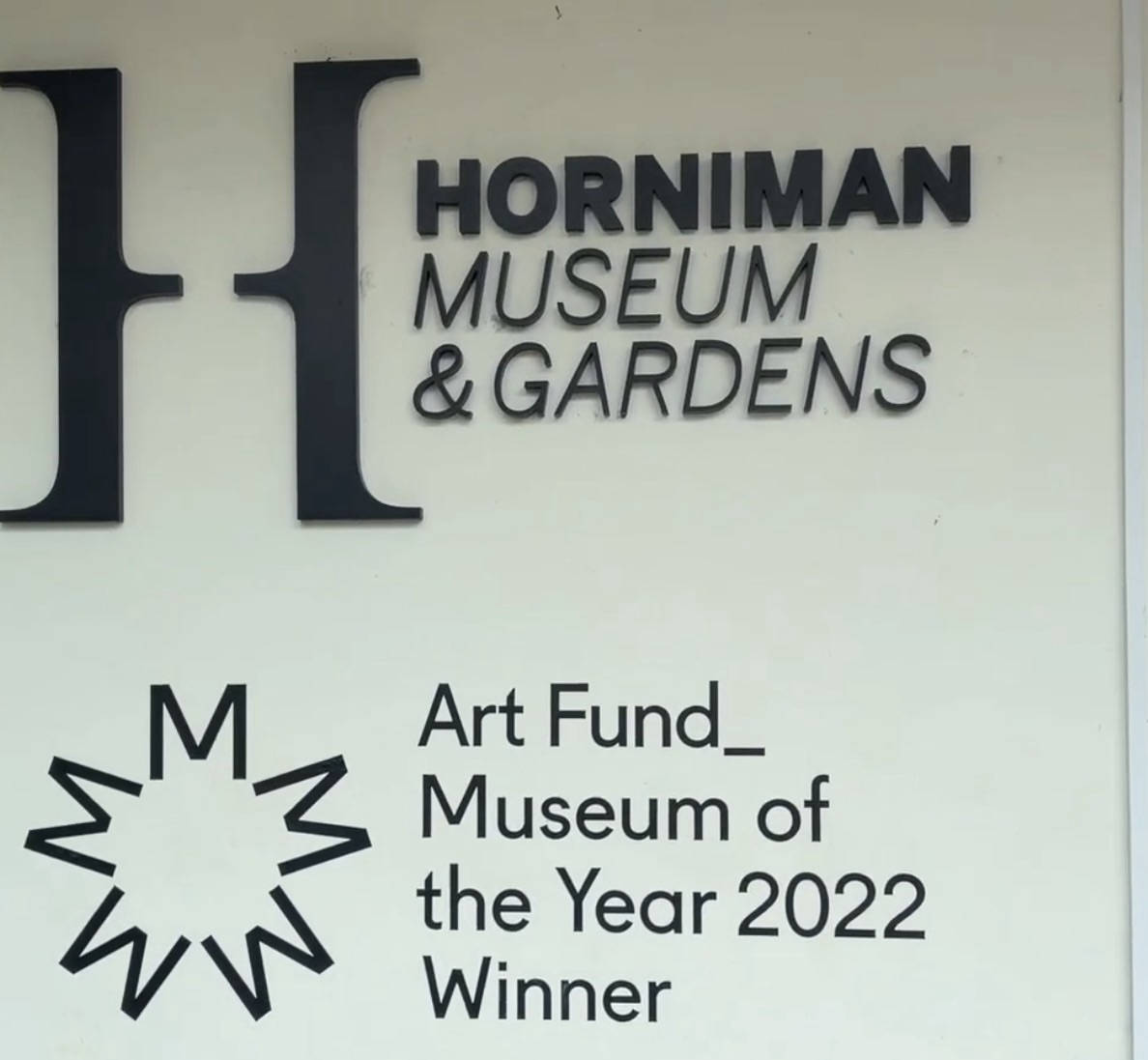
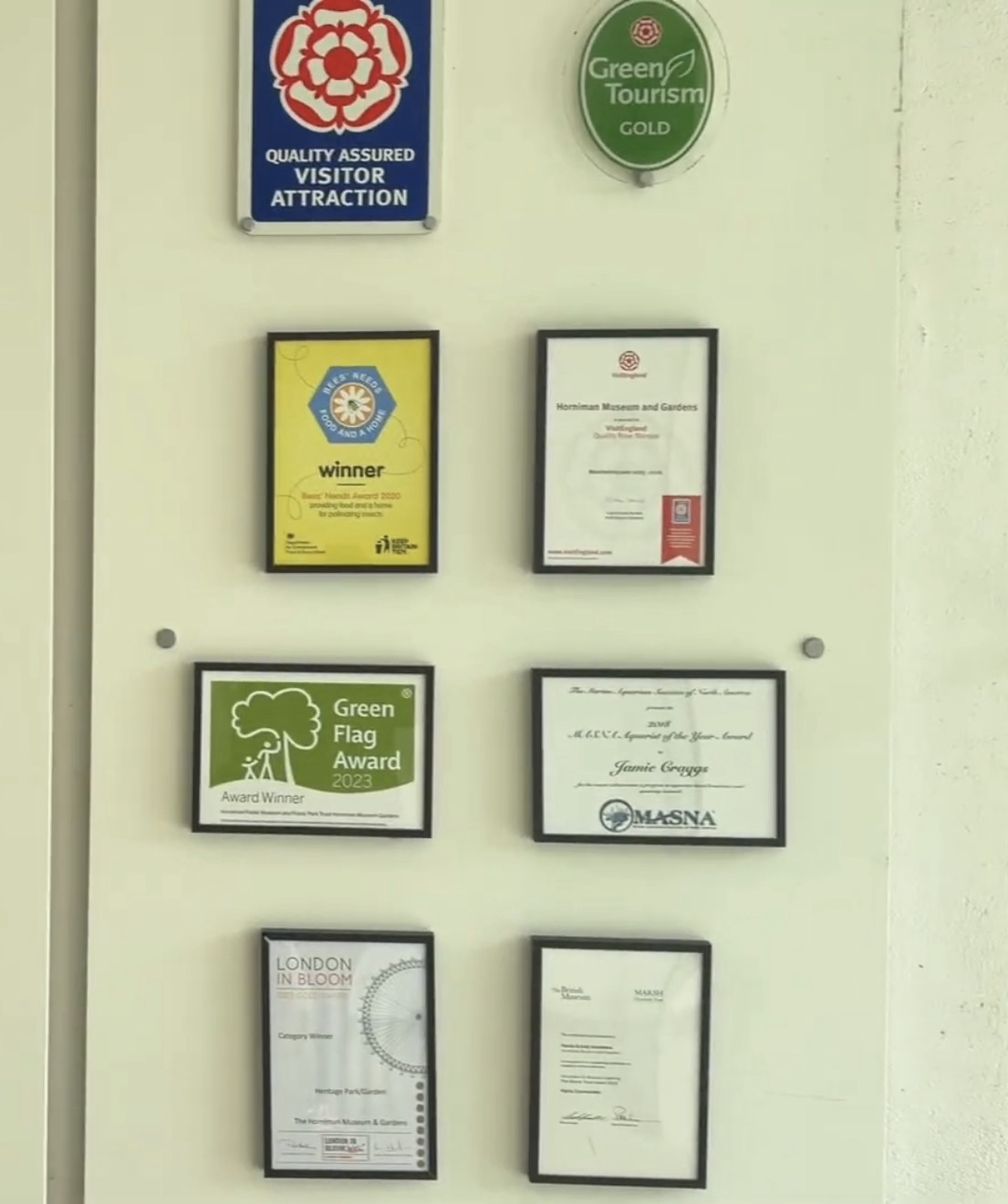
The sign by the entrance tells you something before you walk in. The Horniman was Art Fund Museum of the Year in 2022, and just inside there is a wall of other awards: Green Flag 2023, Green Tourism Gold, a Quality Assured Visitor Attraction rose, London in Bloom, and a Bees’ Needs Award for pollinator planting. For a free local museum in Forest Hill, that is a serious cabinet.
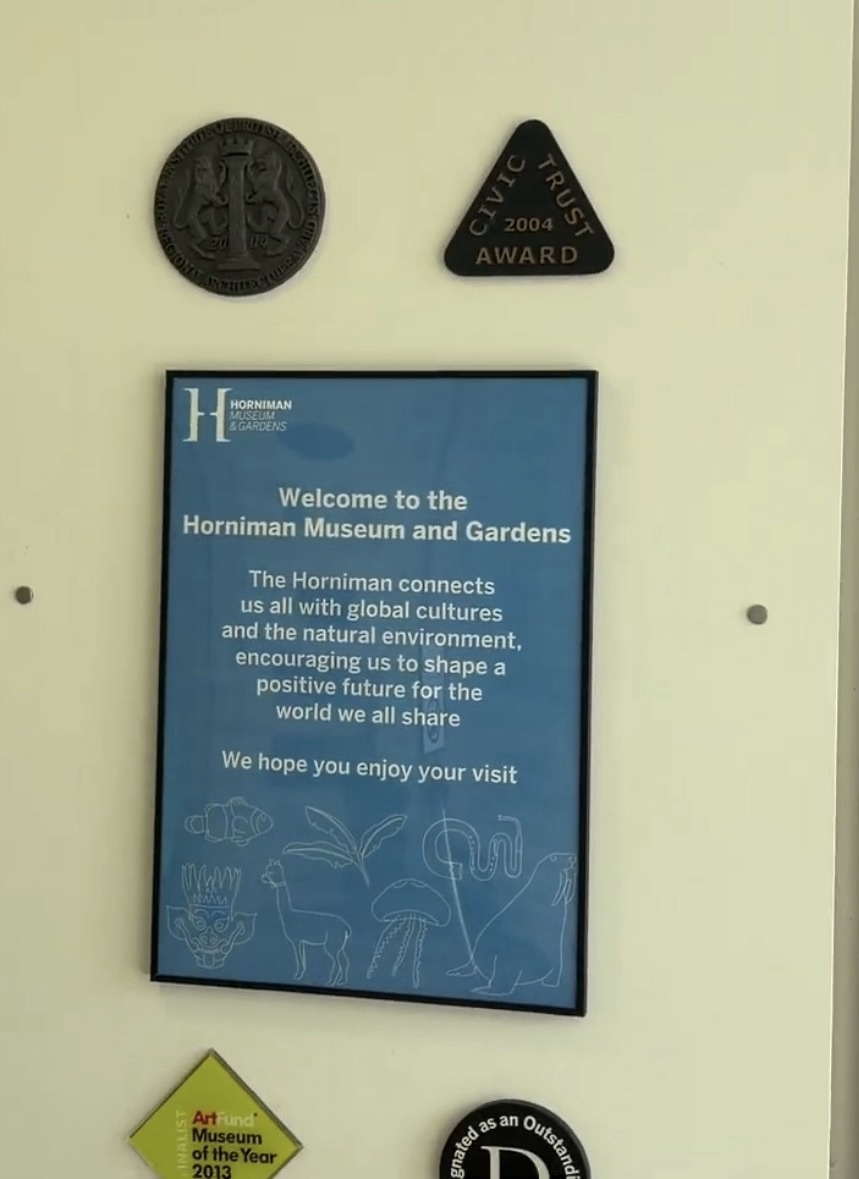
The welcome sign sets out what the place is for: connecting people with global cultures and the natural environment. Around it are more plaques, including a Civic Trust award from 2004 and an Art Fund Museum of the Year finalist badge from 2013, so the 2022 win was not a one off.
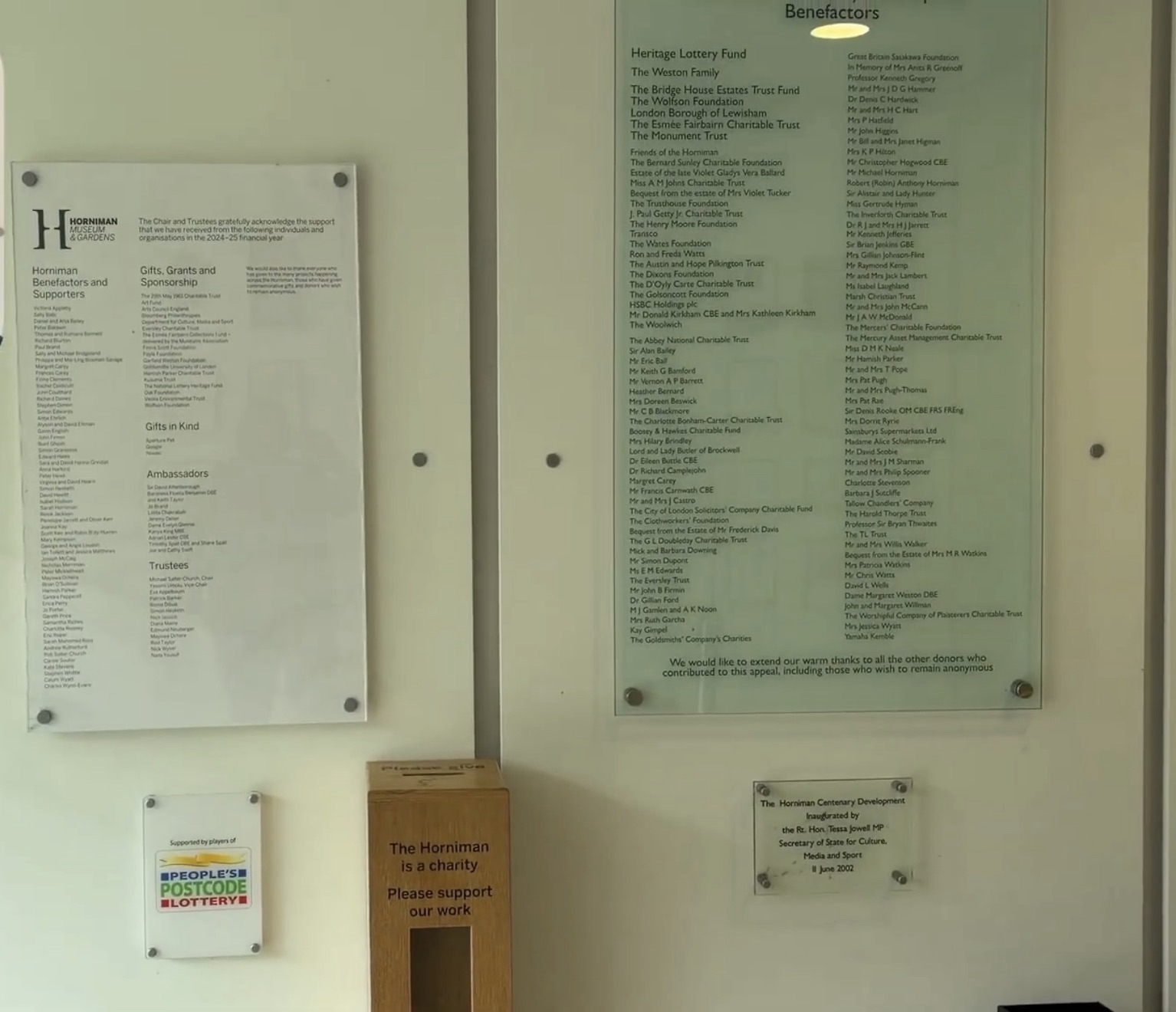
The Horniman is a charity, and the boards near the entrance list the benefactors who keep it going, from the Heritage Lottery Fund and the London Borough of Lewisham down to hundreds of individual names. There is a wooden donation box below them reading “the Horniman is a charity, please support our work”. Worth a glance, because it explains how something this good stays free.
The Signpost in the Entrance Hall
The first thing that stopped me was a signpost, the kind you see at the end of a pier, pointing off to places all over the world with the distance to each one.
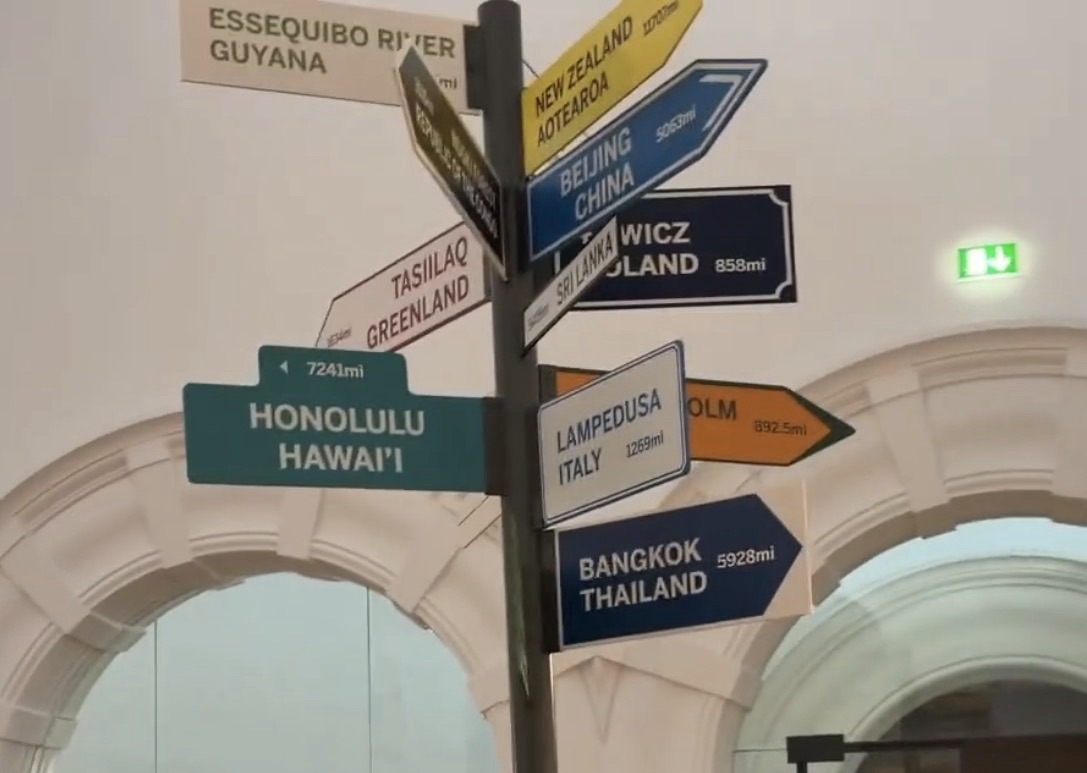
- Honolulu, Hawai’i, 7,241mi
- Bangkok, Thailand, 5,928mi
- Beijing, China, 5,063mi
- Lampedusa, Italy, 1,269mi
- Stockholm, 892.5mi
- Poland, 858mi
- Tasiilaq, Greenland
- Essequibo River, Guyana
- New Zealand, Aotearoa
- Sri Lanka
It sets up the whole idea of the place. Every one of those points to somewhere an object in the collection came from.
The World Gallery
The main gallery opens with two questions painted across the entrance panel: what is a life well lived, and what is it that we hold dear. That is a bold way to start a museum, and it changes how you look at everything afterwards.
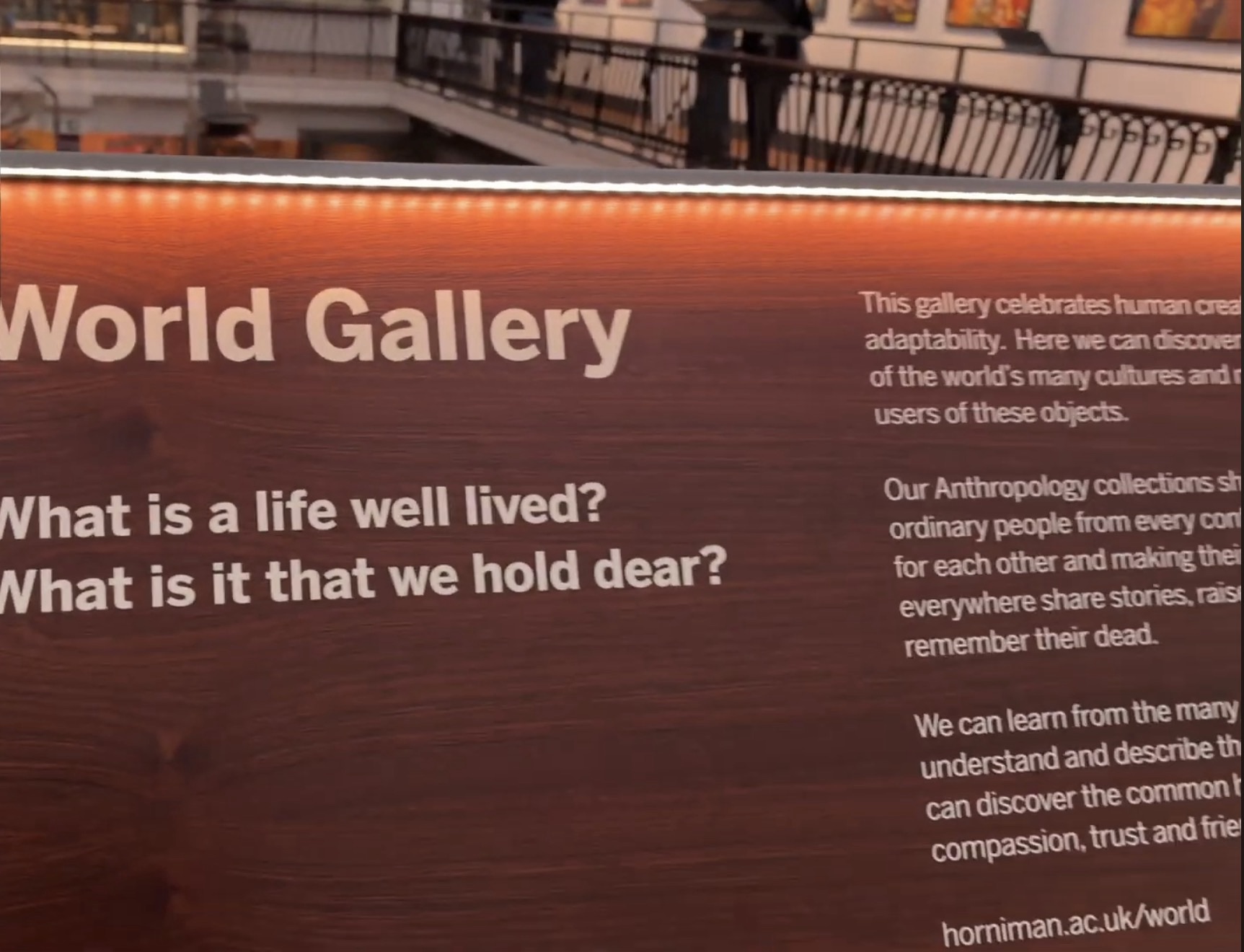
Inside it is one big room over two levels, with a balcony running around the top and cases filling the floor below. You can see most of it at once, which makes it easy to wander rather than follow a route. The upper level is lined with large framed portraits, and from up there you look straight down onto the displays.
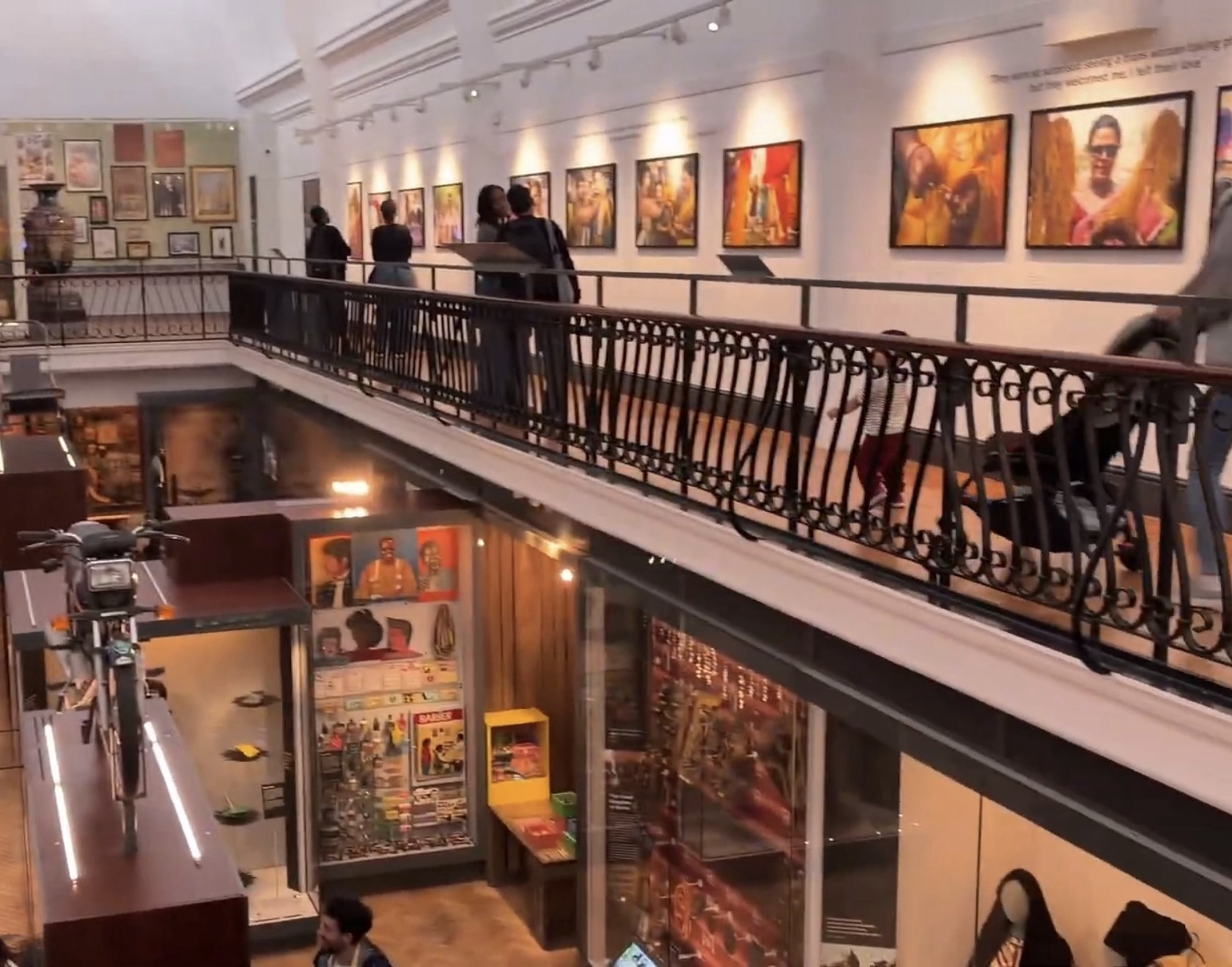
Three things I stopped at
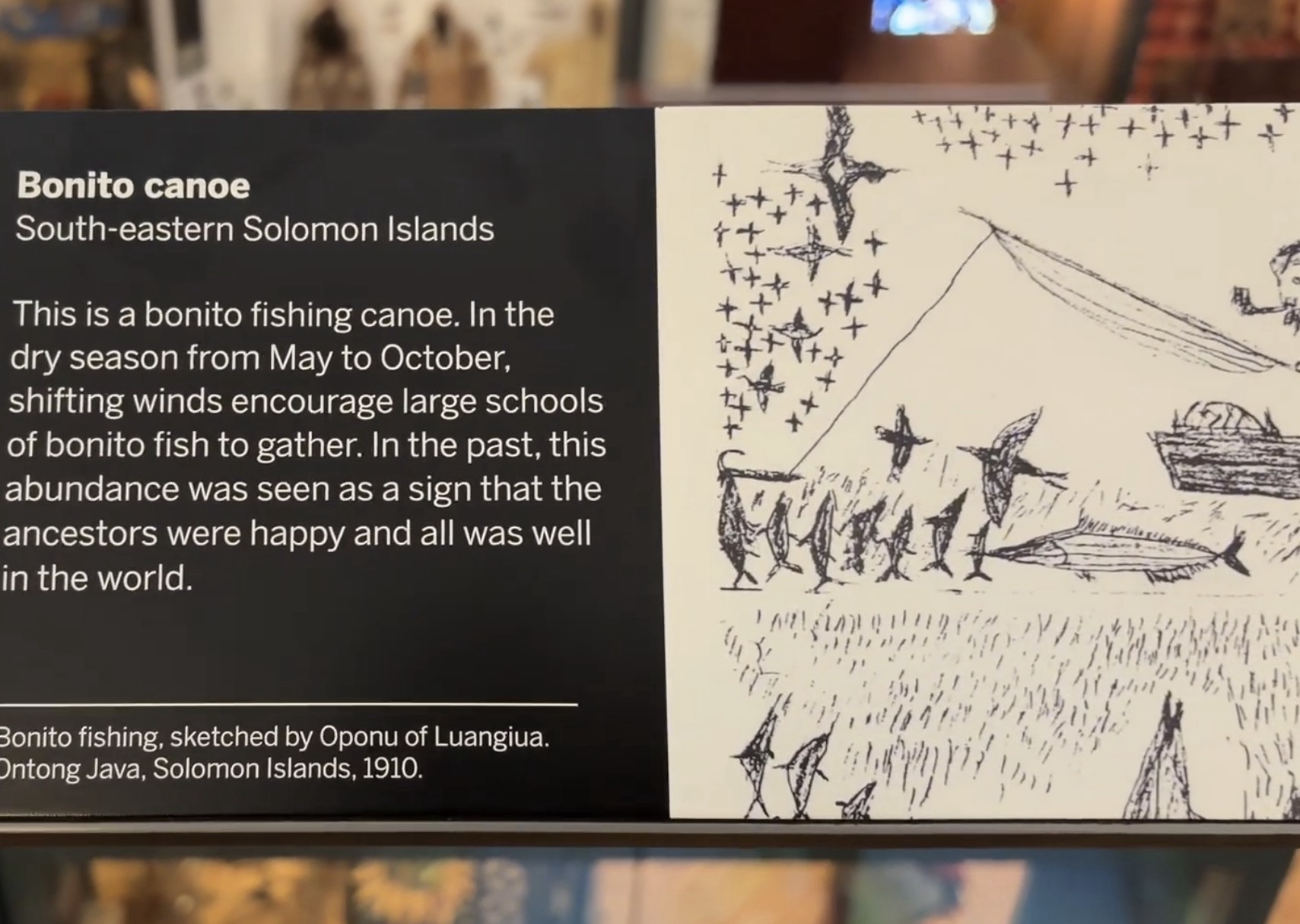
Bonito canoe
South-eastern Solomon Islands. A fishing canoe used in the dry season from May to October, when shifting winds encourage large schools of bonito to gather. The label explains that in the past this abundance was seen as a sign that the ancestors were happy and all was well in the world.
The drawing beside it is bonito fishing, sketched by Oponu of Luangiua, Ontong Java, Solomon Islands, in 1910.
A working motorbike
A Honda CG125 covered edge to edge in stickers and slogans, “DEY YOUR LANE”, “LET THEM SAY”, “I WILL MAKE IT”. Not an antique, not behind velvet rope, just a bike somebody actually rode, lit and displayed as seriously as anything else in the room.

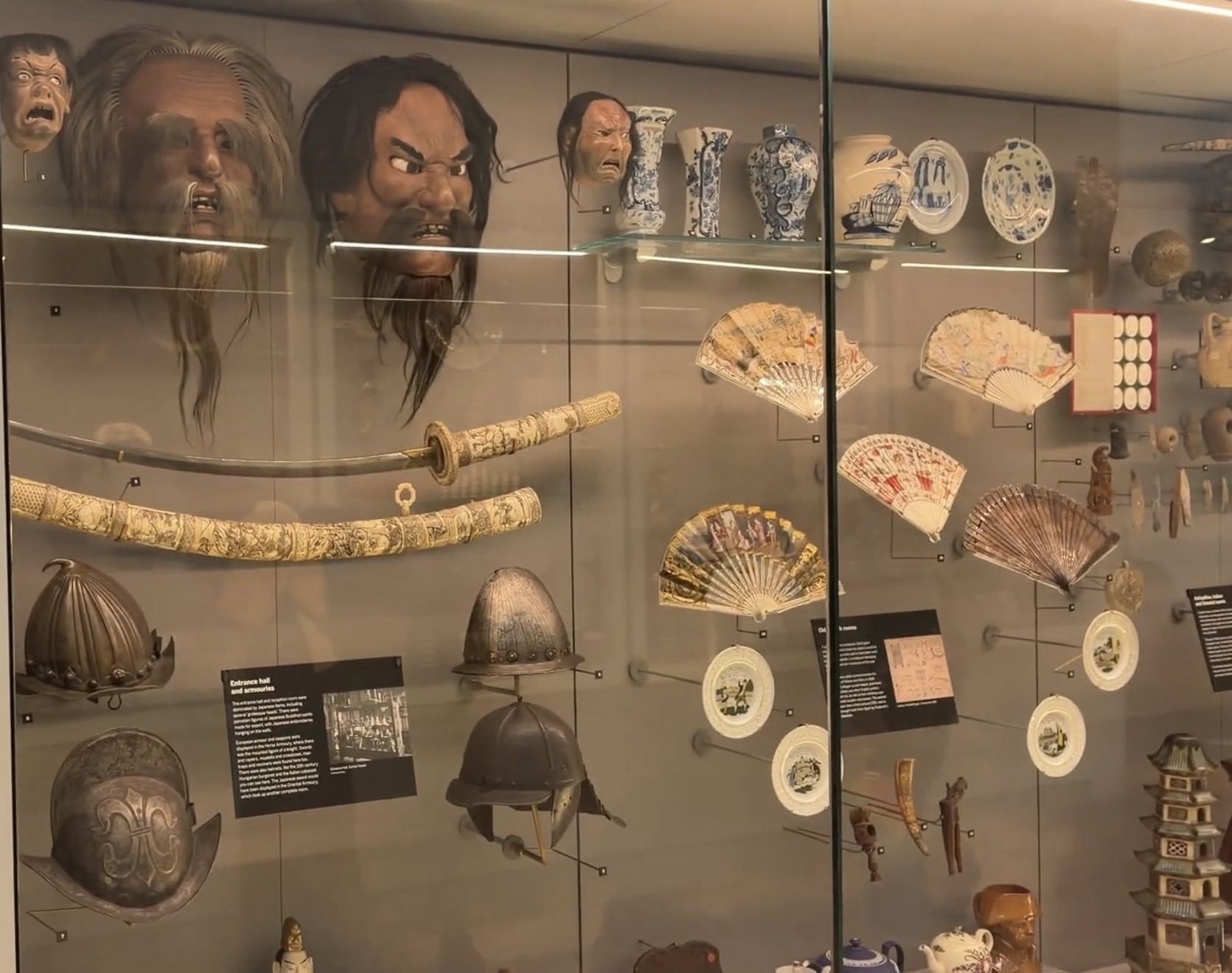
The old entrance hall case
Masks with long real hair, a carved sword and scabbard, folding fans, helmets and armour, blue and white ceramics, all packed into one tall case. A panel inside explains that the entrance hall and reception rooms once looked like this throughout, decorated with Japanese items and grotesque heads, with European armour and weapons displayed in the Horse Armoury.
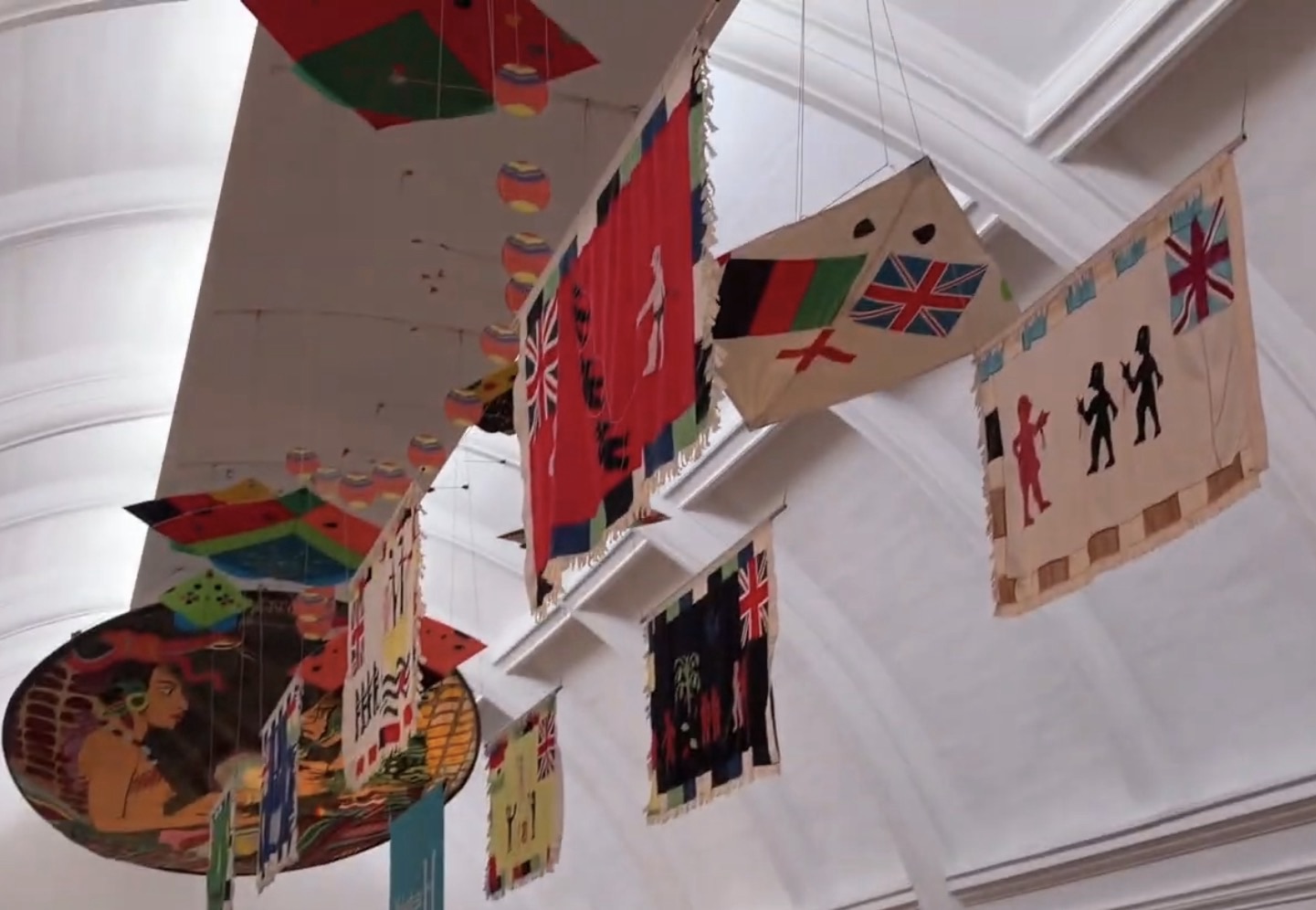
Look Up
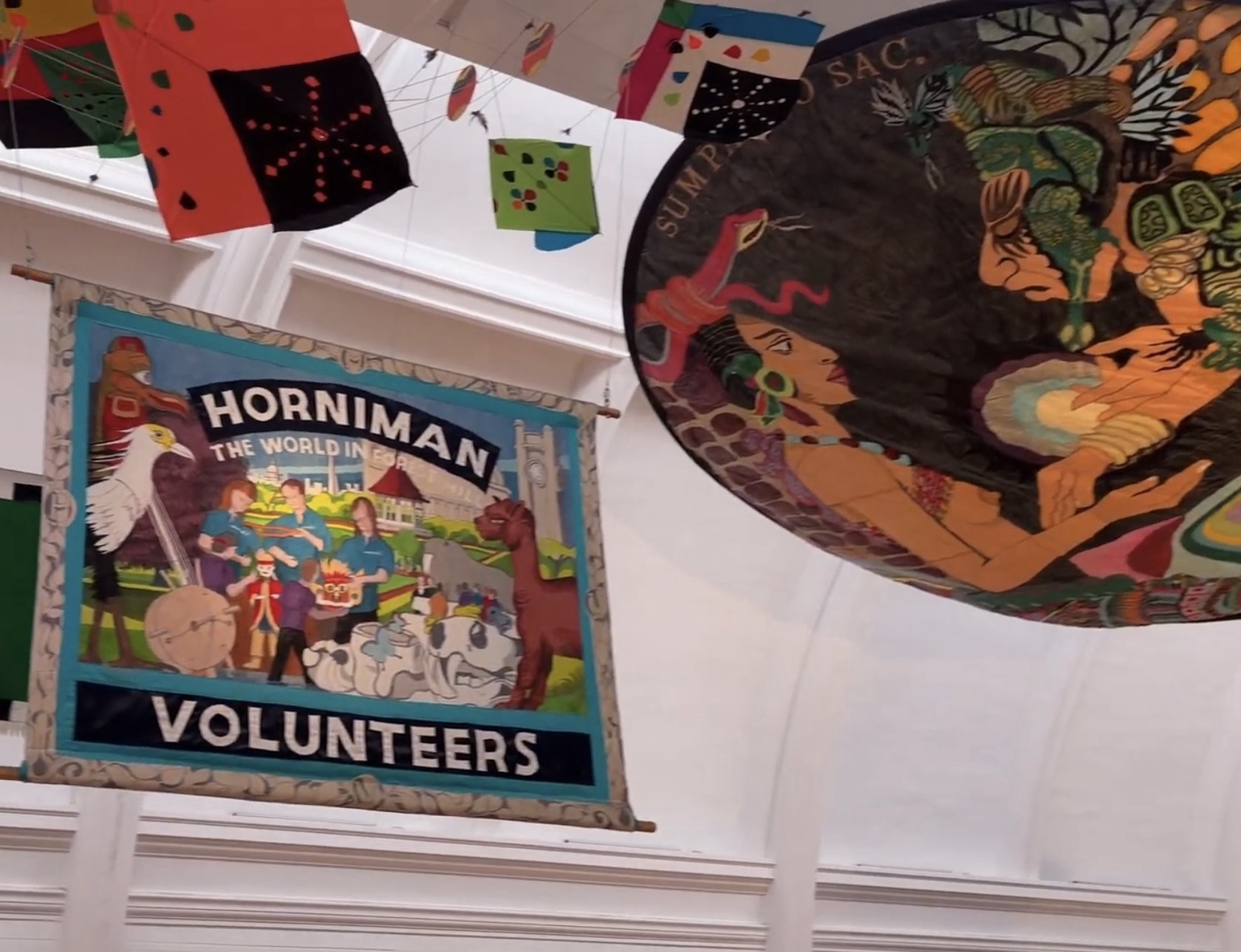
It is easy to spend the whole visit at eye level and miss the ceiling. There are flags, kites and huge decorated textiles hanging above the gallery, including a banner made by the Horniman’s own volunteers.
Practical Things Inside
The museum has several sections on different levels, and there is a lift, so it works if you have a buggy or cannot manage stairs.
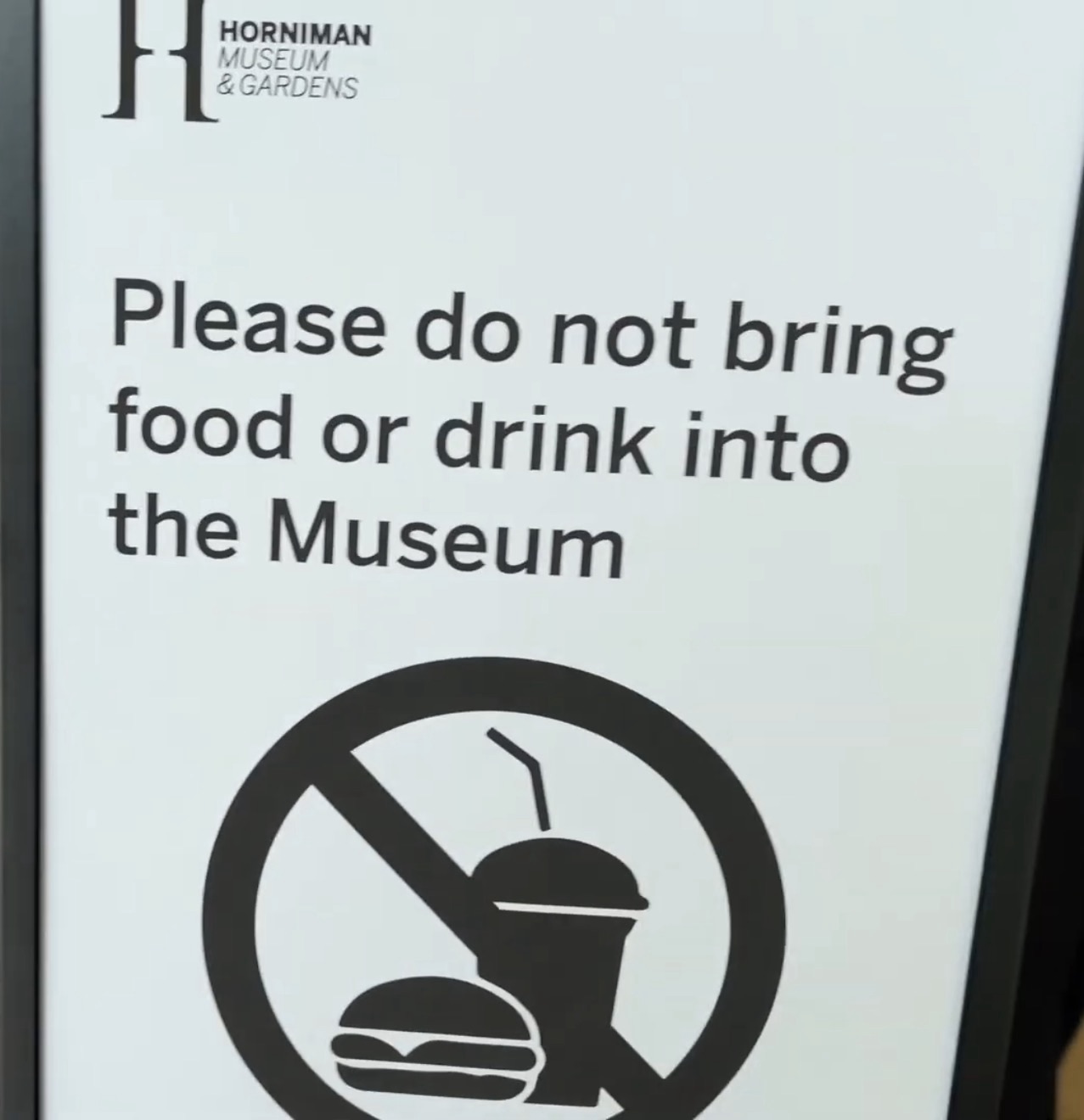
There is a café inside if you need a break. Food and drink are not allowed into the galleries, so eat before or after rather than carrying a coffee round with you.
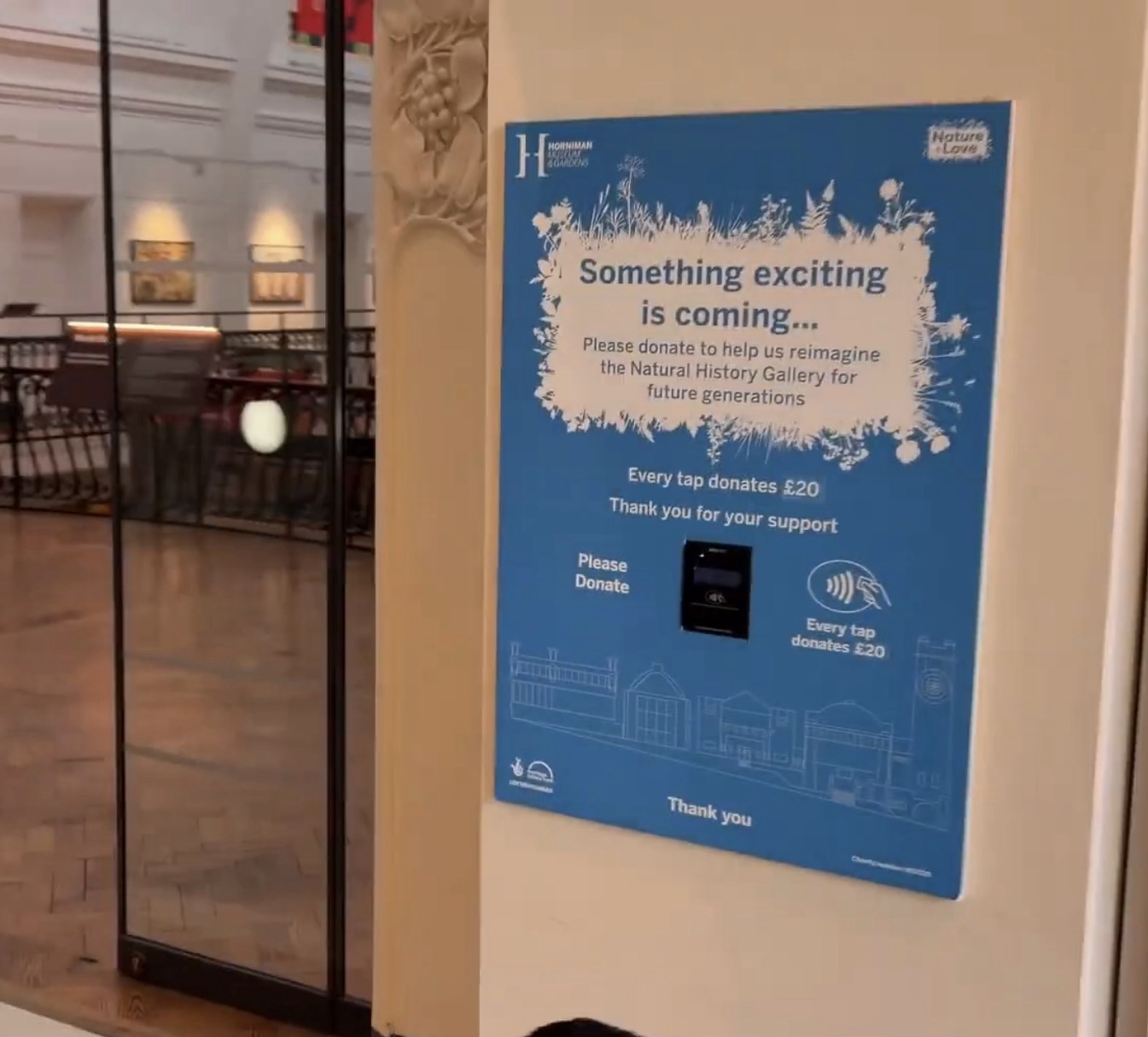
Around the museum there are contactless donation points. Entry is free, and on my visit they were raising money to rebuild the Natural History Gallery, with every tap donating £20. A fair trade for a free day out.
The Gardens
Outside, the gardens are a proper destination in their own right, not a lawn behind a museum. The map board at the entrance lists what is spread across them.
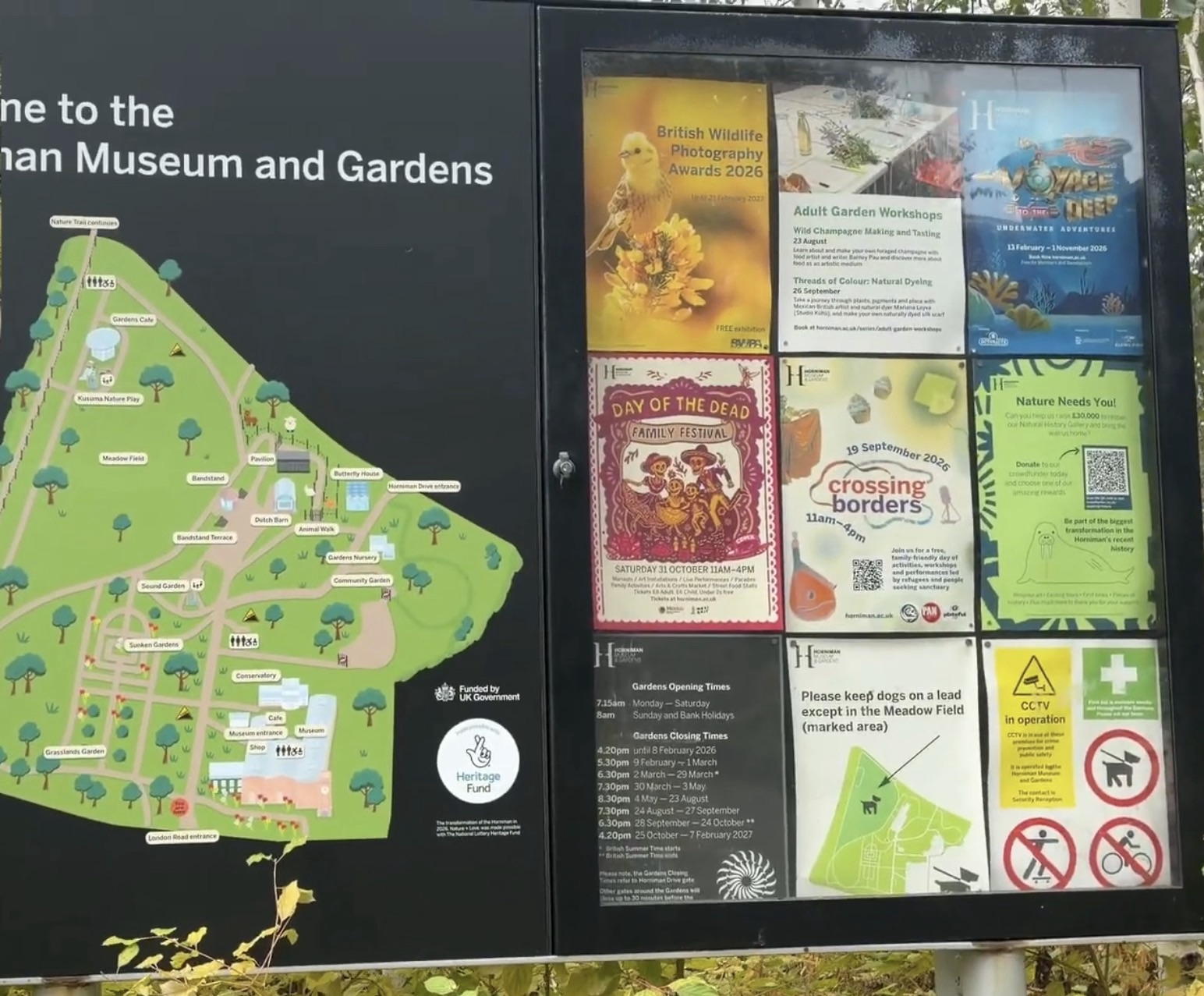
- Bandstand and Bandstand Terrace
- Sunken Gardens
- Conservatory
- Butterfly House
- Animal Walk
- Meadow Field
- Kusuma Nature Play
- Sound Garden
- Grasslands Garden
- Community Garden
- Dutch Barn
- Pavilion
- Gardens Nursery
- Gardens Cafe
- Nature Trail
The Sunken Gardens
The Sunken Gardens are the most formal part of the site: geometric beds laid out around a long pond, edged with stone paths and set a step below the surrounding ground. When I passed, gardeners were working on the beds, which tells you why the planting always looks the way it does.
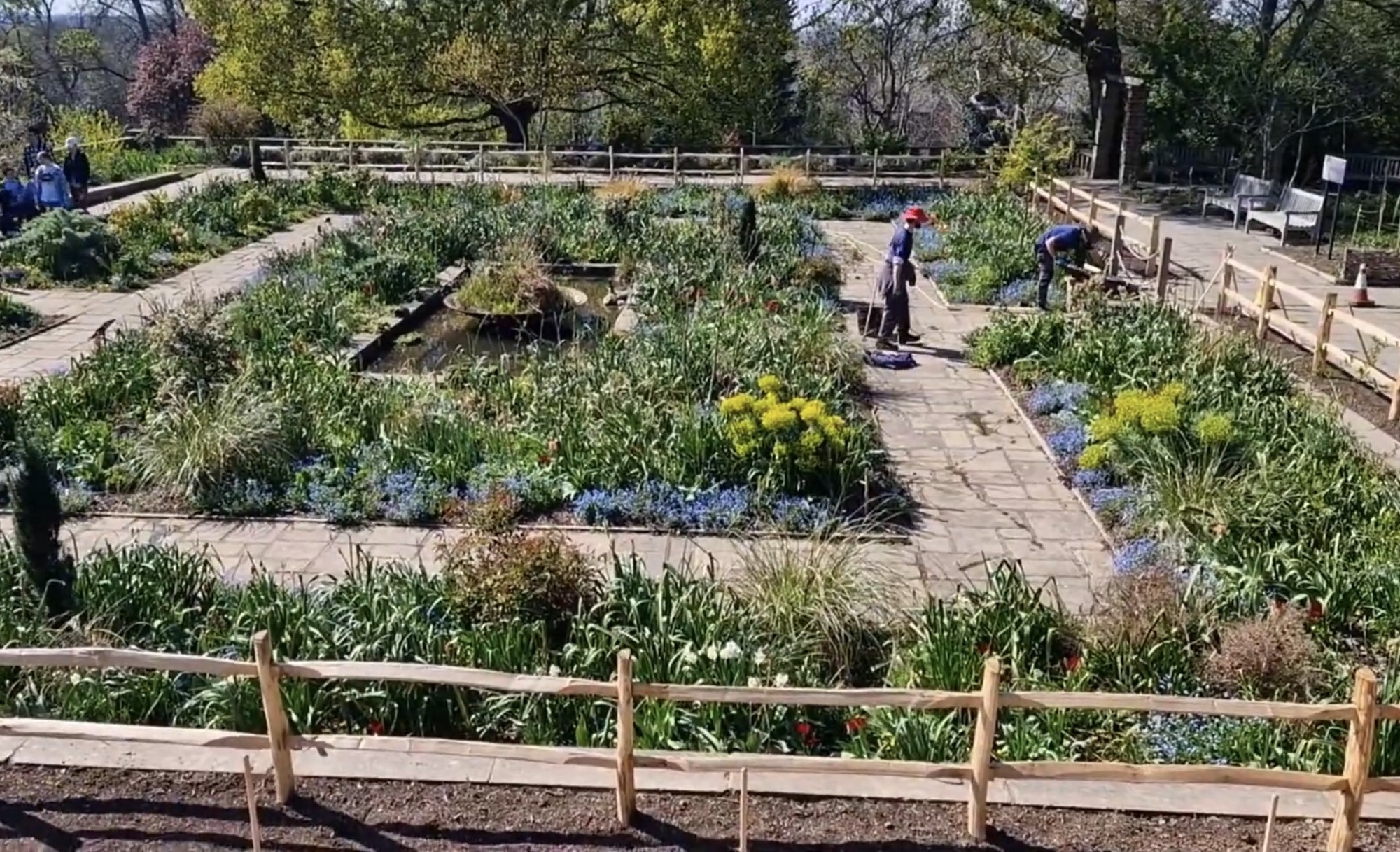
There are benches along the top edge, and it is the best place in the gardens to sit for a while rather than keep walking.
The Sundial, and the Best Sign in the Gardens
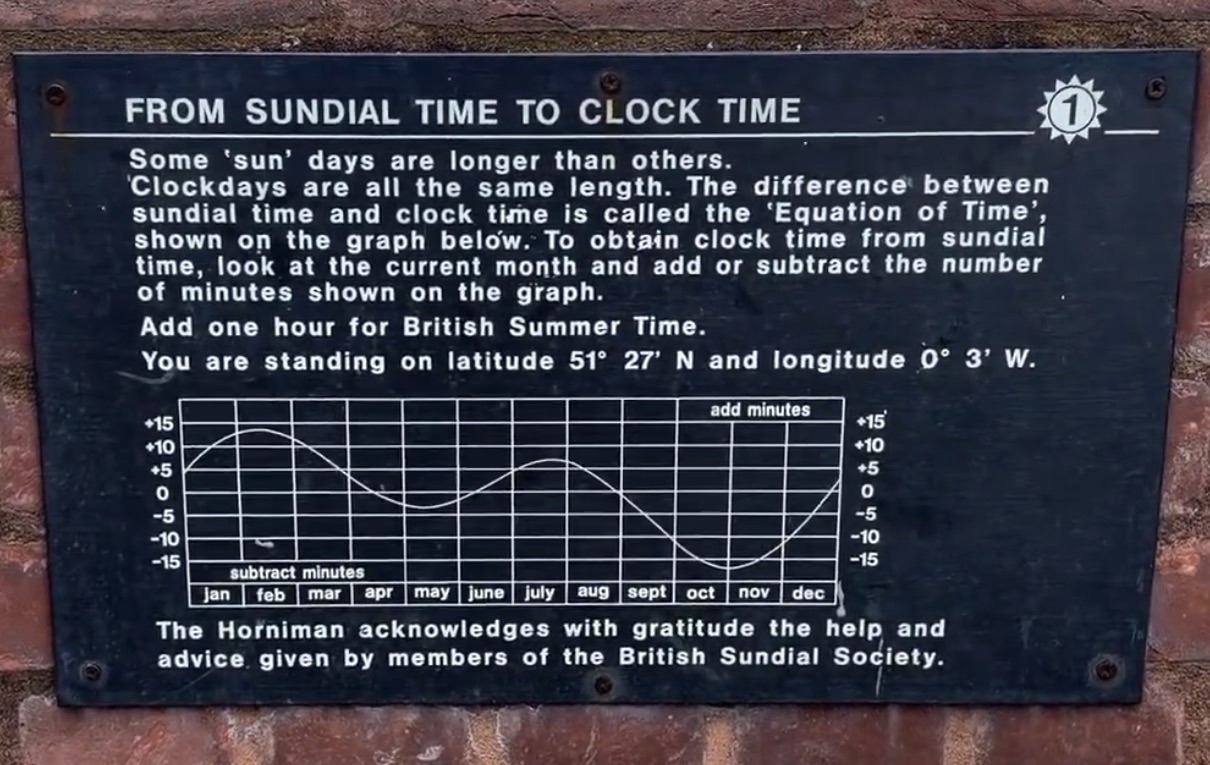
My favourite thing outside was a plaque on a brick wall explaining how to turn sundial time into clock time. Some sun days are longer than others, clock days are all the same, and the difference between them is called the equation of time. There is a graph showing how many minutes to add or subtract in each month, a reminder to add an hour for British Summer Time, and the exact coordinates you are standing on: latitude 51 degrees 27 minutes north, longitude 0 degrees 3 minutes west. It credits the British Sundial Society for the advice.
The Conservatory
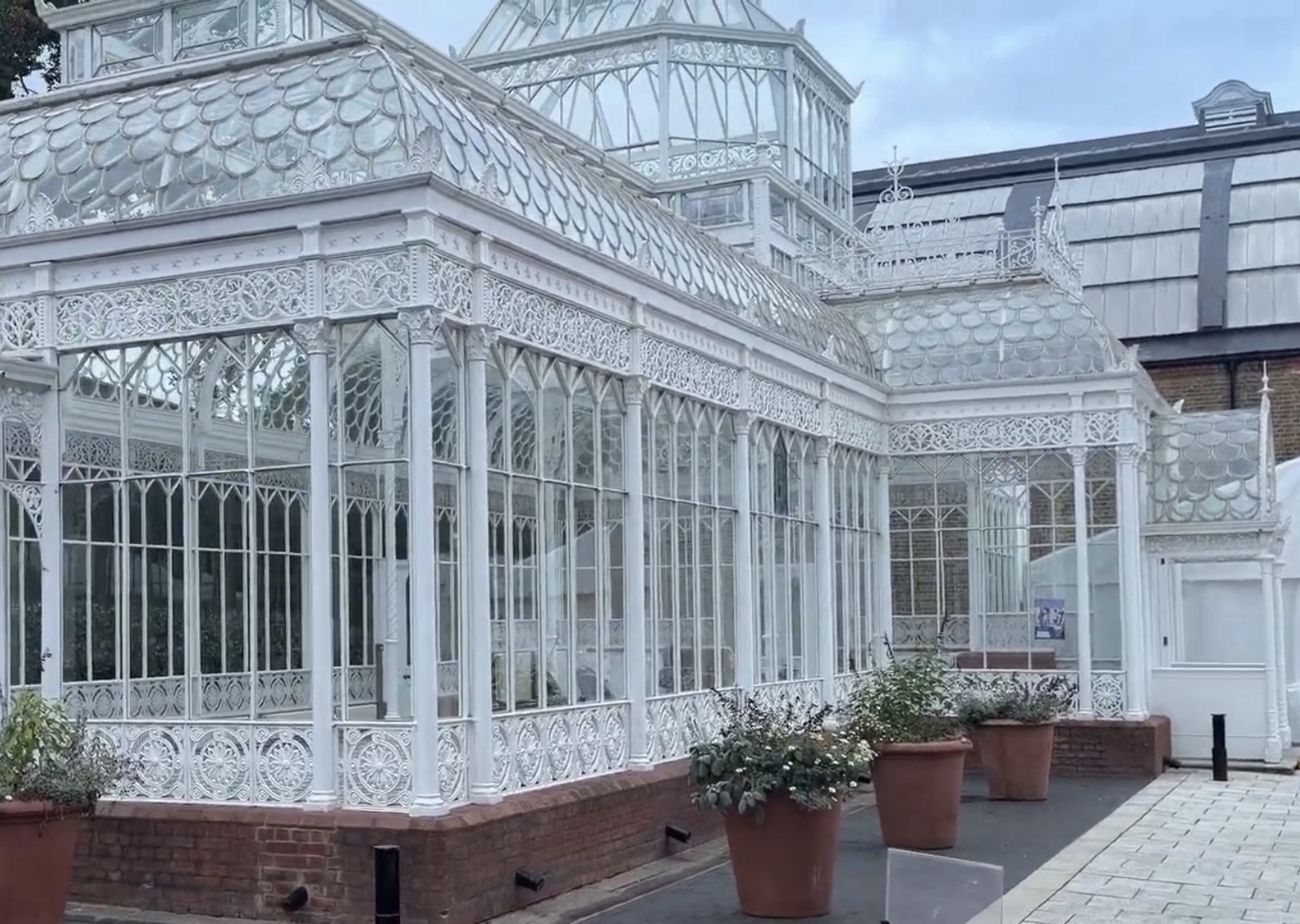
The white iron and glass conservatory is the prettiest building on the site, covered in decorative ironwork and fish-scale glazing, with terracotta pots of planting along the brick base. It is used for events and is often closed, but it is worth walking round the outside even when you cannot go in.
The Pavilion and Kusuma Nature Play
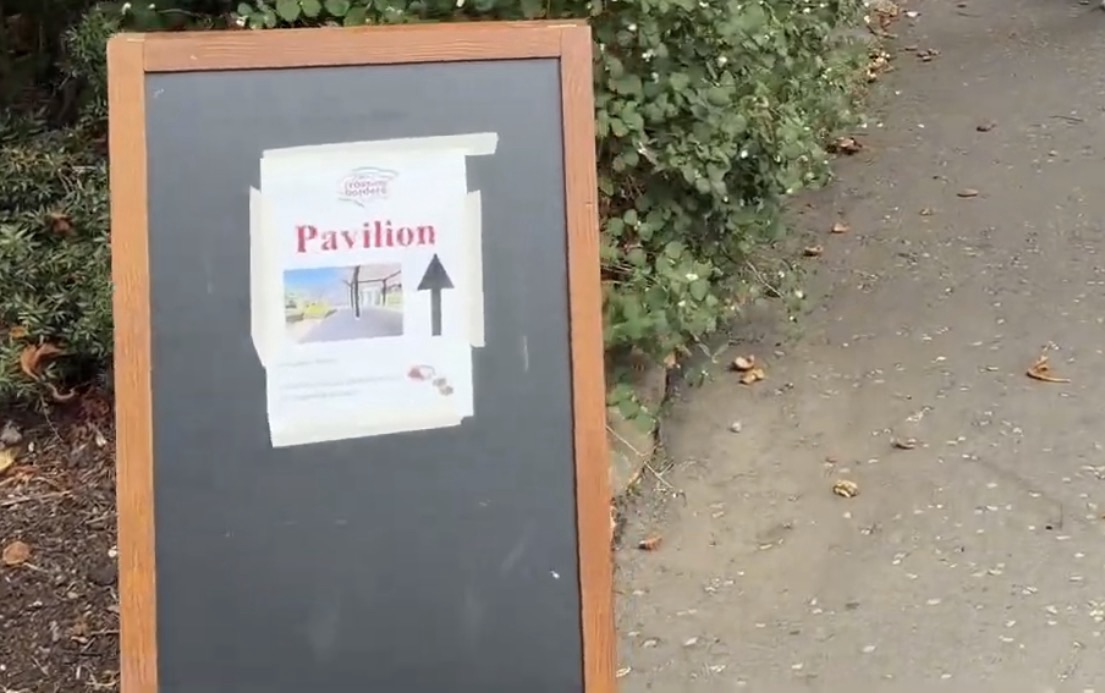
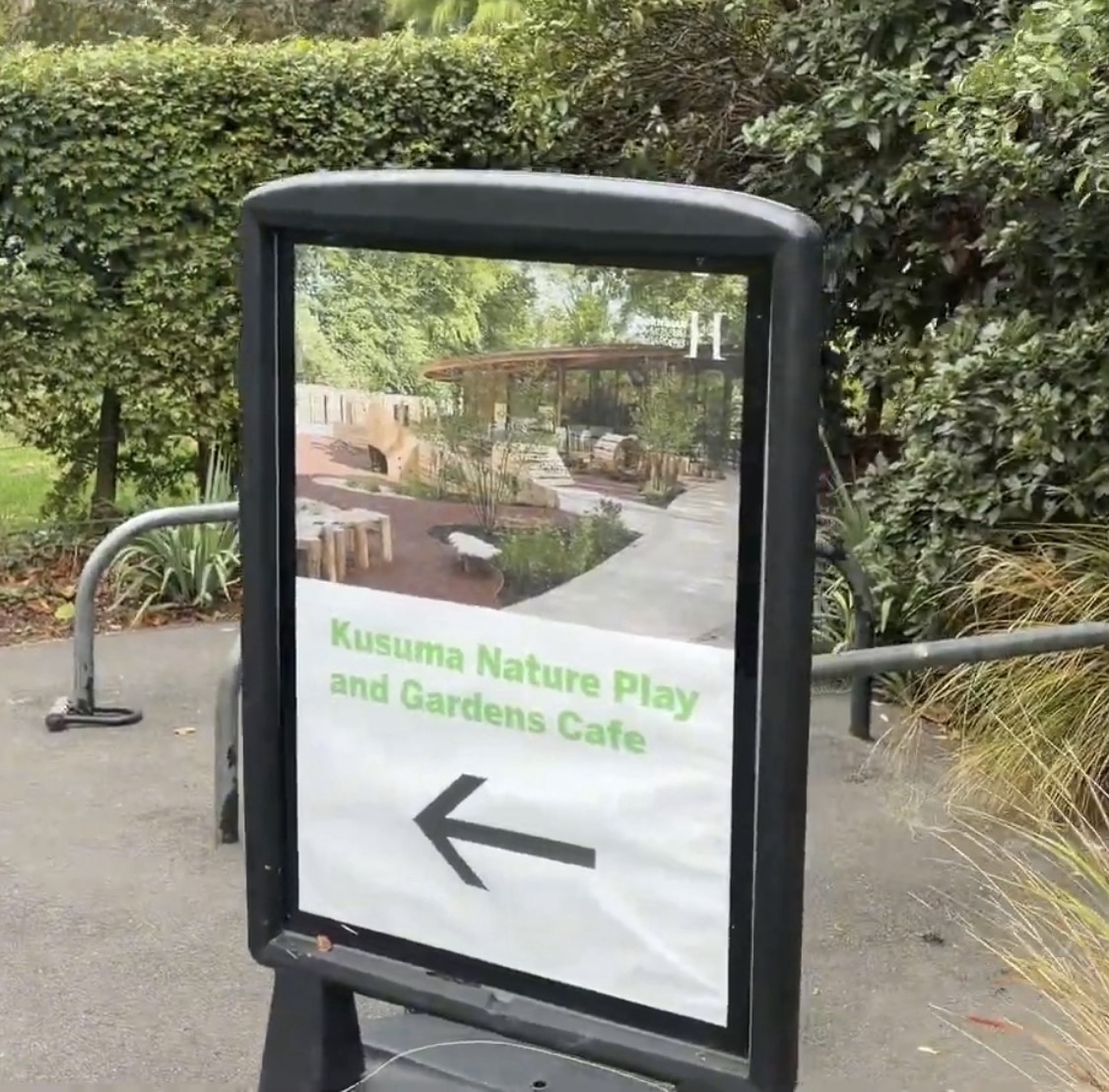
Signs around the gardens point off to the Pavilion and to Kusuma Nature Play with the Gardens Cafe beside it. The nature play area is the one to head for with children: from the picture on the sign it is built from logs, stone and planting rather than painted metal, and it sits right next to somewhere the adults can sit down.
Gardens Opening Times Through the Year
This catches people out, because the gardens close at very different times depending on the season. These are the times posted on the board on my visit. They refer to the Horniman Drive gate, and the other gates close up to 30 minutes earlier.
| Period | Closes |
|---|---|
| Until 8 February | 4.20pm |
| 9 February to 1 March | 5.30pm |
| 2 to 29 March | 6.30pm |
| 30 March to 3 May | 7.30pm |
| 4 May to 23 August | 8.30pm |
| 24 August to 27 September | 7.30pm |
| 28 September to 24 October | 6.30pm |
| 25 October to 7 February | 4.20pm |
Opening is 7.15am Monday to Saturday, and 8am on Sundays and bank holidays.
What I Missed
I did not go into the Butterfly House or the Aquarium, because both need a separate ticket and I wanted to see the free parts properly first. The Butterfly House looks good from the outside and I will come back for it. The Animal Walk and the Nature Trail are also still on my list.
Practical Information
My Honest Verdict
There is much more here than I expected. I went thinking I would spend an hour in a small local museum and ended up taking my time through the whole thing and then walking the gardens on top.
What makes it worth a journey is the combination. You get a genuinely good museum, a set of Victorian gardens with a view over London, a play area, a café and an animal walk, and the core of it costs nothing. Very few places in London can say all of that at once.
Go in the morning if you can. The gardens are open from quarter past seven, the museum from ten, and doing them in that order gives you the quietest version of both.
Frequently Asked Questions
Is the Horniman Museum free?
Yes. Entry to the museum and to the gardens is free. The Aquarium, the Butterfly House and some temporary exhibitions need a separate ticket.
What time does the Horniman open?
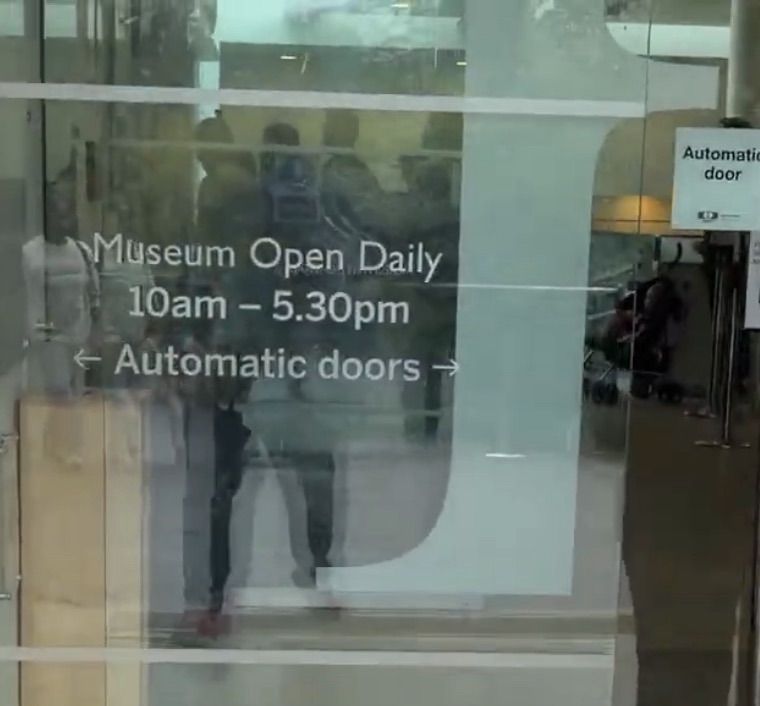
The museum is open 10am to 5.30pm daily. The gardens open at 7.15am Monday to Saturday and 8am on Sundays and bank holidays, and close at a seasonal time between 4.20pm and 8.30pm.
Is there parking at the Horniman?
There is a car park on site. On my visit the first two hours were free with a charge after that. Check the signs on the day, as parking arrangements change.
Can you take dogs into the Horniman Gardens?
Yes, on a lead throughout the gardens. Dogs can be off lead only in the marked Meadow Field. Dogs are not allowed in the museum.
How do you get to the Horniman by public transport?
Forest Hill station is the nearest, a short walk away, served by the Overground and Southern trains.
Is the Horniman good for children?
Yes. Kusuma Nature Play, the Animal Walk, the Butterfly House and the open Meadow Field make it an easy full day, and most of it is free.
How This Guide Was Put Together
Written after a personal visit to the Horniman Museum and Gardens. All photographs on this page are my own, taken on site.
The signpost distances, the World Gallery panel, the bonito canoe label, the entrance hall case panel, the awards and benefactors boards, the no food and drink notice, the museum opening hours, the sundial plaque, the gardens map and the seasonal closing times were all read on site and are reproduced from my own photographs of those signs.
The address, station and borough were checked afterwards against the Horniman’s own information. I did not enter the Aquarium or the Butterfly House, and have not described them.
Opening times, parking charges and ticket prices change, so check the Horniman’s website before travelling.
Last checked: 28 September 2026
Nearby guides: Dulwich Park, Crystal Palace Park and Peckham Rye Park
Sources
- On-site signage at the Horniman Museum and Gardens, including the gardens map board and opening times panel
- World Gallery interpretation panels and object labels
- Horniman Museum and Gardens visitor information
Author

Steve visits every park featured on EKS Parks in person, checking practical details against councils, park operators and official sources. Every guide is based on a personal visit, and the photographs published with it are his own.
About Steve