

Kensington Gardens is such a nice place to walk around. It’s quite big, so you can easily spend a few hours here just exploring the different paths and areas. The weather was really nice when I was there, and after the recent rain the sky had cleared up and the sun was out. You could really see the difference in the park.
Kensington Gardens is a Grade I-listed Royal Park of around 107 hectares, adjoining Hyde Park to the east. Some of the grass was still looking a little dry and yellow from the warmer weather, but there were plenty of trees, plants and flowers that still made everything look really nice.
People Everywhere, Doing Their Own Thing
There are people everywhere doing different things. Some are walking, some are jogging or cycling, and others are just sitting on the grass and relaxing. You also see quite a few people walking their dogs, which is always nice to see in a park like this. There were quite a few people around, but it never felt too crowded. Because the park is so large, you can easily move away from the busy areas and find somewhere quieter.
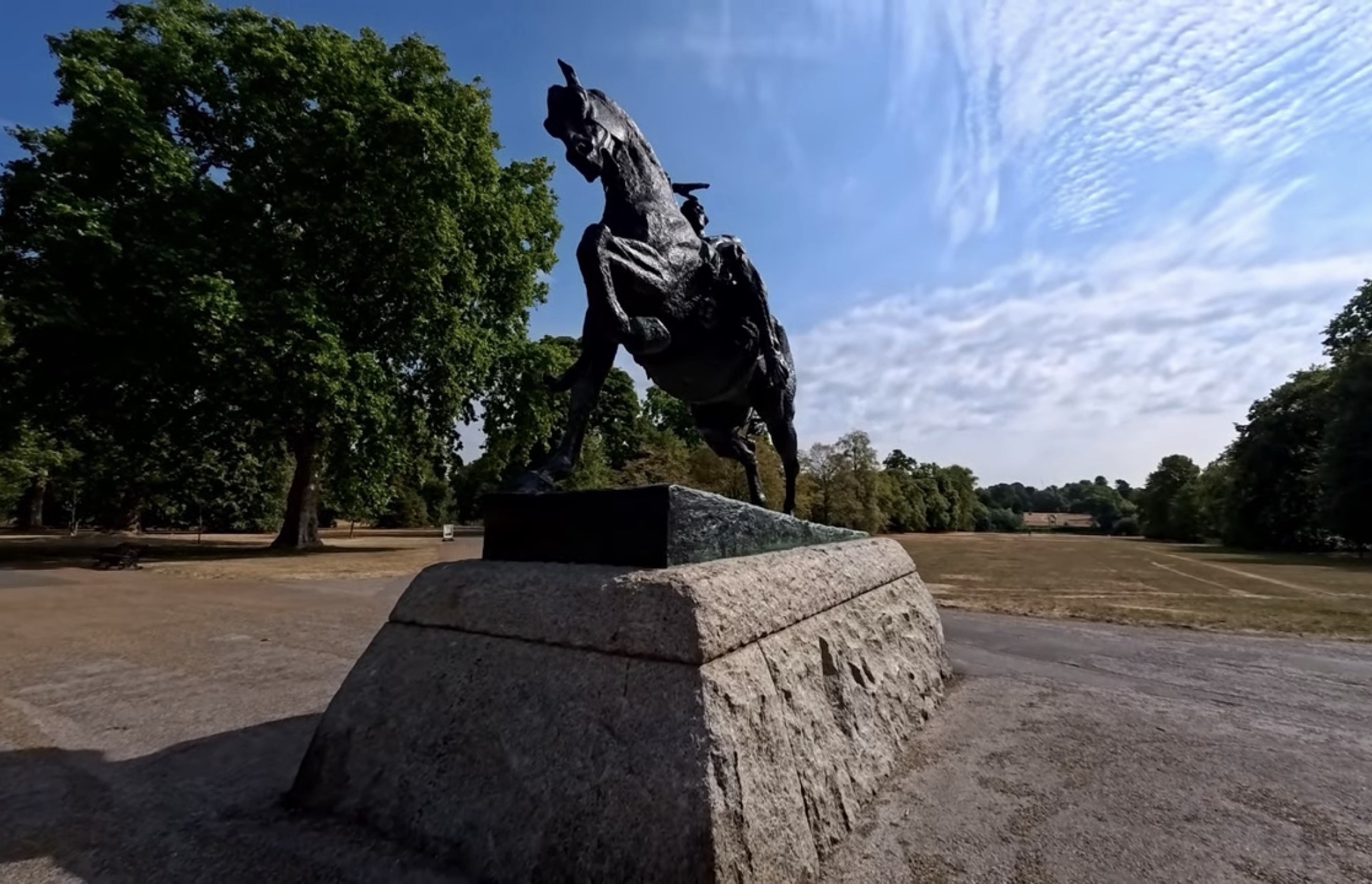
The Long Water and the Serpentine
The Long Water and the Serpentine are probably some of my favourite parts. There are loads of birds around the water, and you’ll see people stopping to feed them. It’s quite peaceful walking along the water, especially when the sun comes through the trees.
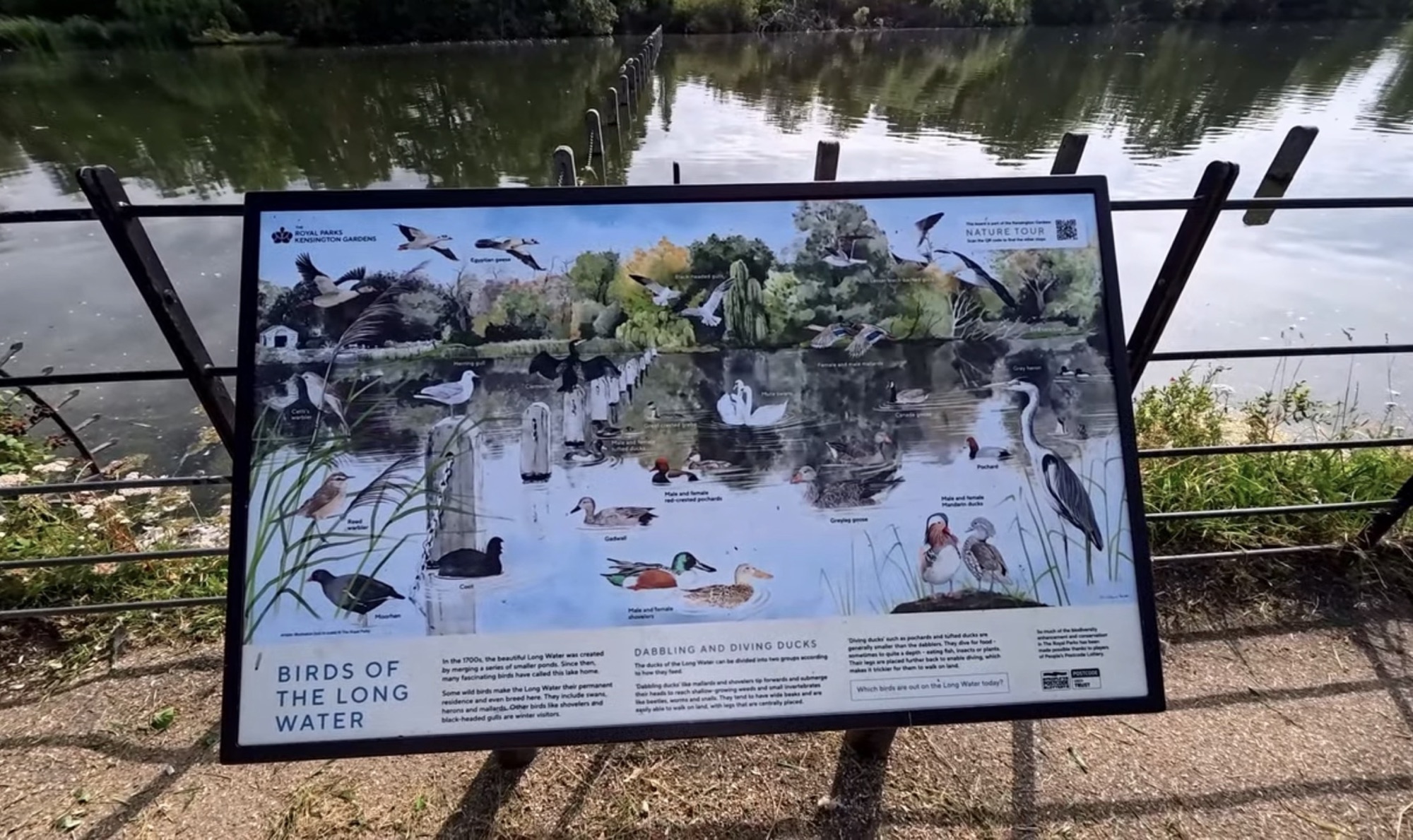
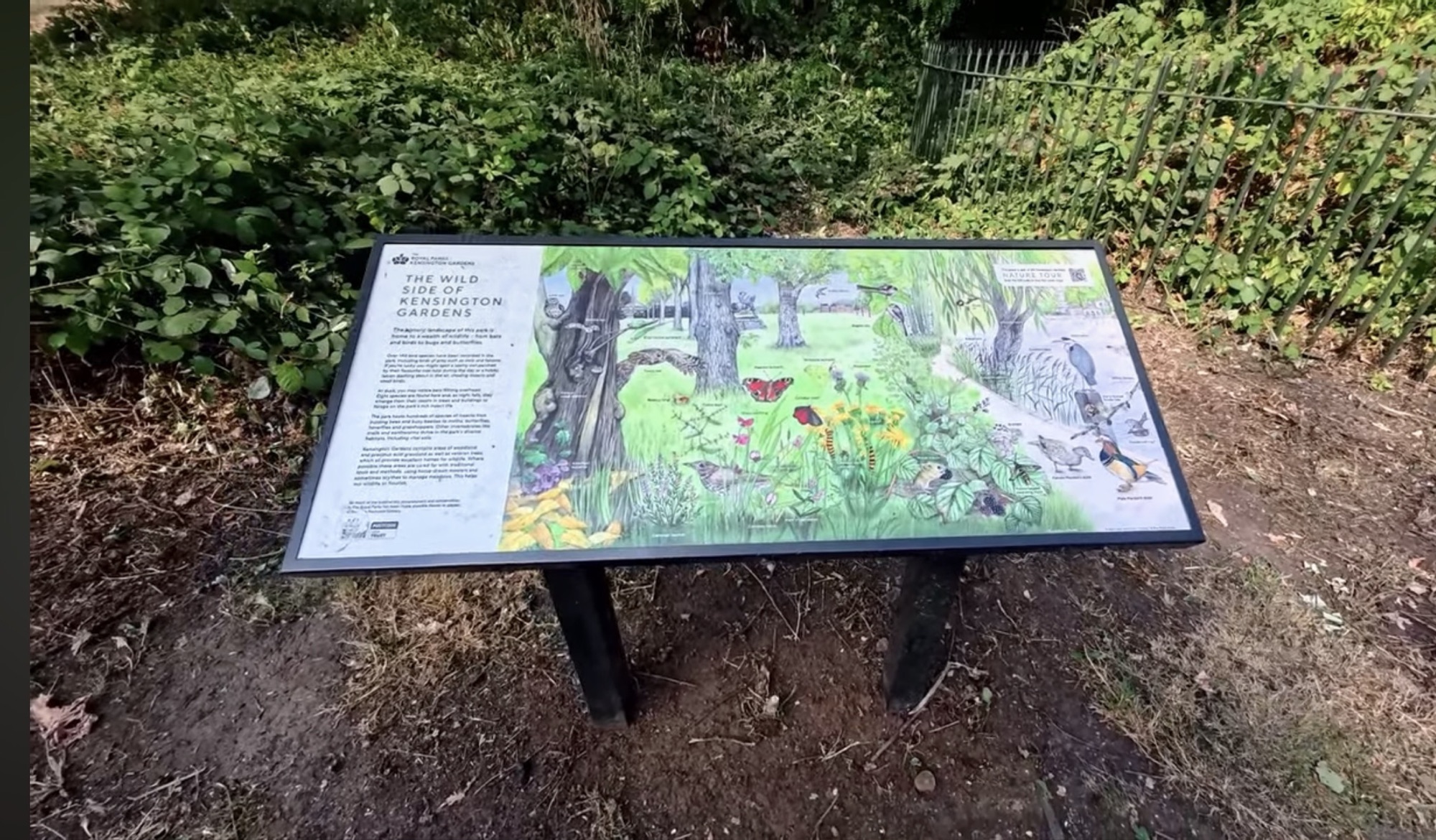
A board by the water catalogues the birds actually likely to be there on any given visit: mute swans, herons, coots, moorhens, and the more decorative mandarin ducks and red-crested pochards that make this stretch popular with birdwatchers. A second board nearby sets out the fuller picture of what the park supports away from the water too: over a hundred recorded bird species, roosting bats that hunt over the water at dusk, and the moths, beetles and grasshoppers that depend on log piles and unmown margins the park leaves deliberately untidy.
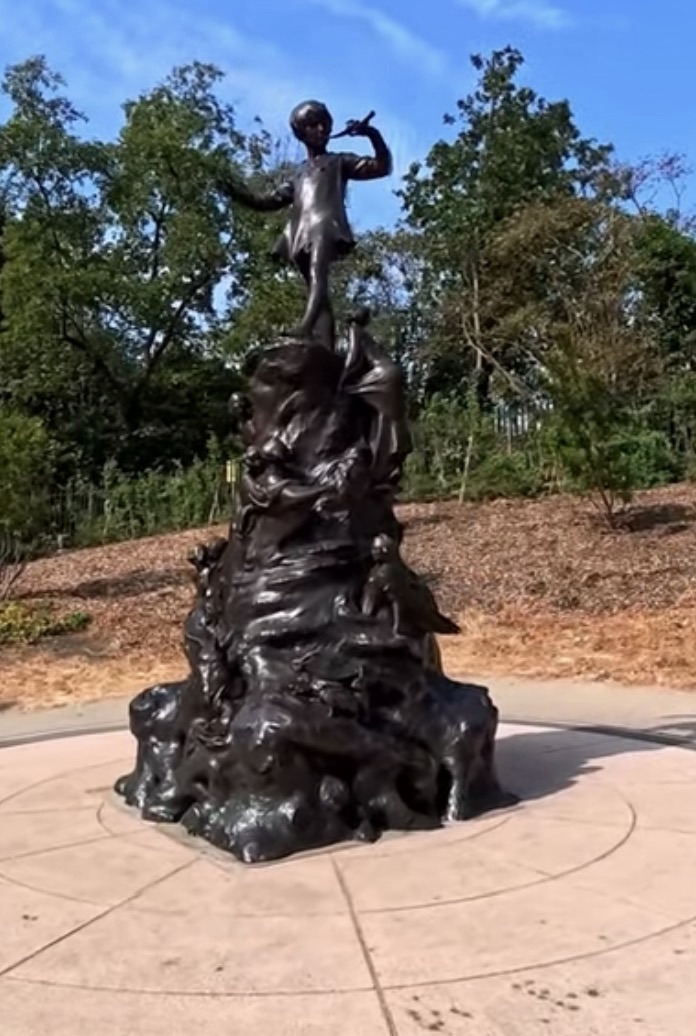
A short walk along the Long Water also brings you to the park’s best-known statue, Peter Pan, cast in bronze and standing above a rock outcrop crowded with fairies, rabbits and mice. J. M. Barrie, who lived nearby and set the character’s early adventures in this exact stretch of the park, had it installed without public announcement in 1912 so that children would simply discover it one morning.
No Particular Route, and That’s the Point
The gardens themselves are really nice as well. There are wide paths, large open areas and plenty of little corners where you can just stop for a while. I like that you don’t have to follow one particular route. You can just keep walking and see where you end up.
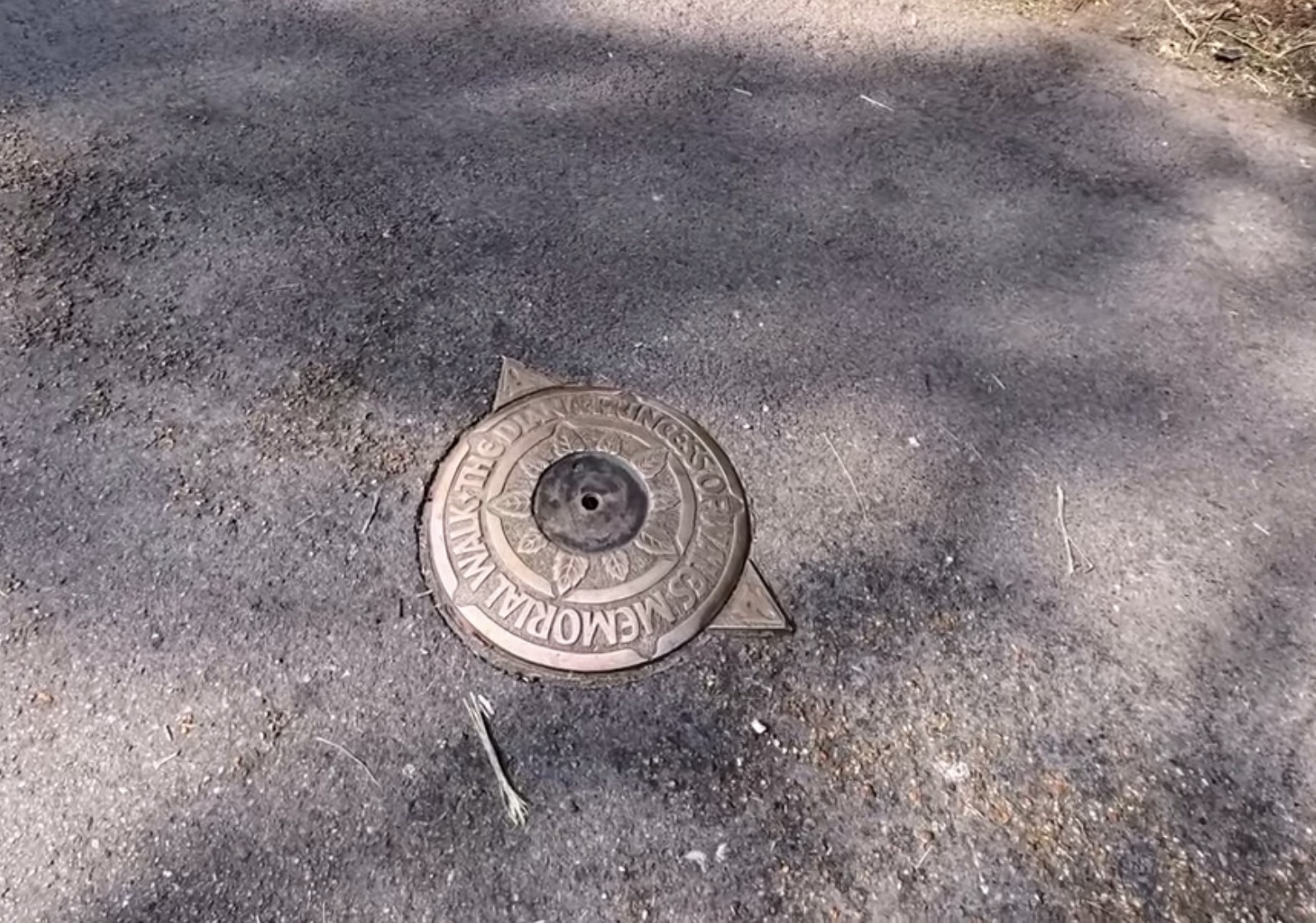
Kensington Gardens is one of four Royal Parks threaded by the Diana, Princess of Wales Memorial Walk, a seven-mile route linking the places connected to her life. Following the arrows on the ground is a genuinely useful way to string together a walk if you don’t already have a route in mind, which suited exactly the kind of wandering I was doing.
The Italian Gardens Slow Everything Down
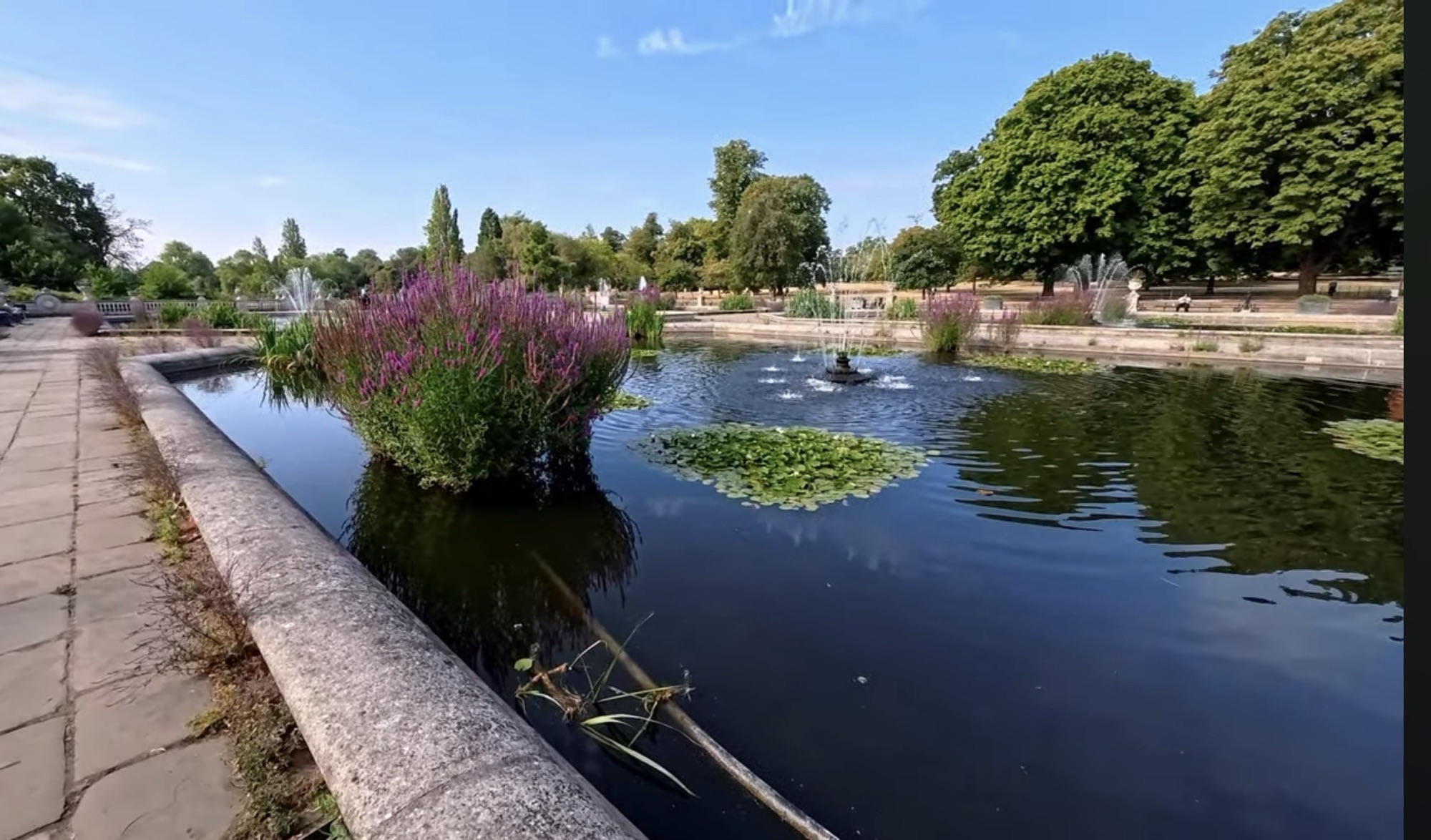
The Italian Gardens are another really nice section. The fountains and the way everything is laid out make it feel a bit different from the rest of Kensington Gardens. It’s one of those places where you naturally slow down and have a look around.
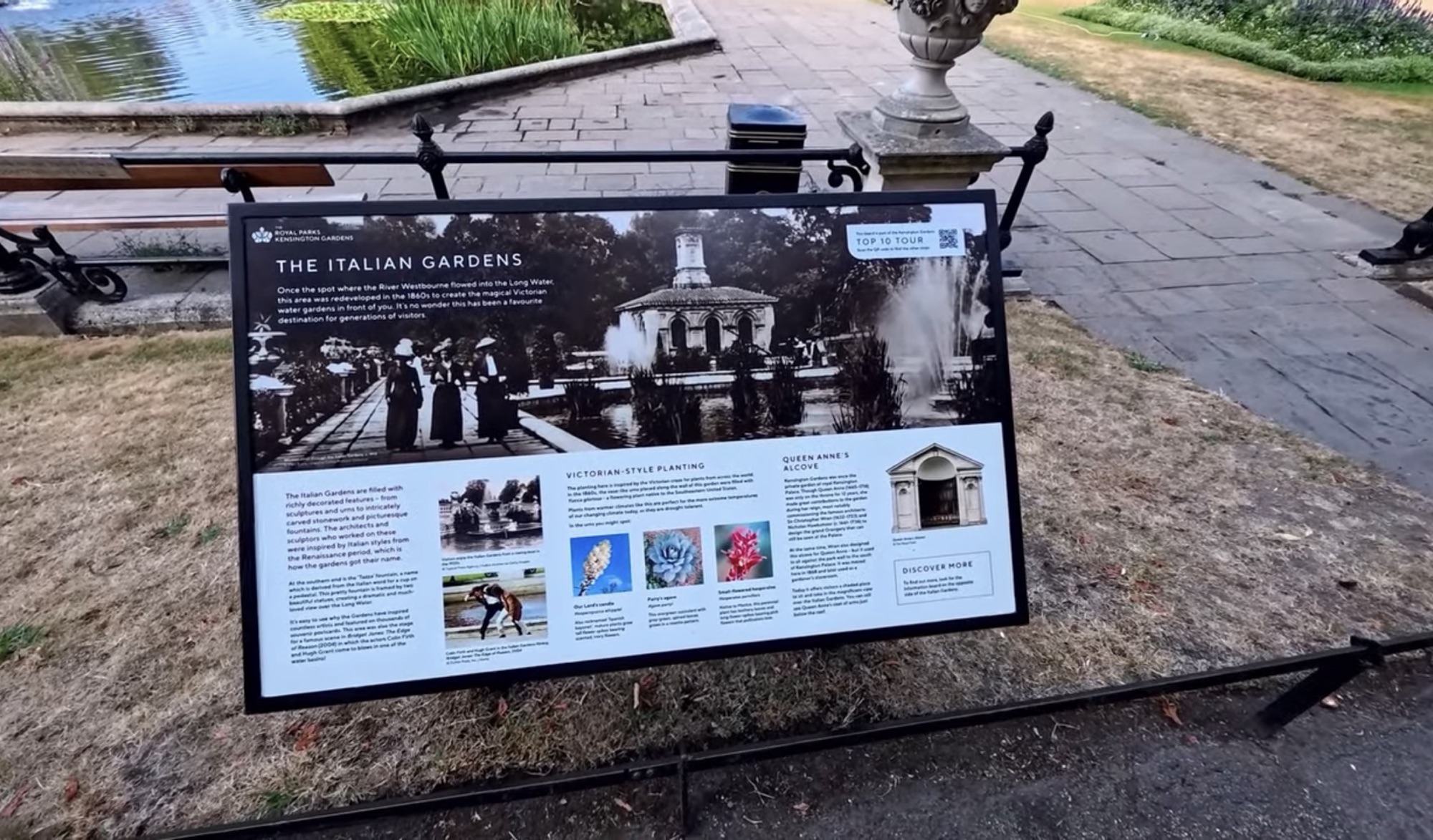
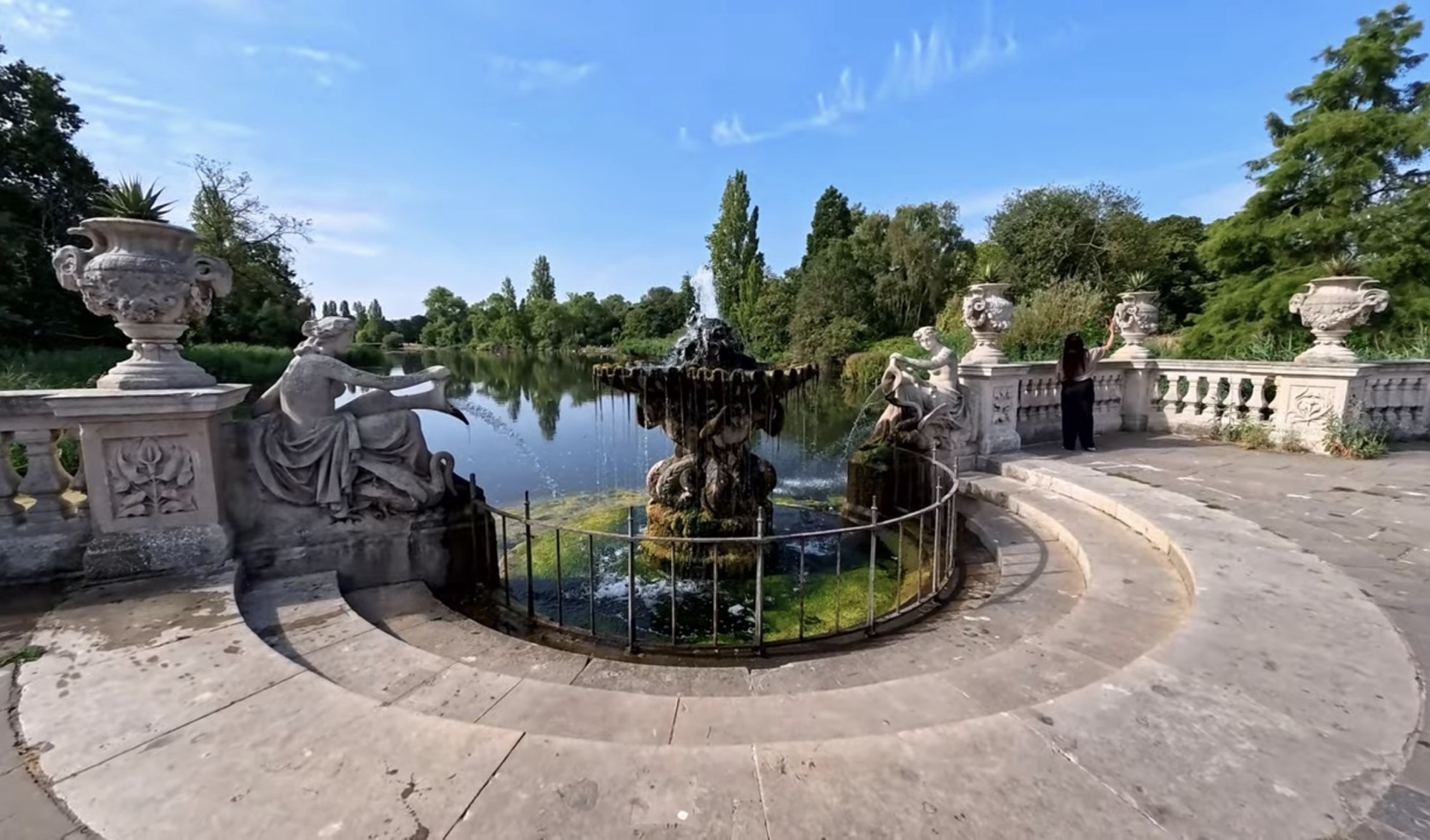
They were laid out in the 1860s on the spot where the River Westbourne once fed into the lake, drawing directly on Italian Renaissance garden design rather than the more naturalistic English landscaping used elsewhere in the park. The southern end holds the Tazza Fountain, framed by dramatic figures and a much-photographed view back down the Long Water.
The urns and planting
The stone urns lining the balustrades are planted in a deliberately Victorian style, several of the varieties, including the agave carved and planted here, are naturally drought-tolerant, which has become a practical advantage as summers get warmer.
The pump house
Presiding over the whole scene is the ornate pump house, its arched doorways and carved pediment doing more architectural work than most visitors give it credit for while they photograph the fountains in front.
You Don’t Really Need to Go Inside Anything
You can also see Kensington Palace from different parts of the gardens, but honestly, there’s so much to enjoy outside that you don’t really need to go inside anything. The gardens are the main attraction for me.
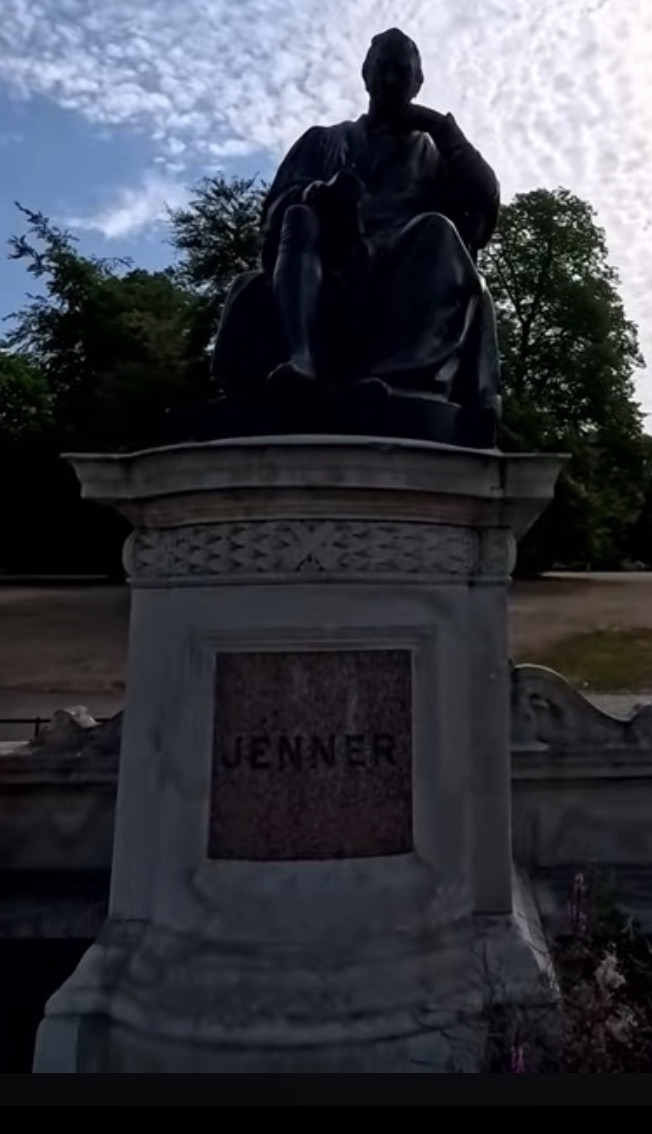
Away from the main path, in a quieter stretch of the park, stands a seated bronze statue of Edward Jenner, the physician credited with pioneering the smallpox vaccine. There is no elaborate interpretation board here, just the statue itself in what felt, at the hour I passed, like one of the park’s least visited corners.
A Note on the Leaf Pen Works
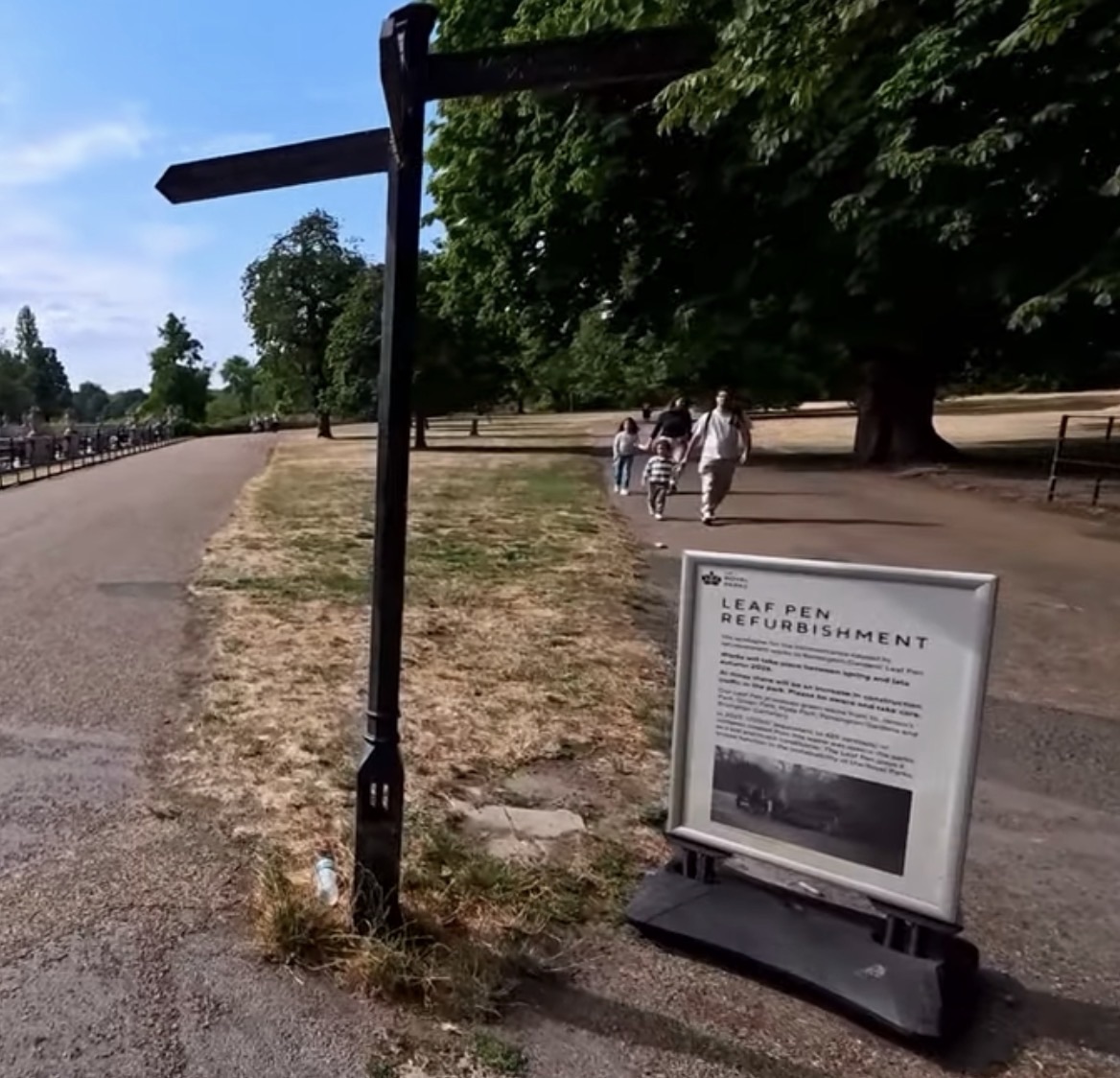
Further along the path, a temporary notice explains one of the park’s less glamorous but genuinely useful pieces of infrastructure: its leaf pens, where fallen leaves collected across Hyde Park, Green Park, St James’s Park, Kensington Gardens and Brompton Cemetery are composted down into leaf mould rather than sent offsite as waste.
Playgrounds Along the Way
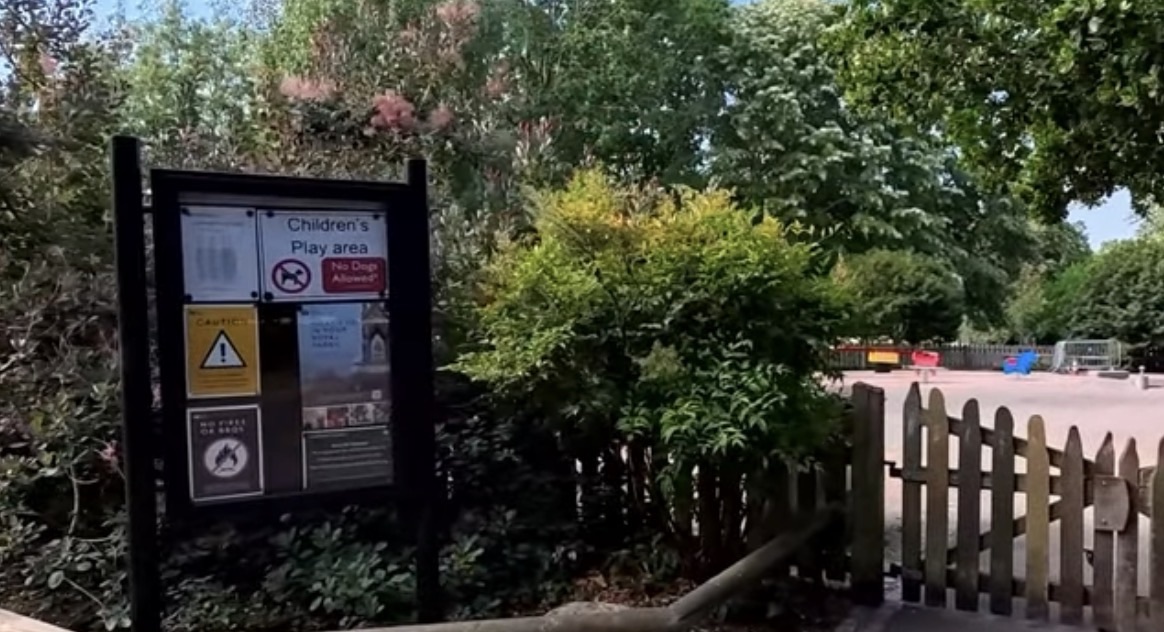
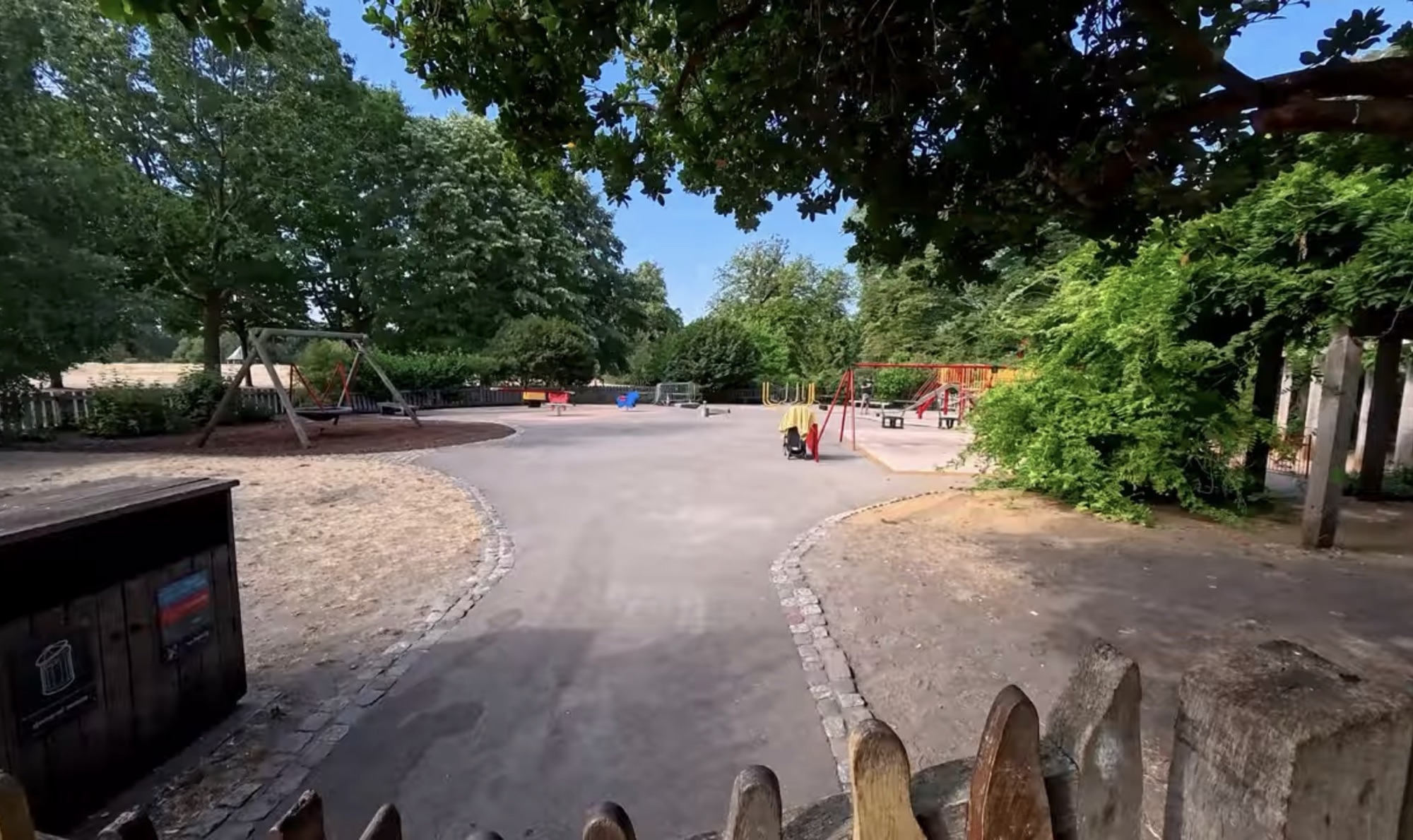
Kensington Gardens has more than one children’s playground, and it is worth checking which one you’re heading for before you set off, since the best-known of them, the Diana Memorial Playground, has at times been closed for renewal work.
My Take
I really liked just walking without having a particular plan. Between the water, the trees, the open grass, the gardens and all the people enjoying themselves, there’s always something happening around you. It’s a very relaxing part of London, and on a day with good weather, it’s easy to spend a lot longer here than you originally planned.
Frequently Asked Questions
Is Kensington Gardens free to enter?
Yes. The park, the Italian Gardens, the Peter Pan and Physical Energy statues, and all the walking routes covered here are free. Kensington Palace, inside the park, is a separate paid attraction.
What is the Diana, Princess of Wales Memorial Walk?
A seven-mile route across four Royal Parks, including Kensington Gardens, marked by small bronze roundels set into the paths and linking places connected to her life.
Where are the Italian Gardens?
At the northern end of the Long Water, closest to the Lancaster Gate side of the park, centred on the pump house building and the Tazza Fountain.
Is the playground in these photos the Diana Memorial Playground?
No. This is one of the park’s other, smaller play areas. Check the Royal Parks website for the current status of the Diana Memorial Playground before planning a visit around it specifically.
Research Method
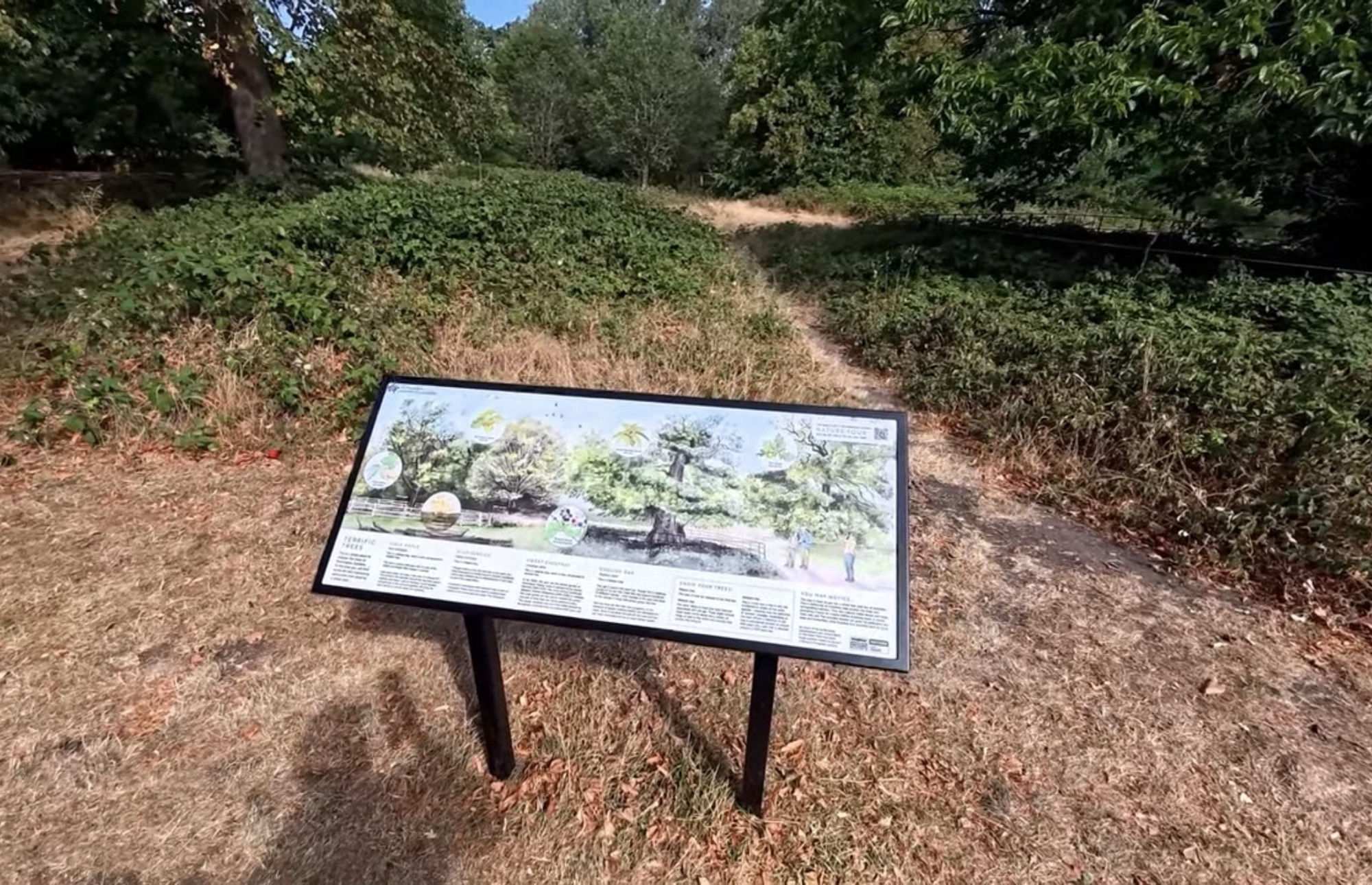
This guide is based on a personal visit to the park after a spell of recent rain gave way to clear summer sunshine. All photographs above are original and were taken on site, including the Terrific Trees, Wild Side of Kensington Gardens, Birds of the Long Water and Italian Gardens interpretation boards, which were read and photographed in person. Background on Physical Energy, Peter Pan and the Diana Memorial Walk was checked against The Royal Parks. Leaf pen works, playground status and seasonal details can change, so confirm anything time-sensitive with The Royal Parks before travelling.
Official & Useful Sources
The Royal Parks: Kensington Gardens
Used to verify general park information, opening arrangements and current facilities.
https://www.royalparks.org.uk/visit/parks/kensington-gardens
The Royal Parks: Diana, Princess of Wales Memorial Walk
Used to verify the route and the markers seen along the path.
https://www.royalparks.org.uk/visit/things-to-see-and-do/diana-memorial-walk
On-site interpretation read during the visit
The Terrific Trees board, The Wild Side of Kensington Gardens board, the Birds of the Long Water board, the Italian Gardens board and the Leaf Pen Refurbishment notice.
Last checked: 10 September 2026
Author

Steve visits every park featured on Ekskluzivet Park in person, checking practical details against councils, park operators and official sources. Every guide is based on a personal visit, and the photographs published with it are his own.
About Steve